


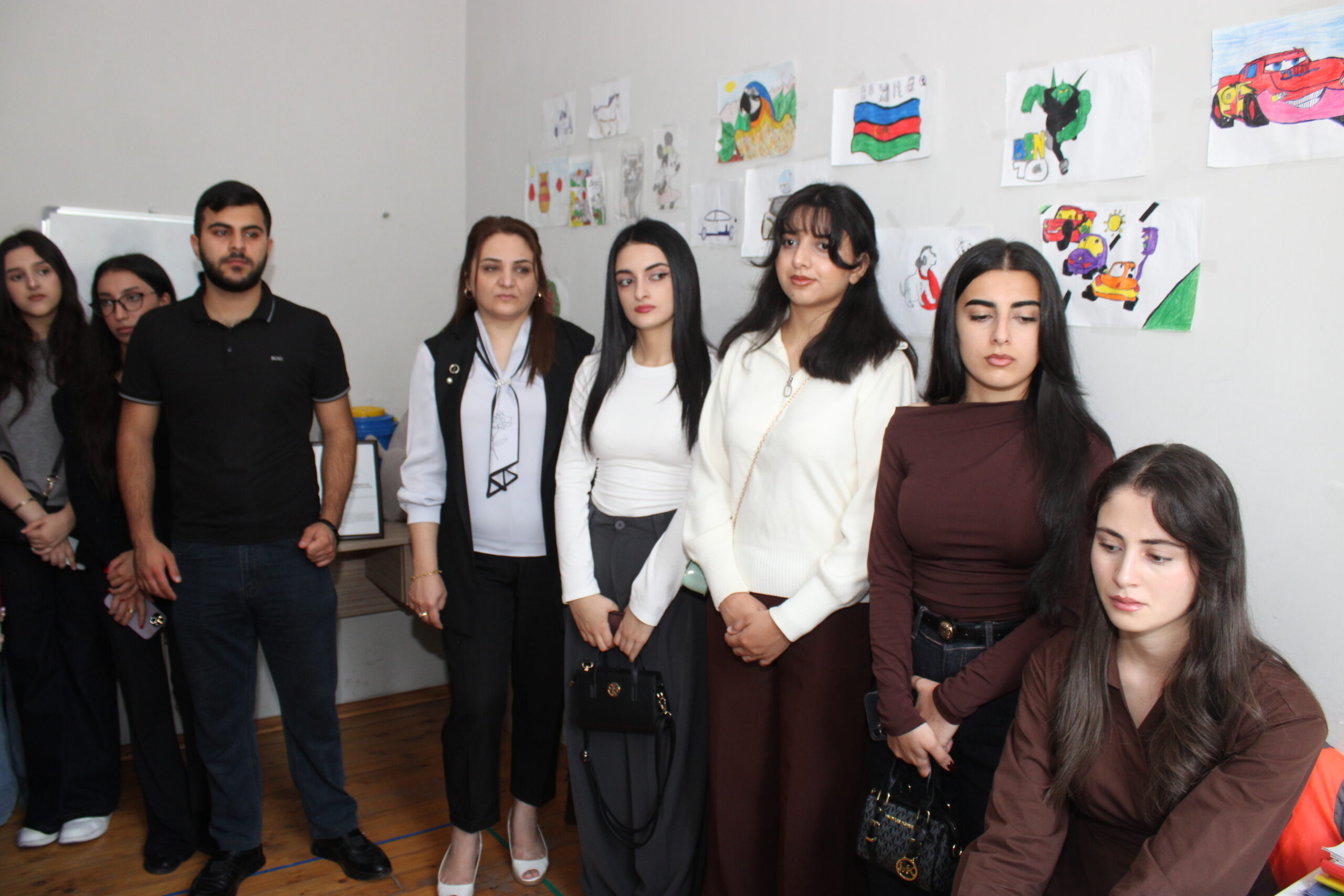

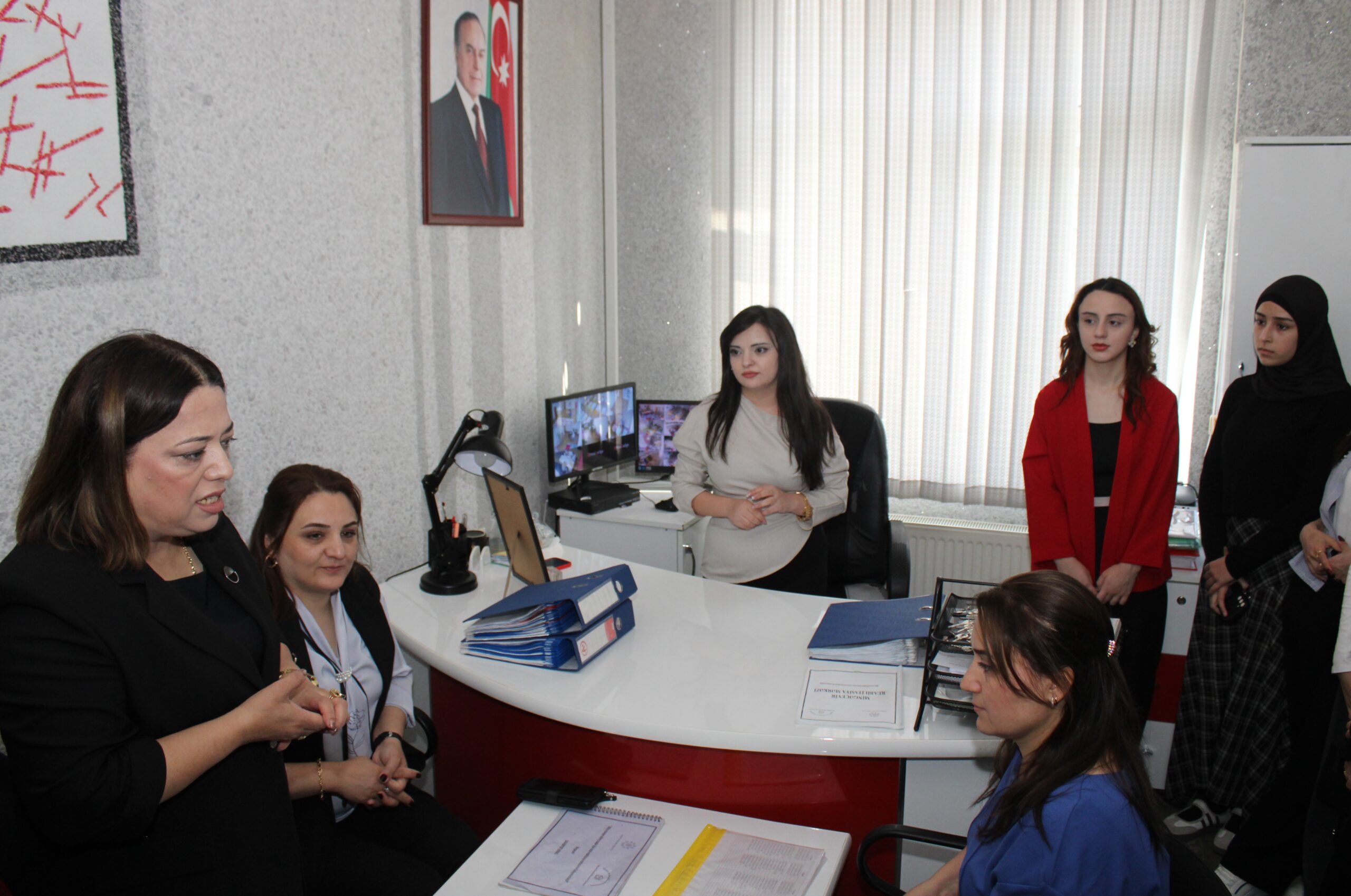
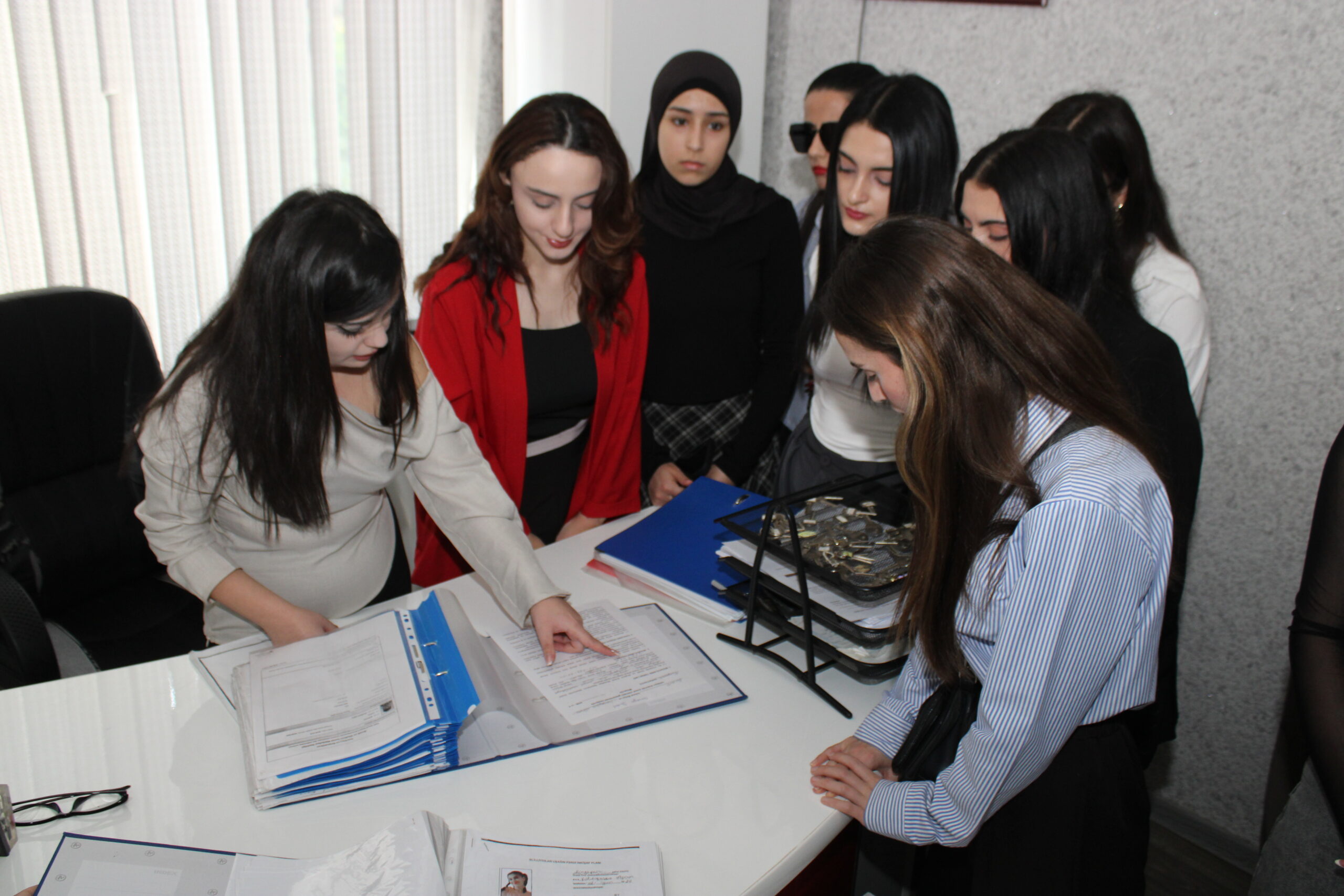
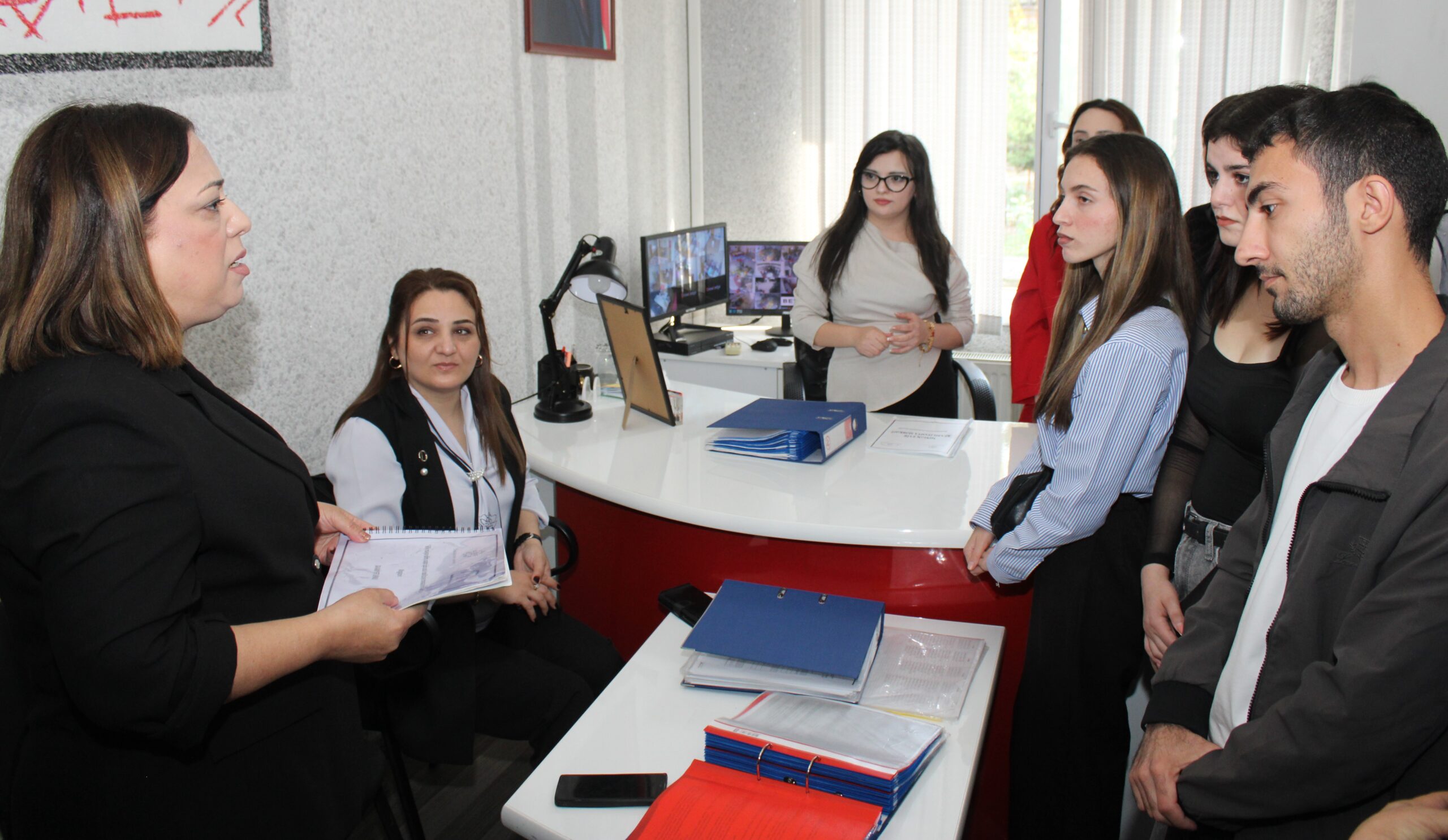
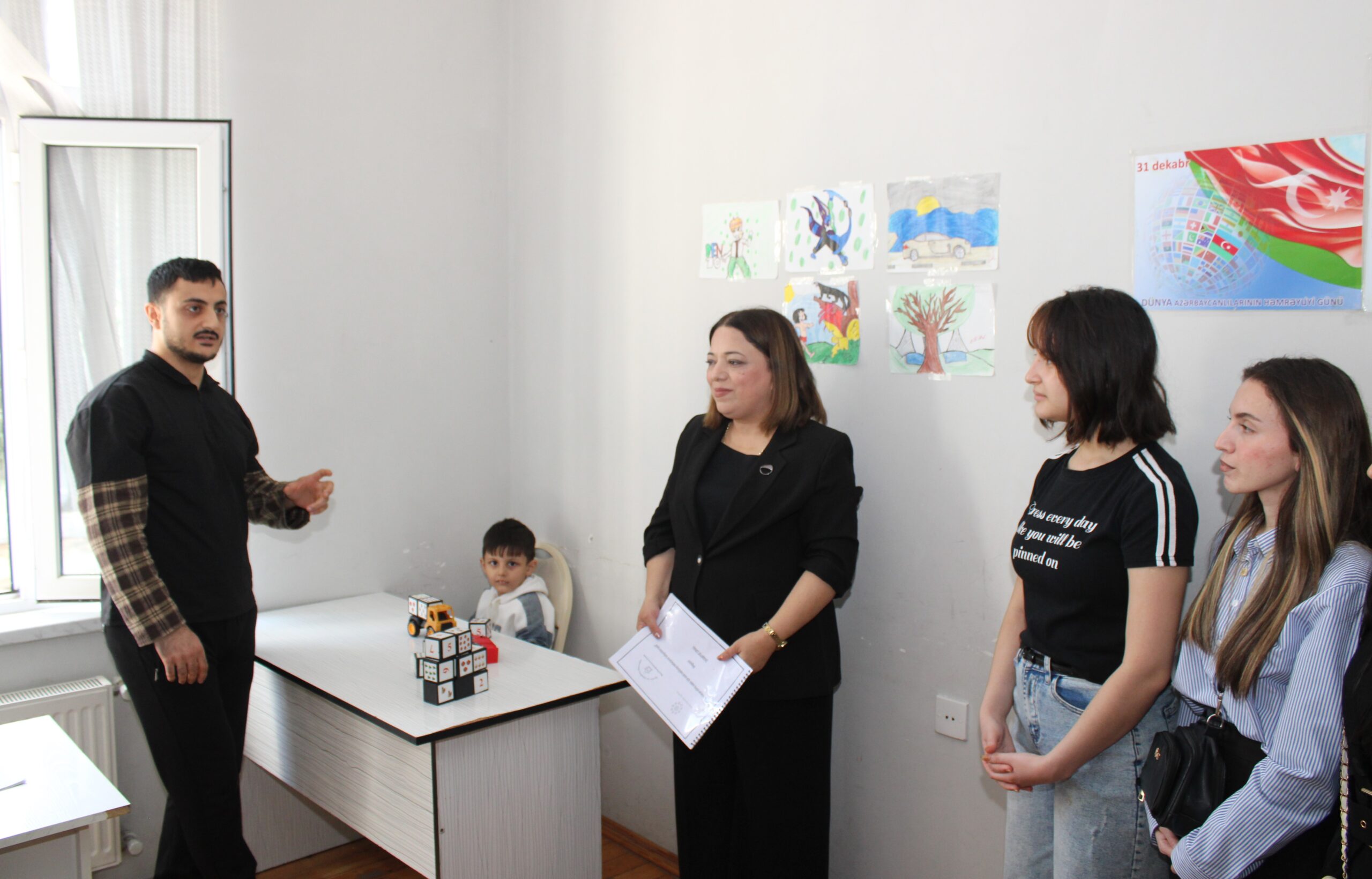

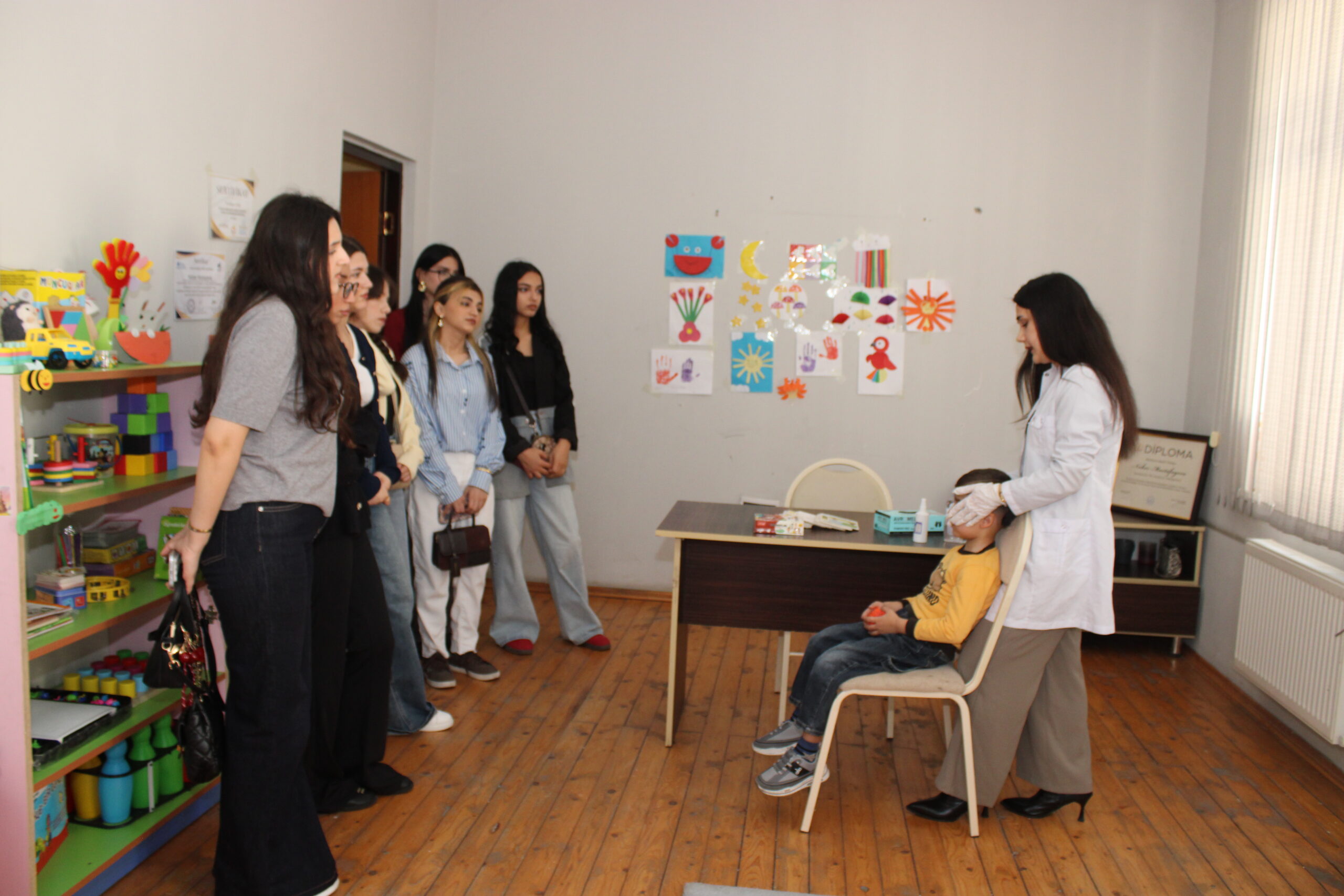
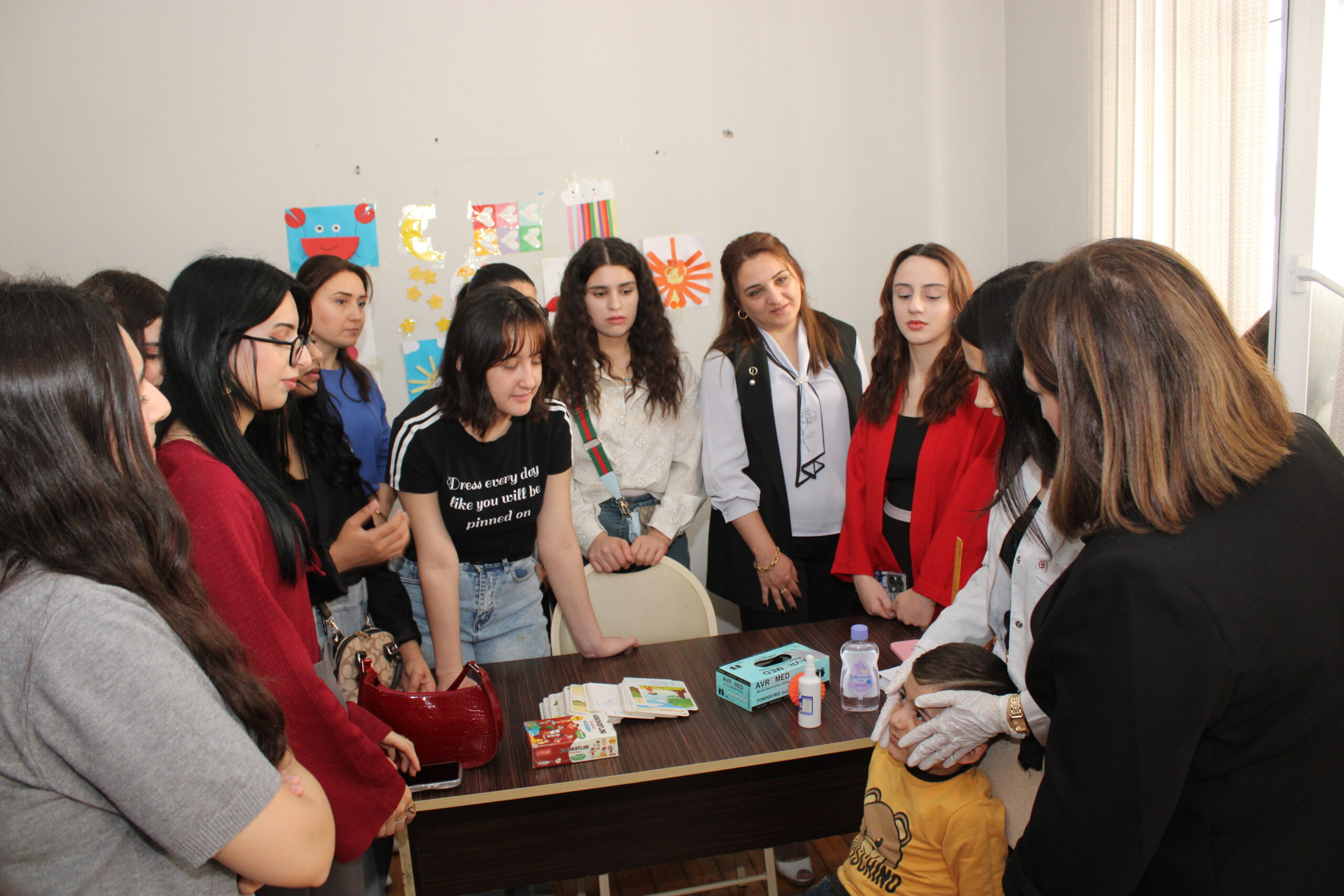

On October 19, 2026, within the framework of the “Year of Urban Planning and Architecture,” Mingachevir State University (MSU) organized an awareness-raising meeting on the topic “Inclusive Society and the Social Rehabilitation of Children: Modern Approaches and Prospects” at the Social Rehabilitation Center for Children with Disabilities in the city of Mingachevir.
The meeting was organized by Könül Jabbarova, Head of the Department of Pedagogy and Psychology at MSU, Doctor of Philosophy in Pedagogy and Associate Professor, and Gülnar Mammadova, a lecturer at the department. University students participated in the meeting.
The main objective of the meeting was to expand students’ knowledge of building an inclusive society, the social rehabilitation of children with disabilities, and their integration into society, to strengthen their theoretical preparation through practical experience, and to support the development of the skills necessary for their future professional activities. In addition, the importance of being sensitive to children’s individual needs, protecting their rights, and ensuring equal opportunities was emphasized.
As part of the program, Aynur Zulfugarova, Doctor of Philosophy in Pedagogy, provided detailed information about the Center’s activities, its main responsibilities, and the work carried out in the field of social rehabilitation of children with disabilities. She emphasized the importance of taking children’s individual characteristics into account during the rehabilitation process, developing their social skills, and supporting their active participation in community life.
Gövhər Hajiyeva, a social worker at the Center, spoke about the main areas of a social worker’s activities, their role in helping children with disabilities adapt to the social environment, and ways to support their integration into society. During her presentation, she highlighted the importance of the accessibility of social services, identifying children’s individual needs, and applying professional approaches aimed at improving their social well-being.
Psychologist Mirzəxan Ibadov addressed issues related to supporting children’s emotional and psychological development, providing psychological assistance tailored to their individual characteristics, and organizing psychological correction work. He noted that psychological support plays an important role in increasing children’s self-confidence, developing their communication skills, and fostering their social relationships during the rehabilitation process.
Speech therapist Nübar Mustafayeva provided information about activities aimed at developing speech, language, and communication skills, the organization of speech therapy support, and the work carried out to expand children’s communication abilities. She emphasized the importance of applying methods tailored to children’s individual developmental characteristics and conducting regular sessions.
At the end of the meeting, interactive discussions and an exchange of experience took place between the students and specialists, and the participants’ questions were answered. During the discussions, particular emphasis was placed on the importance of cooperation among professionals from different fields in the social rehabilitation process, an individualized approach to children, adherence to professional ethics, and respect for human rights.
The students had the opportunity to become familiar with the daily activities of specialists working in the field of social rehabilitation, learn about the practical application of their theoretical knowledge, and gain a more comprehensive understanding of their future professional pathways.
Along with strengthening students’ professional preparation, the meeting also contributed to developing their sense of social responsibility, empathy, and approaches based on inclusive values. Attention to issues such as protecting the rights of children with disabilities, promoting equal access to social services, and supporting their active participation in public life further increased the social significance of the event.
Such awareness-raising initiatives are a clear example of Mingachevir State University’s student-oriented educational approach, its emphasis on developing practical skills, and its cooperation with various segments of society. Strengthening ties between the university and social rehabilitation institutions contributes to preparing future professionals in line with labor market requirements, promoting an inclusive social environment based on equal opportunities, and advancing the development of a sustainable and socially responsible society.