
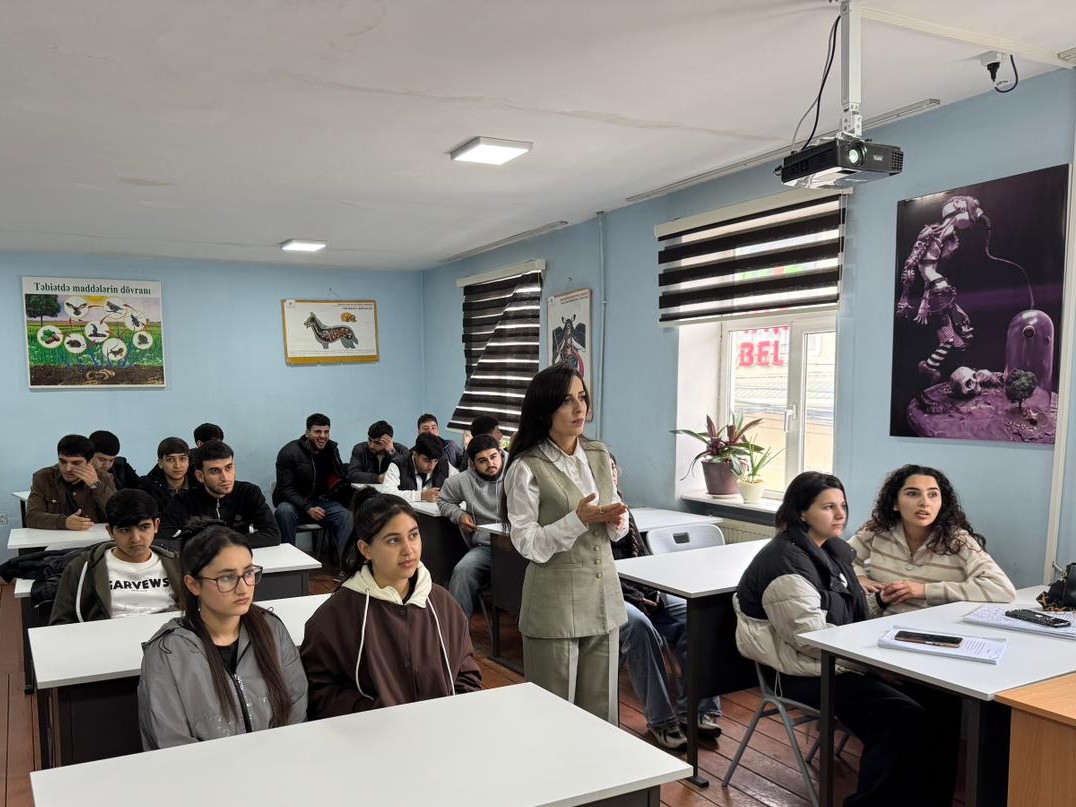
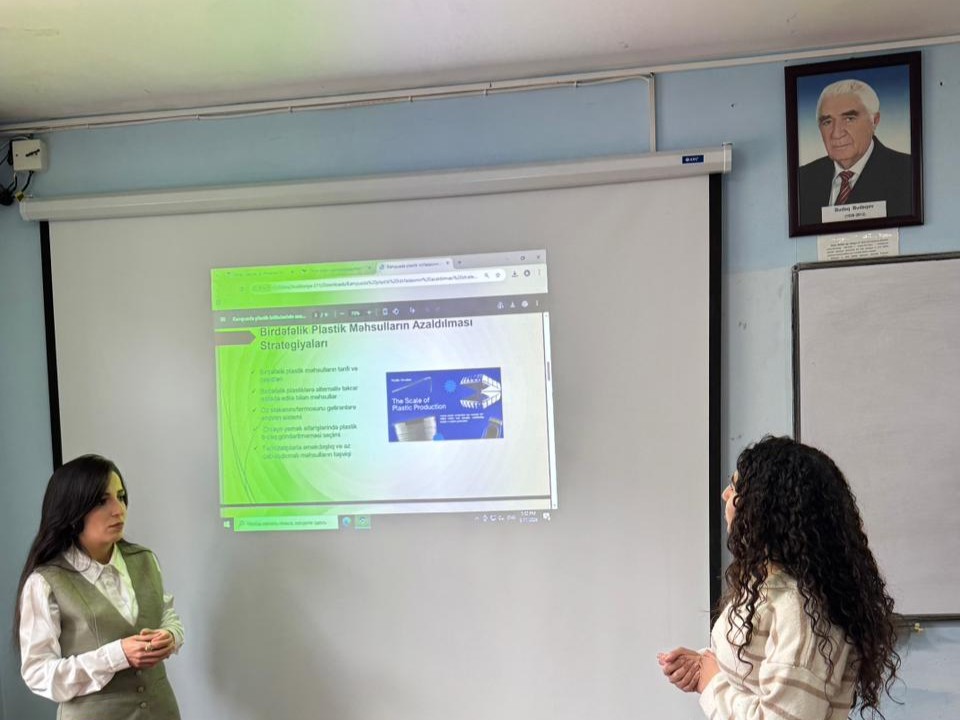
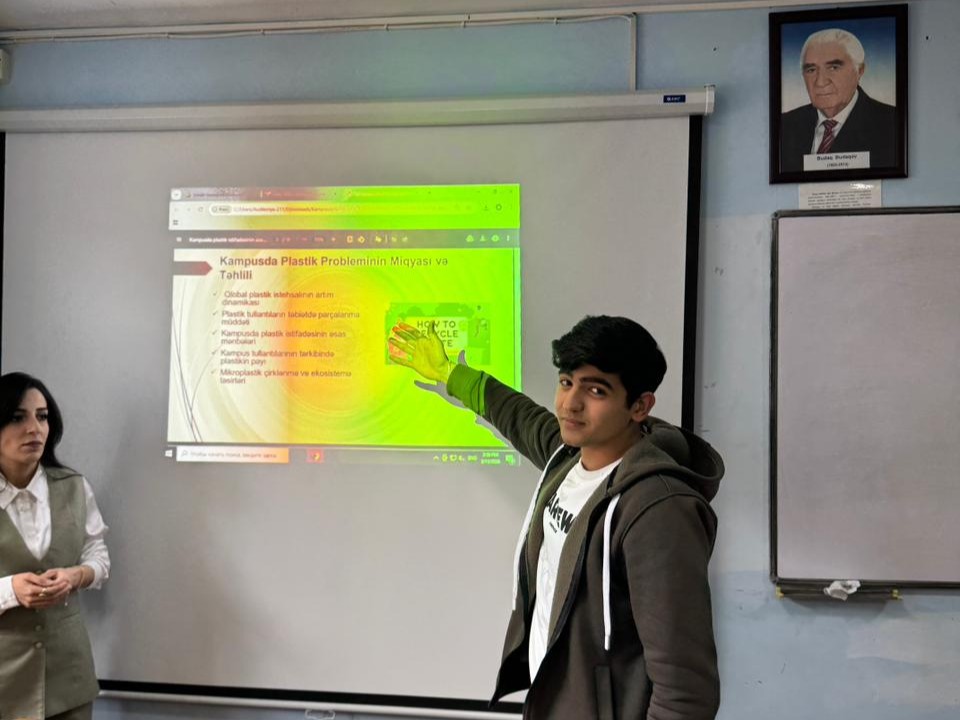
A training session on the topic “Strategy for Reducing Plastic Use on Campus” was organized at Mingachevir State University by Ayshan Salmanova, lecturer of the Department of Physics and Ecology, for Group 24 of the Ecological Engineering specialty. During the training, students actively discussed the topic and exchanged views on practical solutions for reducing plastic use on the university campus.
Within the framework of the training, the growth dynamics of global plastic production, the decomposition period of plastic waste in nature, the main sources of plastic use on campus, and the share of plastic in campus waste composition were analyzed in detail. Information was also provided about microplastic pollution and its impact on ecosystems.
The main focus of the training was on strategies for reducing single-use plastic products, promoting reusable alternatives, and introducing economic incentive mechanisms. It was emphasized that initiatives such as discount systems for those bringing their own cups or thermoses, the option to avoid sending plastic cutlery in online food orders, and cooperation with suppliers to promote products with less packaging are of great importance. Measures such as establishing a network of water dispensers on campus, promoting steel and glass water bottles, and restricting the sale of plastic bottles were discussed.
During the training, detailed information was provided about reducing the use of plastic bags and promoting alternative carrying solutions. Discussions covered Azerbaijan’s 2021 ban on single-use plastic bags with a thickness of 15 microns or less, the introduction of paid plastic bags in campus stores and cafeterias, the promotion of fabric, jute, and paper bags, the “bag bank” system, and the use of biodegradable bags.
A comprehensive presentation was also delivered on reducing plastic packaging and establishing recycling infrastructure. The promotion of bulk purchasing and mass packaging, installation of color-coded collection bins for plastic packaging, strategic placement of recycling bins, and the processes of transferring collected plastic to recycling facilities were explained.
At the end of the training, an interactive discussion was held with participants, and questions were answered. Student participants Kamil Ismayilzada, Nazli Hashimli, and Jeyran Mahmudova shared their impressions regarding the knowledge they gained. Kamil Ismayilzada stated that he found the information about alternatives to single-use plastic products very interesting, Nazli Hashimli supported the idea of establishing a water dispenser network on campus, while Jeyran Mahmudova noted that she gained new knowledge about legislative measures aimed at reducing plastic bag use. It was emphasized that reducing plastic use on campus is a matter of collective responsibility requiring the active participation of every student.