
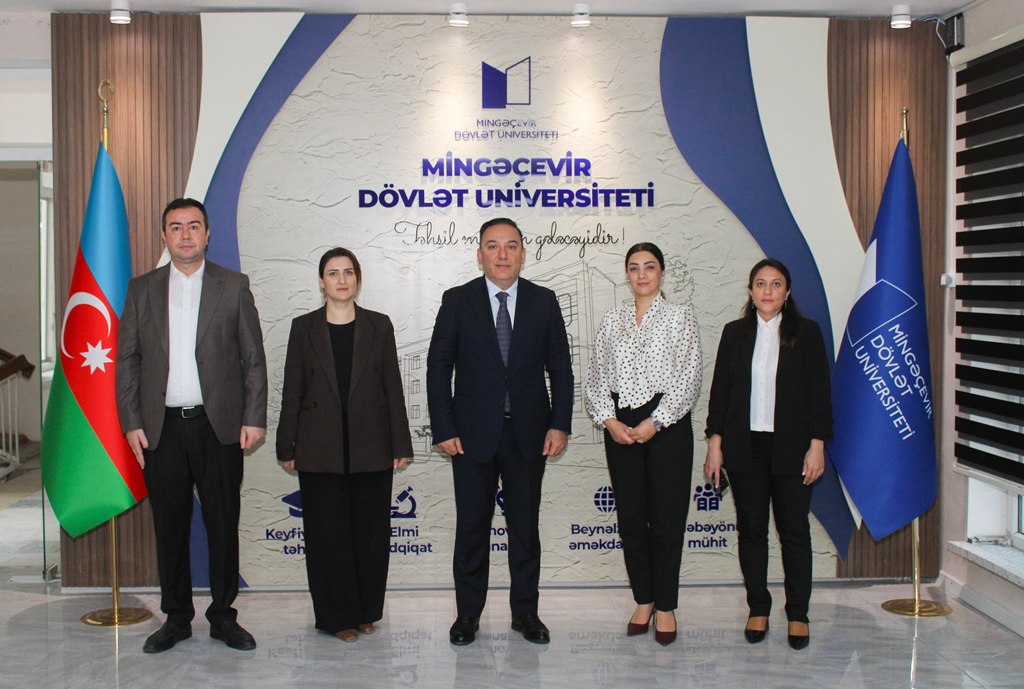
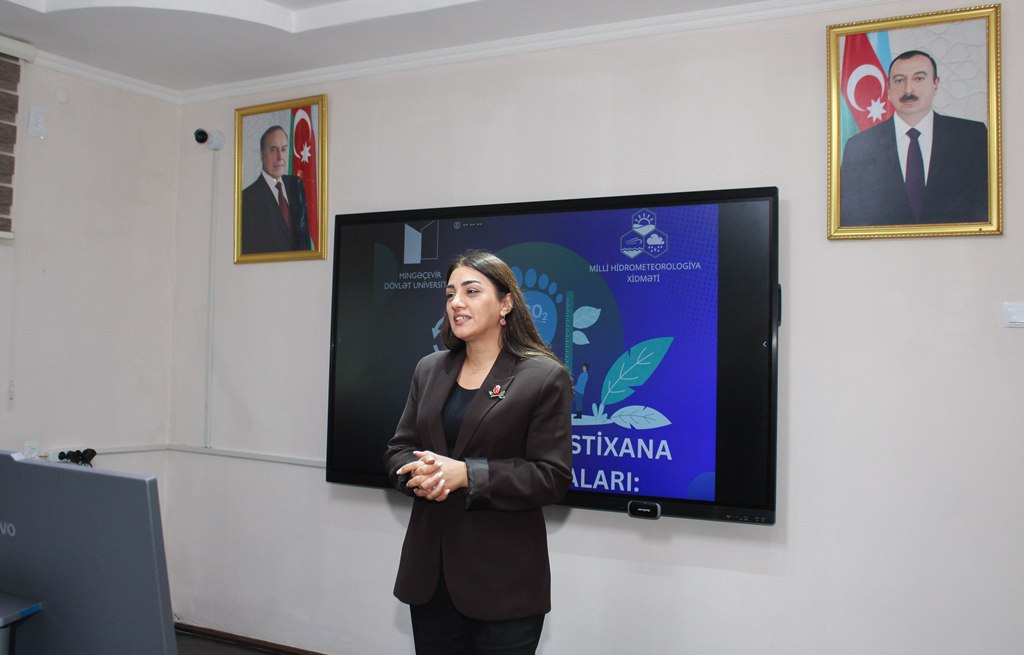
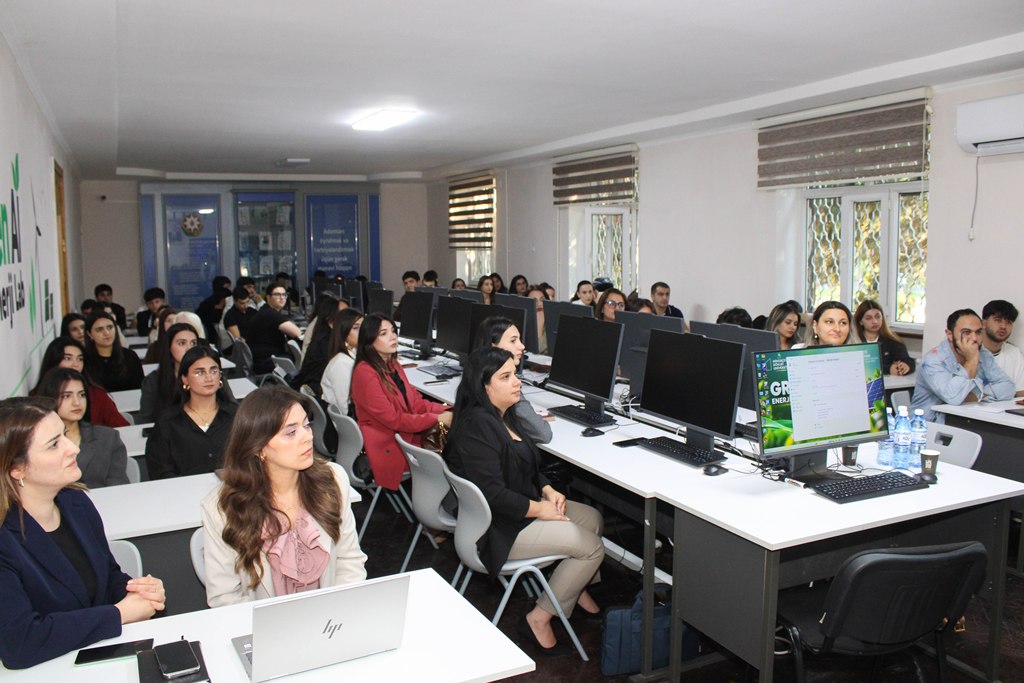
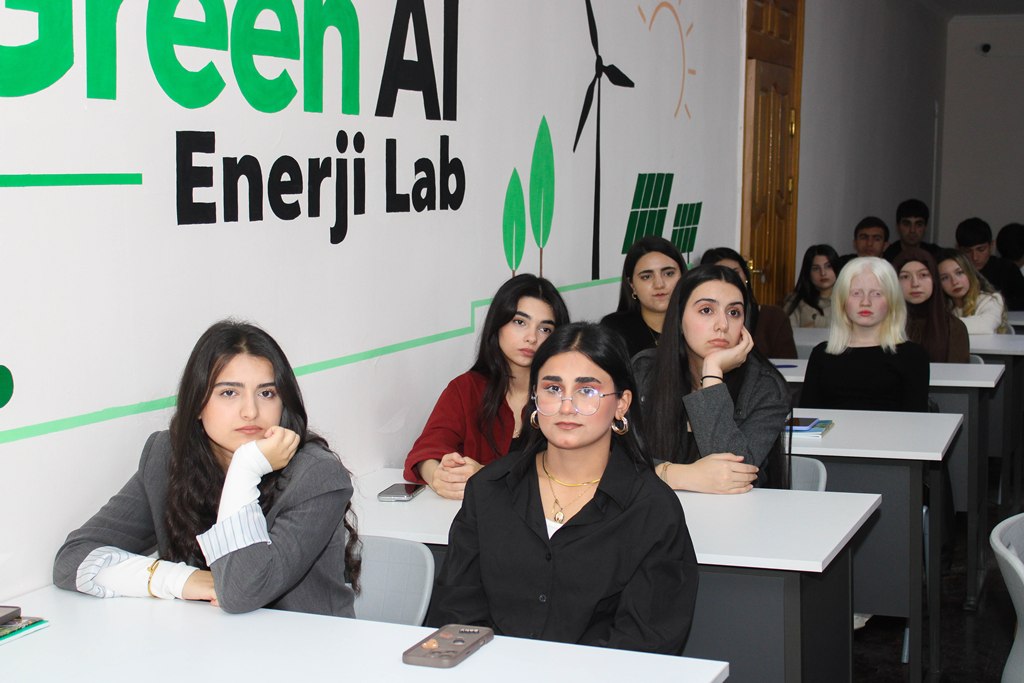
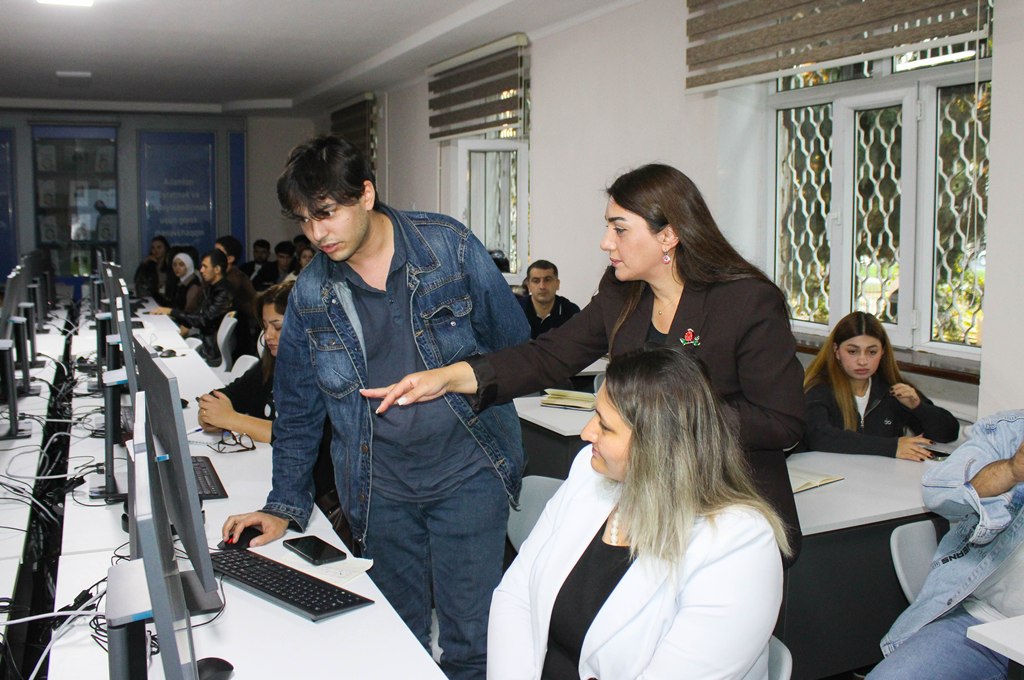
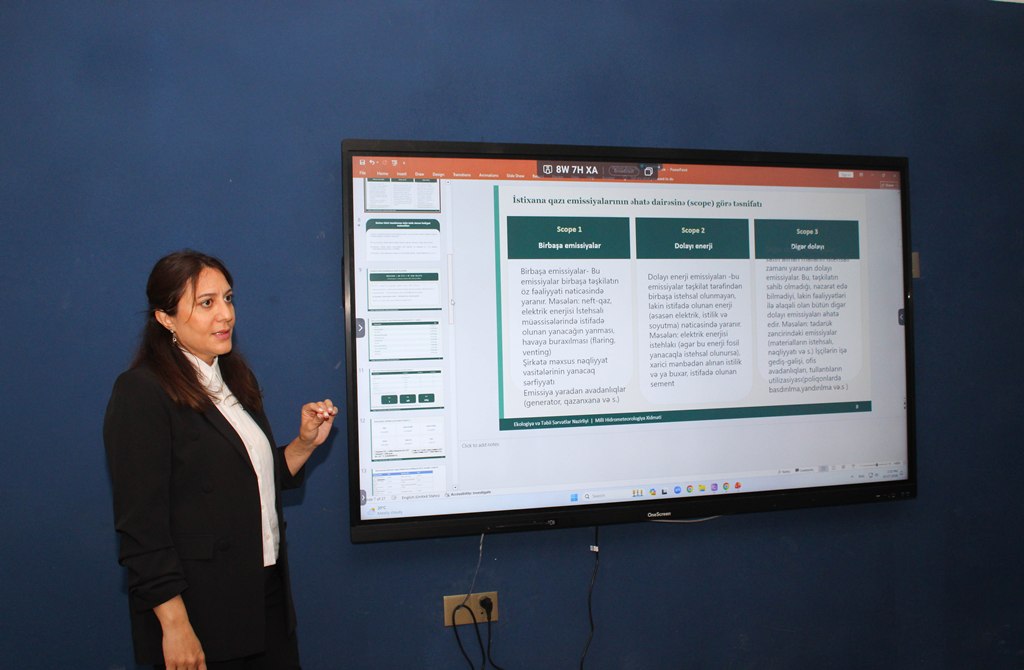
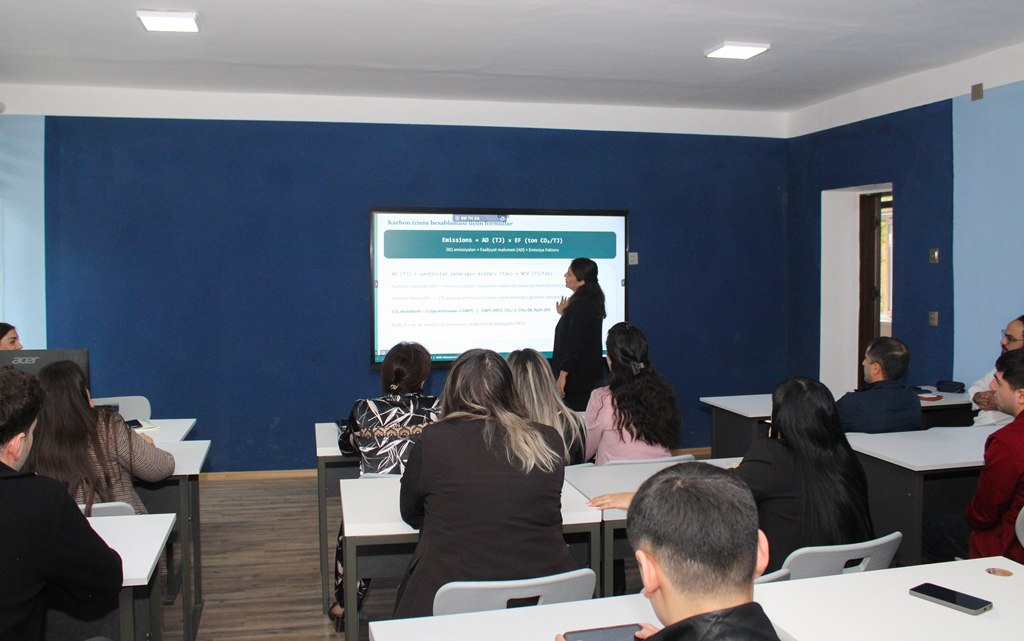
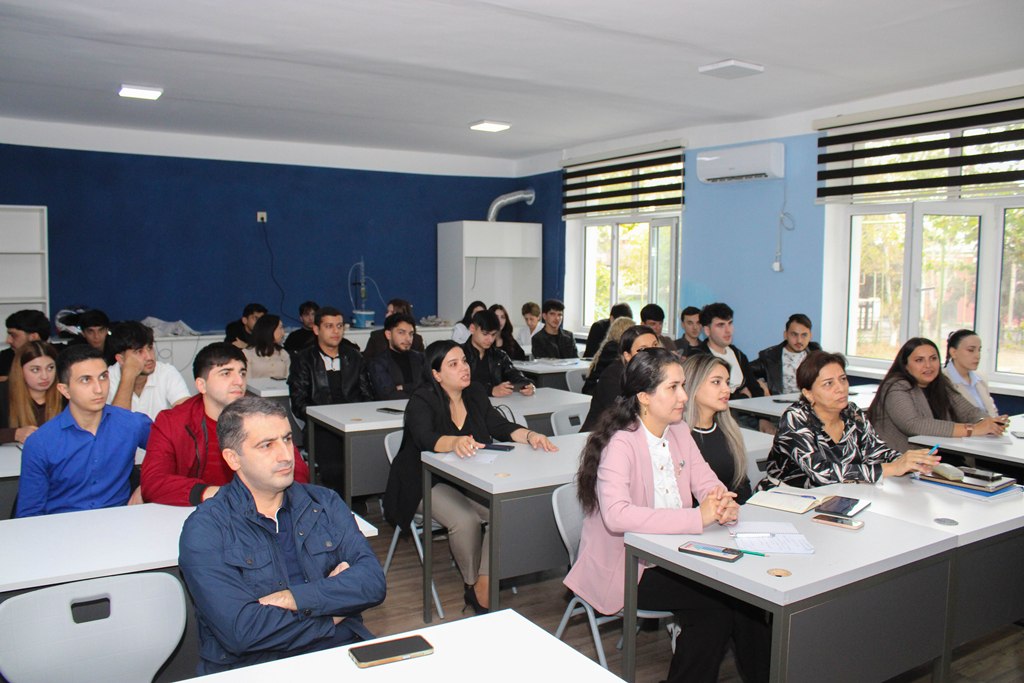
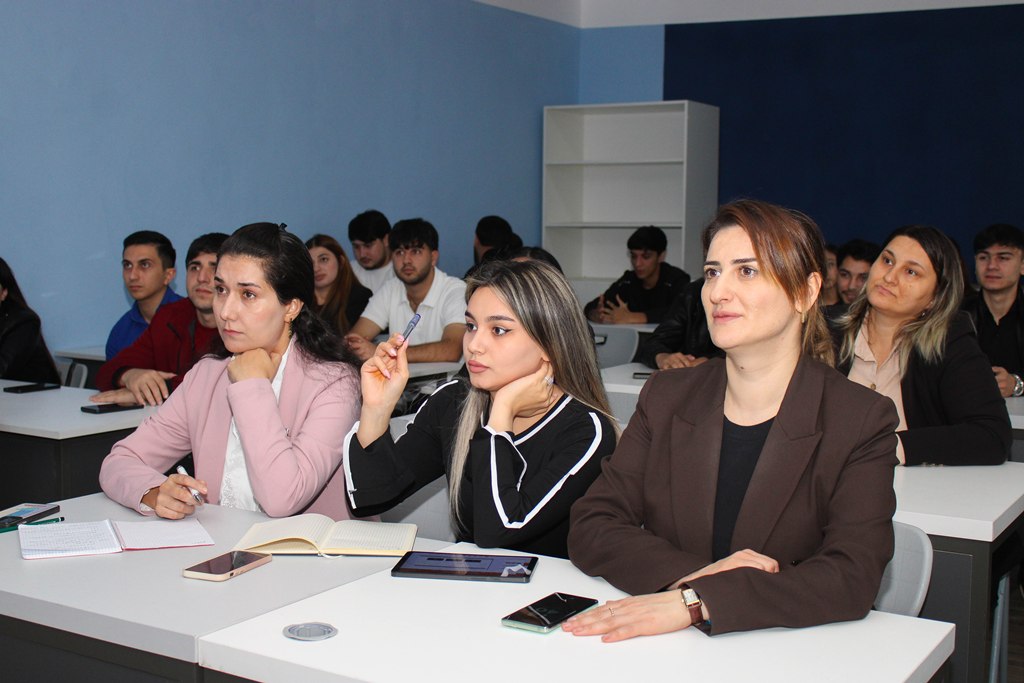
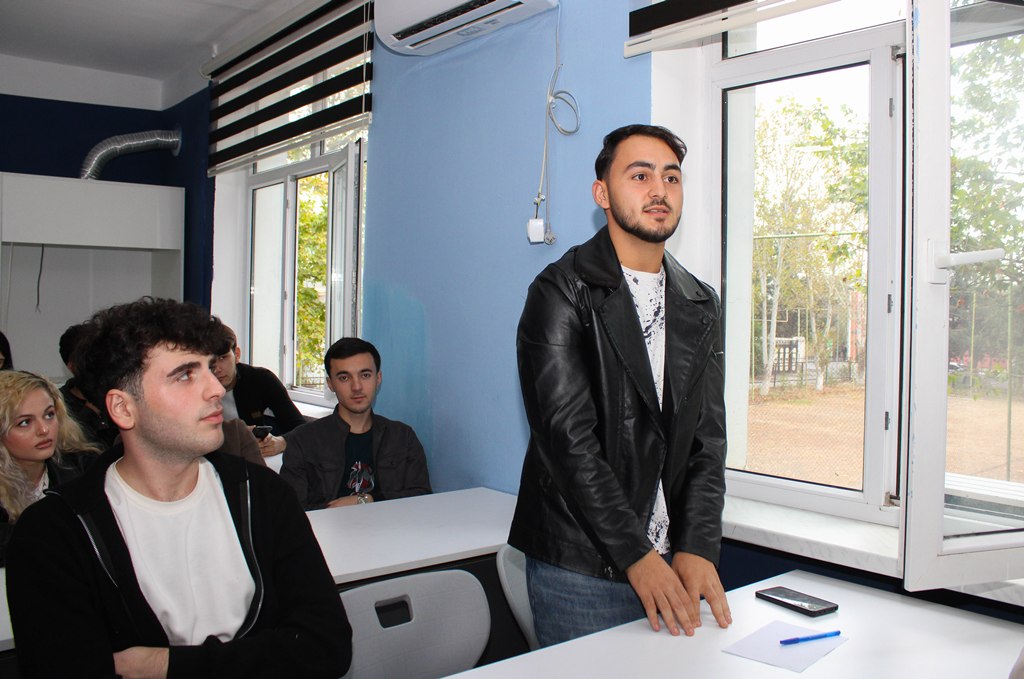
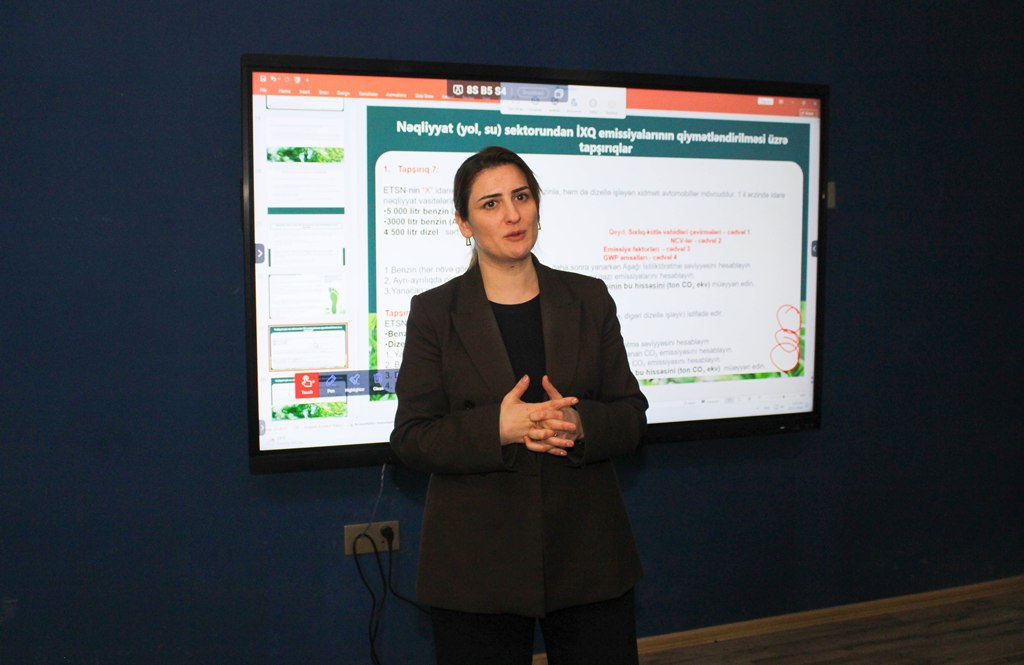
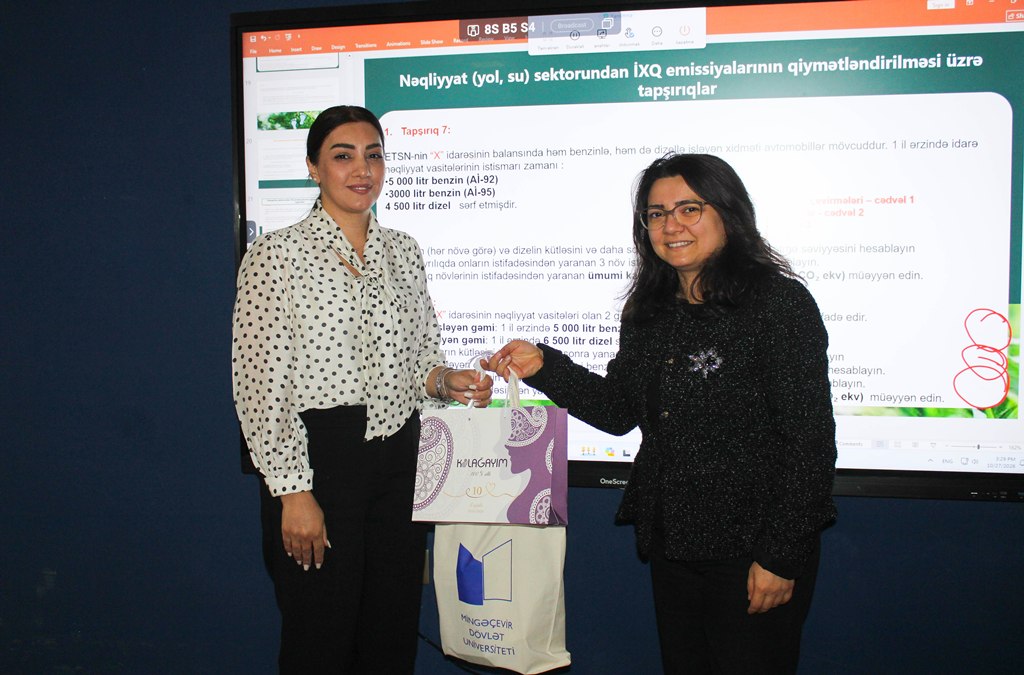
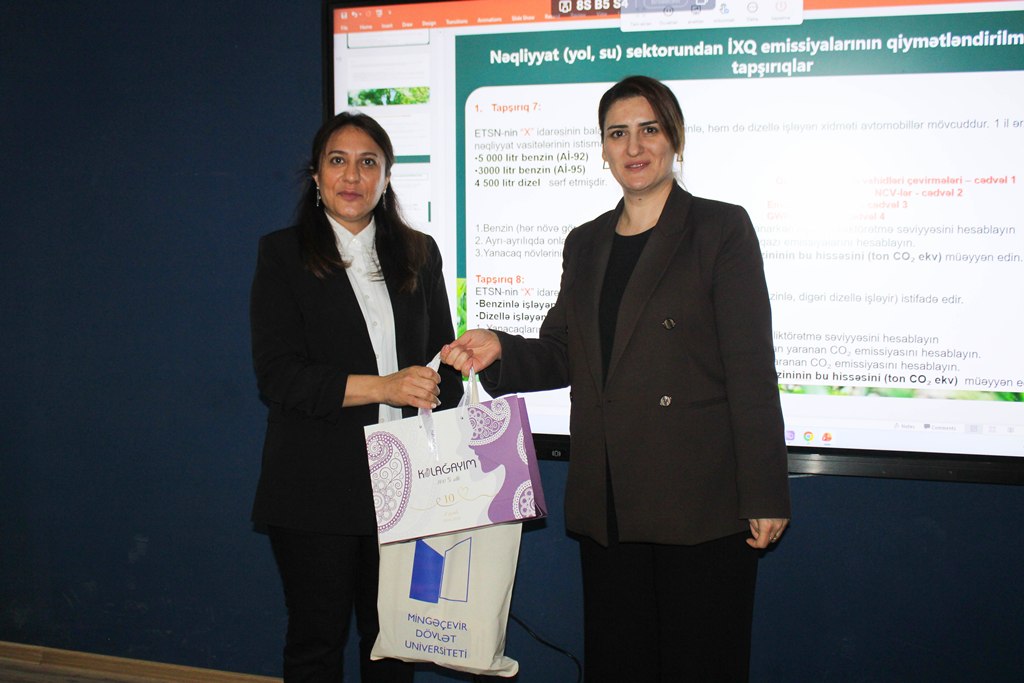
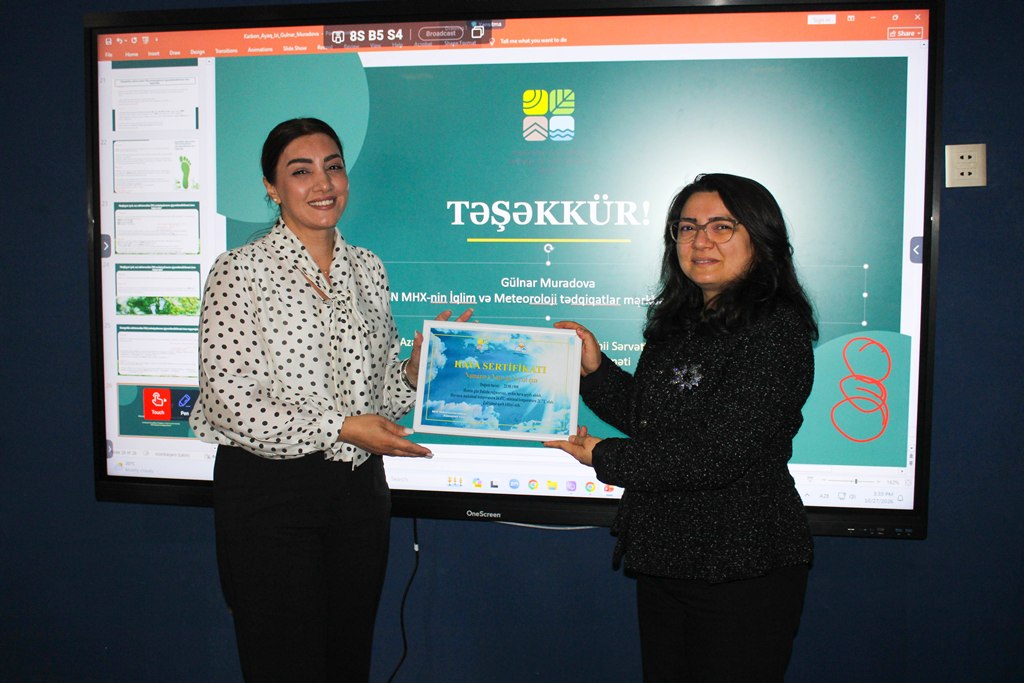
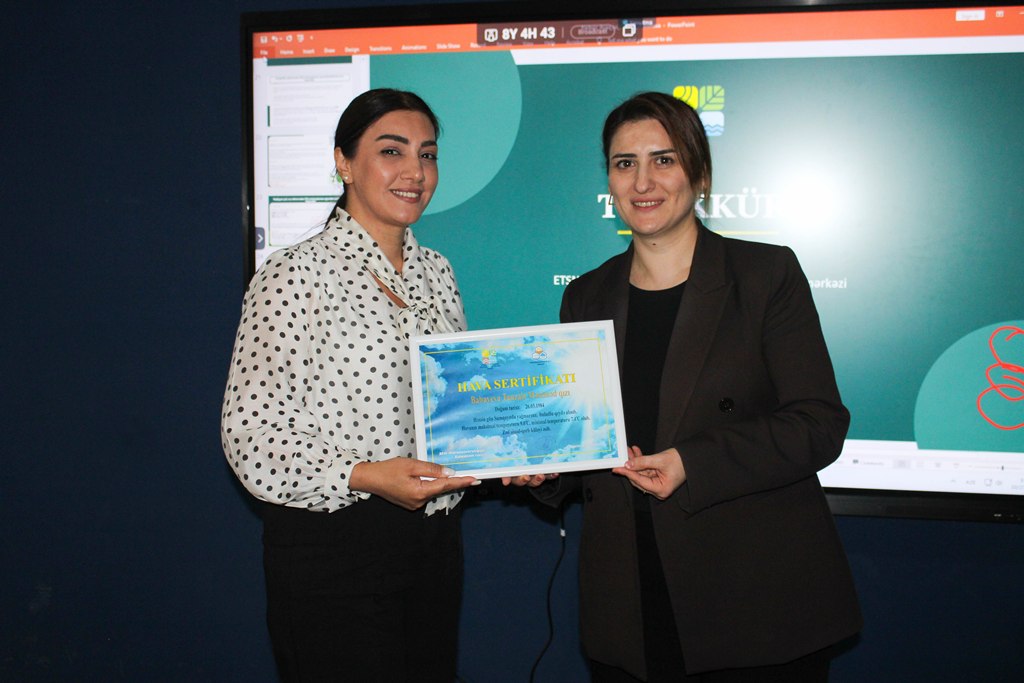
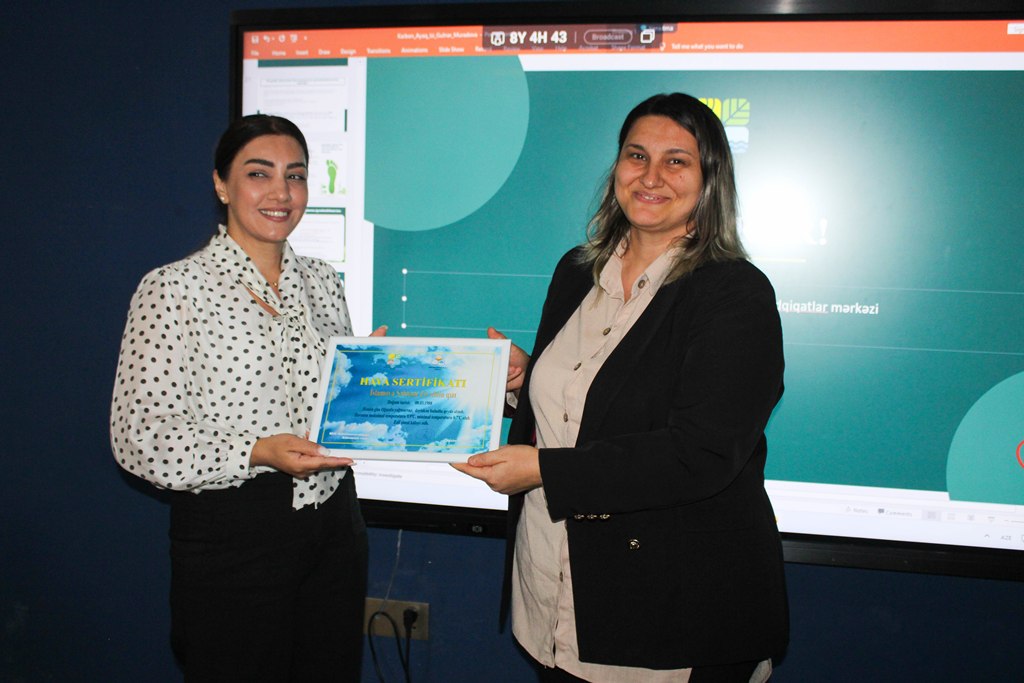
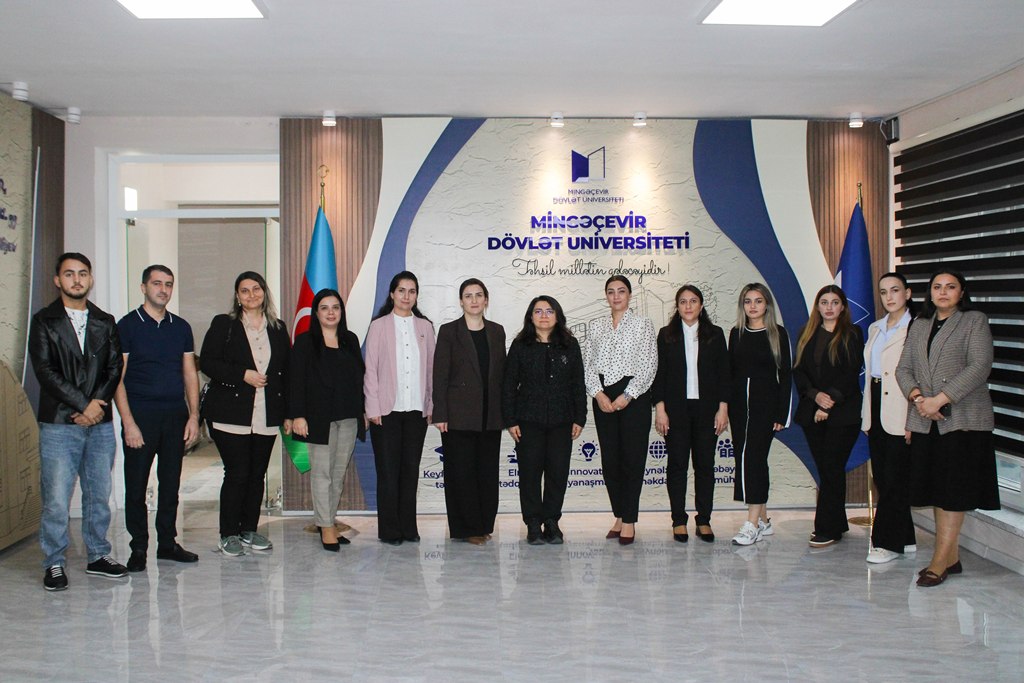
On October 26–27, 2026, Mingachevir State University (MSU), through its Research Institute for Sustainable Energy and Engineering Systems, organized a training session entitled “Carbon Footprint and Greenhouse Gas Emissions: Calculation, Inventory, and Practical Application,” with the participation of representatives from the National Hydrometeorological Service. The primary objective of the training was to enhance scientific knowledge of climate change, develop practical skills in assessing carbon emissions, and promote environmentally responsible approaches.
Organized as part of the University’s ongoing initiatives in sustainable development, green transformation, and environmental management, the training focused on carbon footprint assessment, the major sources of greenhouse gas emissions, emission calculation methodologies, and inventory mechanisms.
The training sessions were delivered by Gulnara Abbasova, Deputy Head of the National Hydrometeorological Service, and Gulnar Muradova, Chief Specialist at the Center for Climate Change and Meteorological Research. The experts provided theoretical insights and practical guidance on the environmental and socioeconomic impacts of climate change, carbon emissions monitoring, the calculation of emission indicators, and the systematic collection and management of relevant data.
Throughout the two-day training, participants explored practical approaches to calculating greenhouse gas emissions, opportunities for reducing carbon footprints, efficient resource utilization, and the management of environmental performance indicators. They also became familiar with the key stages of carbon emissions assessment and inventory processes.
The training represented an important step toward integrating environmental sustainability principles into MSU’s academic and institutional activities, advancing green campus initiatives, and strengthening the University’s performance in international sustainability assessments and rankings. Such educational initiatives contribute to fostering environmental awareness within the University community, connecting scientific knowledge with practical skills, and promoting a culture of responsible resource management.