
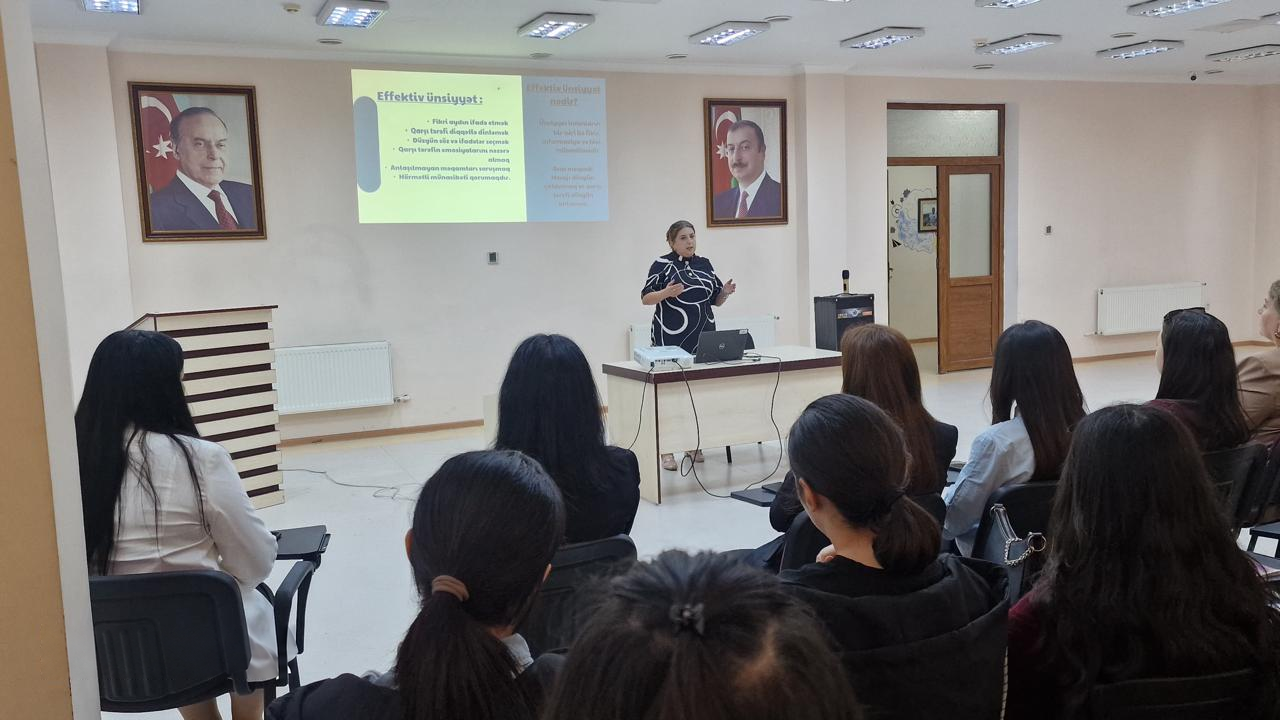
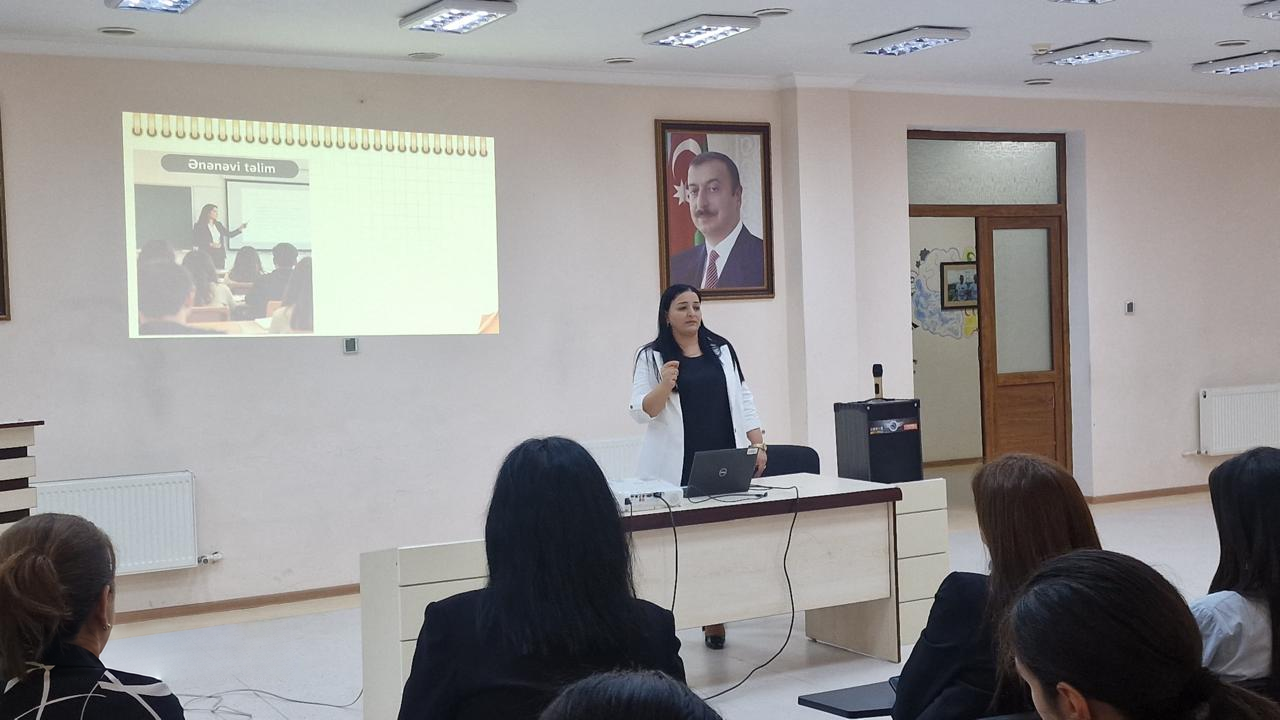
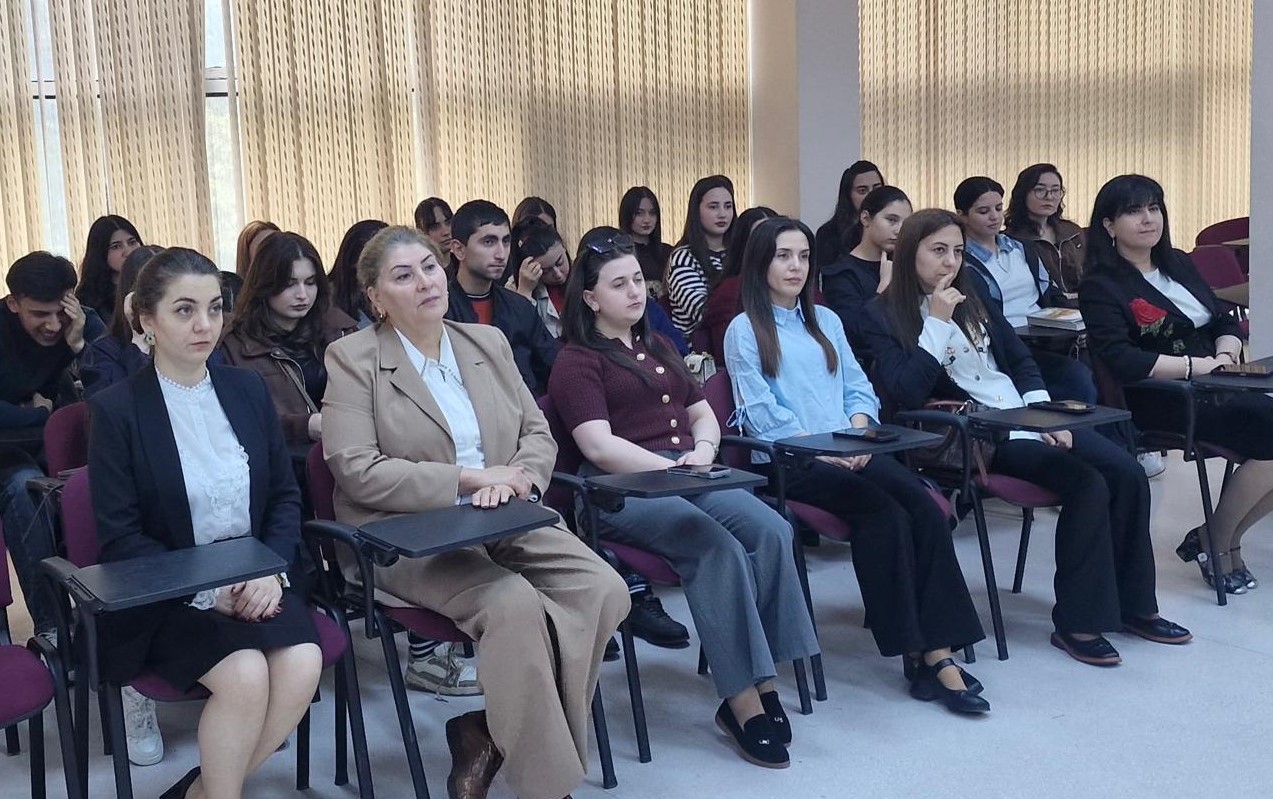
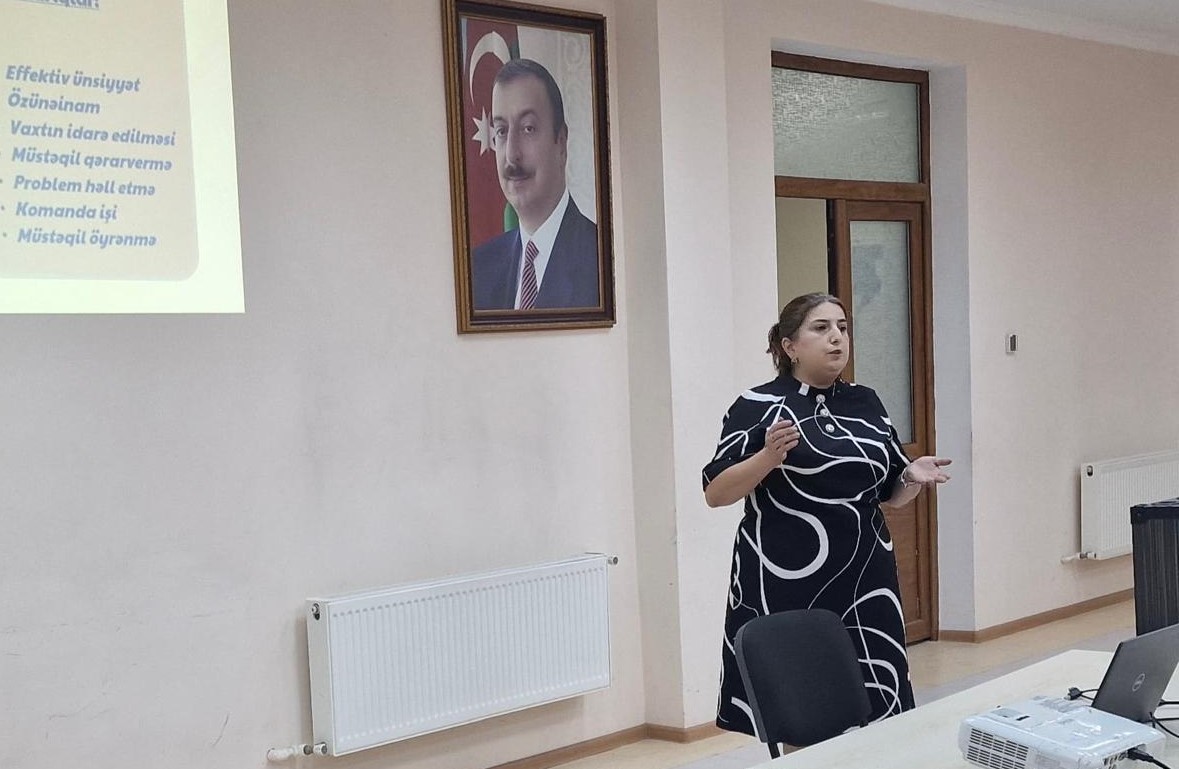
On 27 October 2026, the first module of a two-module training programme was held at Mingachevir Youth House, organised by the Faculty of Pedagogy and the Department of Pedagogy and Psychology of Mingachevir State University (MDU). The training sessions were attended by the university’s young staff members, academic advisers and senior students.
The programme aimed to support participants’ professional and personal development, expand their knowledge of modern teaching approaches, and improve their effective communication, collaboration and independent working skills.
As part of the first module, Zulfiyya Tanriverdiyeva, a lecturer in the Department of Pedagogy and Psychology, delivered a training session on “Student-centred teaching approaches”. The session provided information on encouraging students’ active participation in the teaching process, taking their individual needs and interests into account, developing independent learning skills, and the importance of teacher–student collaboration. The role of student-centred approaches in improving teaching quality and creating an inclusive and supportive learning environment that enables every student to realise their potential was emphasised.
Gunel Najafova, a senior lecturer in the department, delivered a training session on “Effective communication and self-confidence, independent student life skills”. She discussed the importance of expressing ideas clearly and accurately, ensuring mutual understanding, strengthening self-confidence and developing independent decision-making skills. Attention was also paid to overcoming challenges encountered in everyday student life and developing responsible behaviour and independent working habits.
During the training, the impact of these skills on students’ academic performance, adaptation to the university environment and preparation for their future professional lives was explained. The importance of effective communication and relationships based on mutual respect in fostering a healthy social environment and a culture of collaboration was highlighted.
The two-module training programme supports the expansion of opportunities for mutual learning and the exchange of experience within the university, as well as the continuous development of staff and students. Activities in this area contribute to promoting quality and inclusive education, creating equal learning opportunities and strengthening social responsibility.