
Mingachevir State University (MSU) systematically monitors and manages food waste as part of its institutional commitment to sustainable development, efficient resource utilisation, and reducing the environmental impact of campus operations.
Within the University’s waste management framework, the amount of food waste generated by on-campus food services is regularly monitored, recorded, and analysed. Annual monitoring data are used to assess food waste generation, compare reporting periods, identify opportunities for waste reduction, and evaluate the effectiveness of waste management measures.
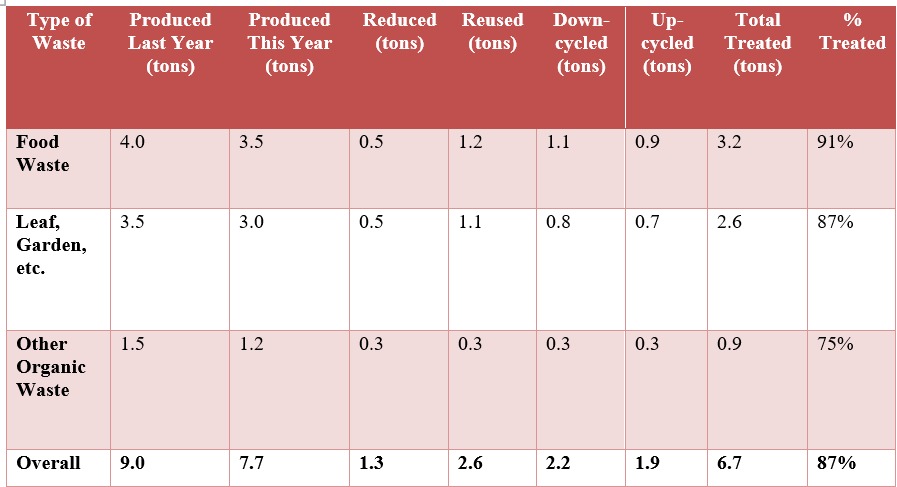
According to annual monitoring records, the amount of food waste generated at the University decreased from 4.0 metric tonnes in the previous reporting period to 3.5 metric tonnes in the current reporting period, representing a reduction of 0.5 tonnes, or 12.5%.
The monitoring results also provide a breakdown of food waste management activities. Of the 3.5 tonnes of food waste recorded during the current reporting period:
- 1.2 tonnes were recorded as reused;
- 1.1 tonnes were recorded as downcycled;
- 0.9 tonnes were recorded as upcycled.
In total, 3.2 tonnes of food waste, representing approximately 91.4% of the total amount generated, were recorded as treated through waste management and recovery activities.
The University’s monitoring system also covers other categories of organic waste, including leaves, garden waste, and other organic materials. According to the reported figures, total organic waste generation decreased from 9.0 tonnes in the previous reporting period to 7.7 tonnes in the current reporting period, of which 6.7 tonnes were recorded as treated.
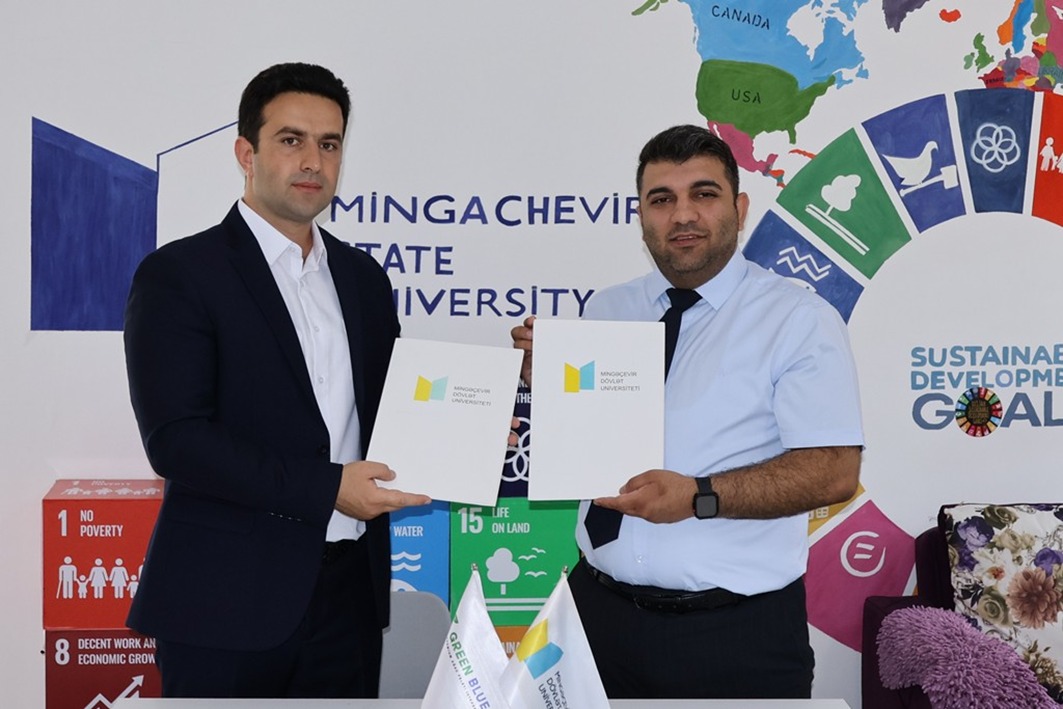
To strengthen its waste management practices, MSU cooperates with Green Blue LLC in waste collection, segregation, recycling, and disposal activities. The University and the company have signed a service agreement covering these activities. Institutional measures have also been introduced to support the implementation of waste segregation and management procedures across university buildings.
The systematic measurement and annual analysis of food waste enable the University to monitor waste generation trends, assess reduction outcomes, and make informed decisions aimed at improving resource efficiency and environmental performance.
These initiatives contribute to the United Nations Sustainable Development Goals, particularly SDG 2 – Zero Hunger and SDG 12 – Responsible Consumption and Production, while demonstrating Mingachevir State University’s institutional commitment to environmental responsibility and sustainable campus management.