


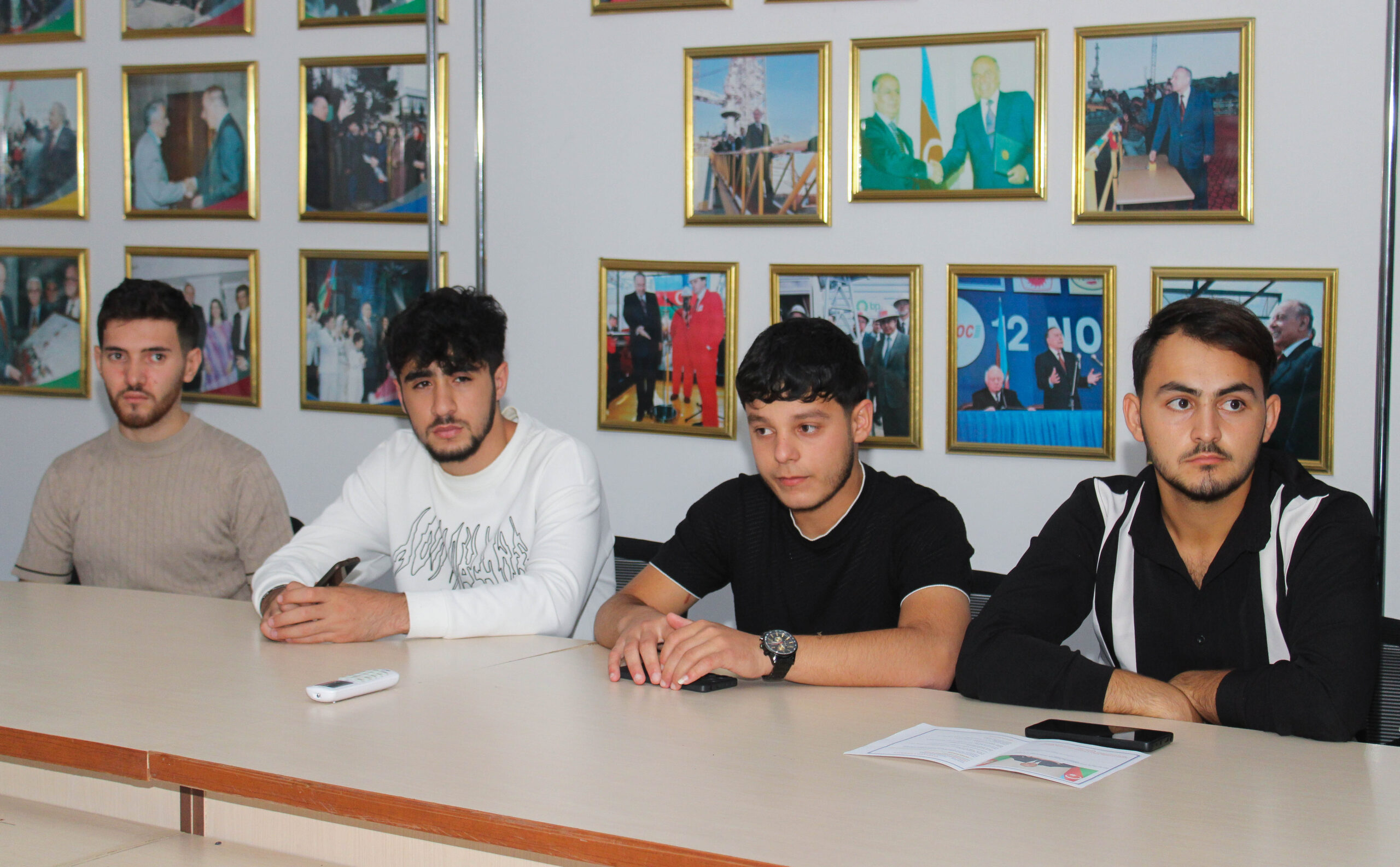
On 15 October 2026, Mingachevir State University (MSU) held an awareness-raising seminar titled “From Biodiversity to the Table: Healthy Food, Healthy Ecosystems, a Sustainable Future” as part of the “Year of Urban Planning and Architecture” and dedicated to 16 October – World Food Day.
The seminar aimed to raise awareness of biodiversity conservation, promote healthy and safe nutrition, protect natural ecosystems and highlight the environmental impact of food consumption. It also sought to encourage environmental responsibility and sustainable lifestyle habits among young people.
The seminar was moderated by Tünzalə Babayeva, Head of MSU’s Department of Natural Sciences, and began with the screening of a video highlighting the significance of World Food Day.
During the presentations, Şəfəq Məmmədova, Doctor of Philosophy in Biology and Acting Head of the Mingachevir Regional Experimental Station, spoke on “Biodiversity Conservation: Protecting Aquatic Ecosystems, Feeding Fish with Environmentally Friendly Feed, and Measures to Protect Birds.” Her presentation highlighted the importance of preserving the ecological balance of aquatic ecosystems, protecting living species and using natural resources efficiently.
Aysel Bayramova, a lecturer at MSU’s Department of Natural Sciences, delivered a presentation titled “Genetically Modified Foods (GMOs) and Biodiversity.” She discussed the characteristics of genetically modified food products, their relationship with biodiversity and current scientific approaches in this field.
Səma Mustafayeva, a master’s student in group EMM-25, presented on “Assessing Biodiversity in the Natural Ecosystems of the Kura–Araz Lowland.” Her presentation examined the region’s natural ecosystems, biodiversity assessment and the importance of maintaining ecological balance.
Fatimə Qurbanova, a student in MSU’s E24 group, spoke on “Food Packaging: Plastic Waste and Ecosystems.” Her presentation addressed the environmental impact of plastic packaging, ways to reduce waste, recycling opportunities and the importance of switching to more environmentally friendly alternatives.
The importance of raising public awareness of environmental issues to protect biological diversity, as well as strengthening the knowledge and skills of professionals working in this field, was also noted. Sharing scientific knowledge about the protection of ecosystems and species with the wider public, holding awareness-raising activities on a regular basis and familiarising specialists with modern approaches can help make efforts in this area more effective.
The seminar concluded with discussions and an exchange of views on the topics. Participants considered the role of scientific approaches, public awareness and individual responsibility in addressing environmental challenges.
The seminar contributed to developing environmental awareness at the University, engaging students in research and expanding awareness-raising activities related to environmental protection. The initiative also drew attention to promoting healthy food systems, protecting aquatic and terrestrial ecosystems, encouraging responsible consumption and using natural resources efficiently.