
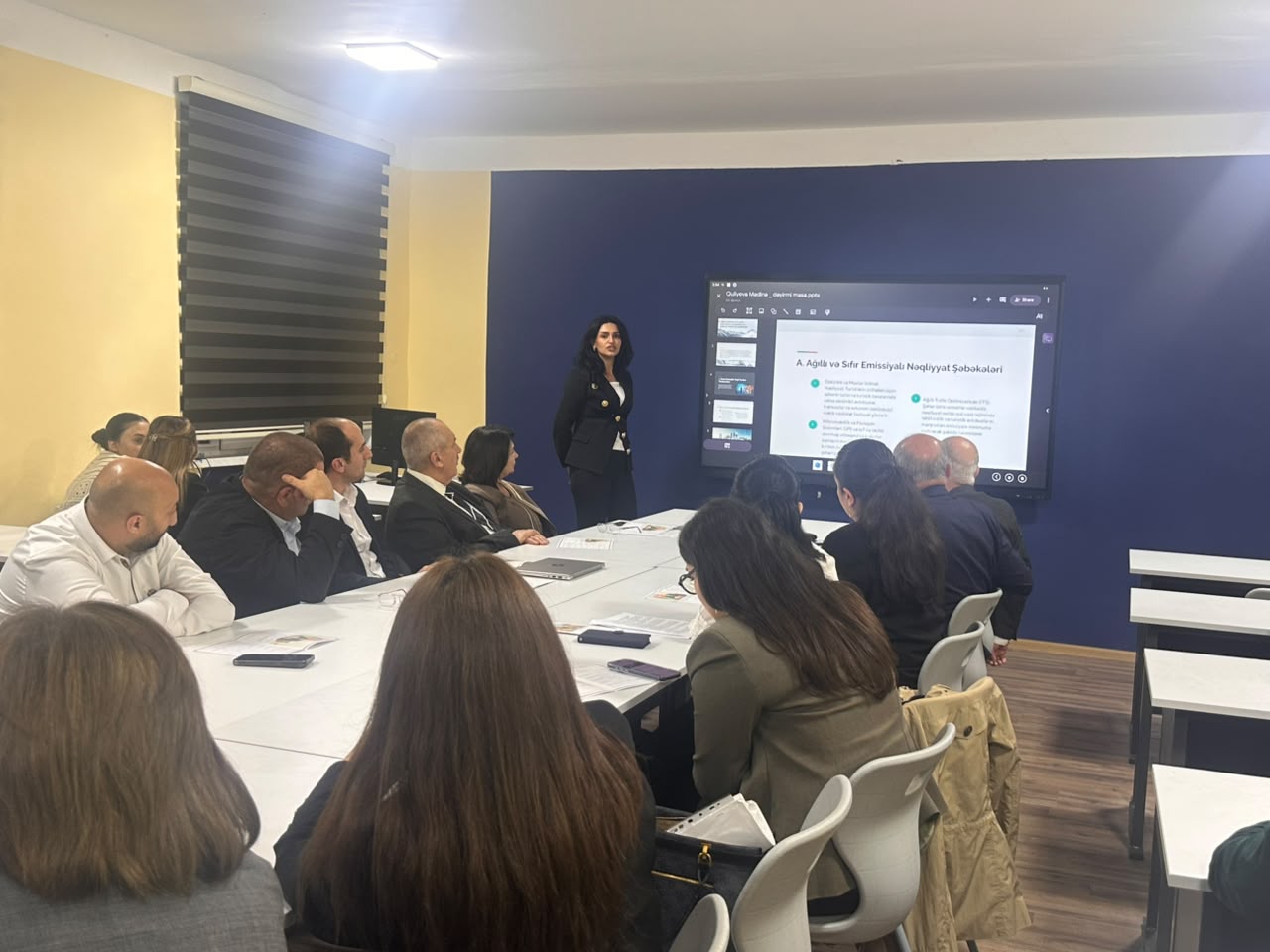
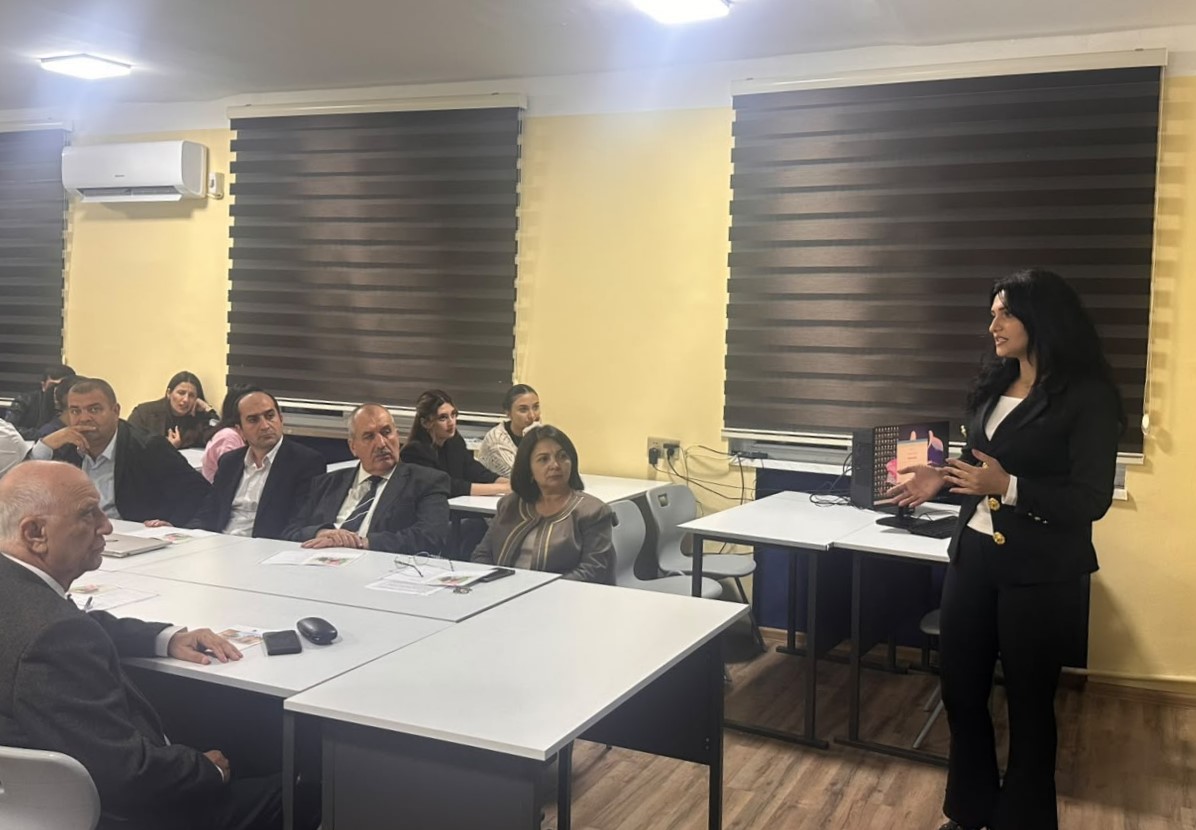
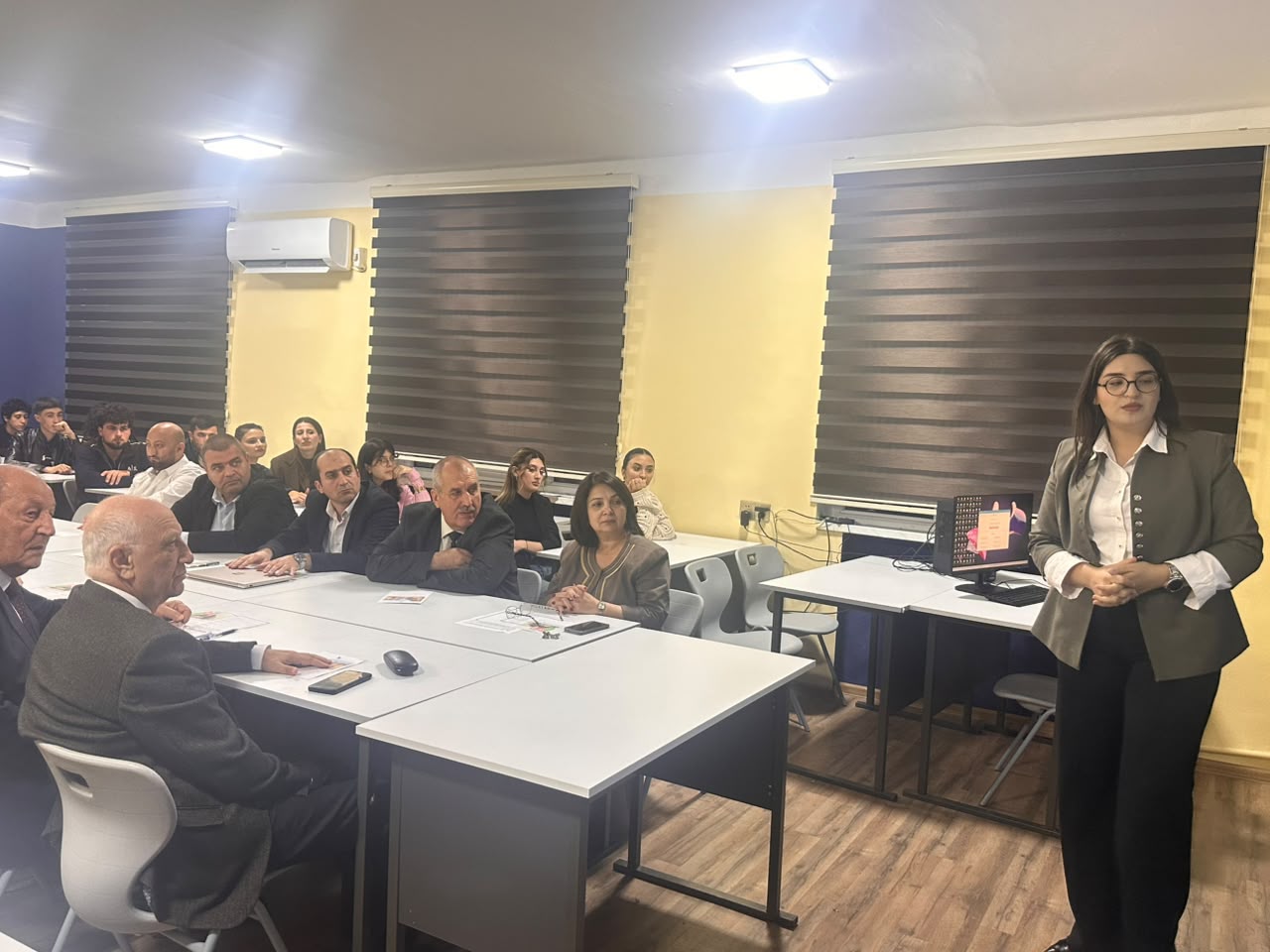
On October 28, 2026, a roundtable entitled “Green Urban Planning and Historical and Cultural Heritage: New Tourism Opportunities and Priorities” was held at Mingachevir State University (MDU) within the framework of the “Year of Urban Planning and Architecture.”
The main purpose of the event was to discuss ensuring environmental sustainability in modern urban planning processes, preserving historical and cultural heritage, effectively assessing tourism potential, and exploring prospects for green tourism development through innovative approaches. Maintaining ecological balance in urban environments, using natural and cultural resources responsibly, and strengthening the tourism sector’s role in socio-economic development were also central to the discussions.
Opening the roundtable, Associate Professor Nushaba Gadimli, Dean of MDU’s Faculty of Economics and Management, spoke about the importance of environmental responsibility, historical and cultural heritage conservation, and sustainable tourism approaches in modern urban planning policy. Emphasising the importance of maintaining a balance between economic, social and environmental factors in urban development, she noted that expanding green infrastructure, applying innovative technologies and passing cultural heritage on to future generations play an important role in creating a sustainable urban environment. Nushaba Gadimli highlighted the significant role of higher education institutions in conducting research in this area, strengthening environmental awareness and preparing specialists who meet the requirements of the modern labour market.
Following the opening address, a video dedicated to the topic was screened.
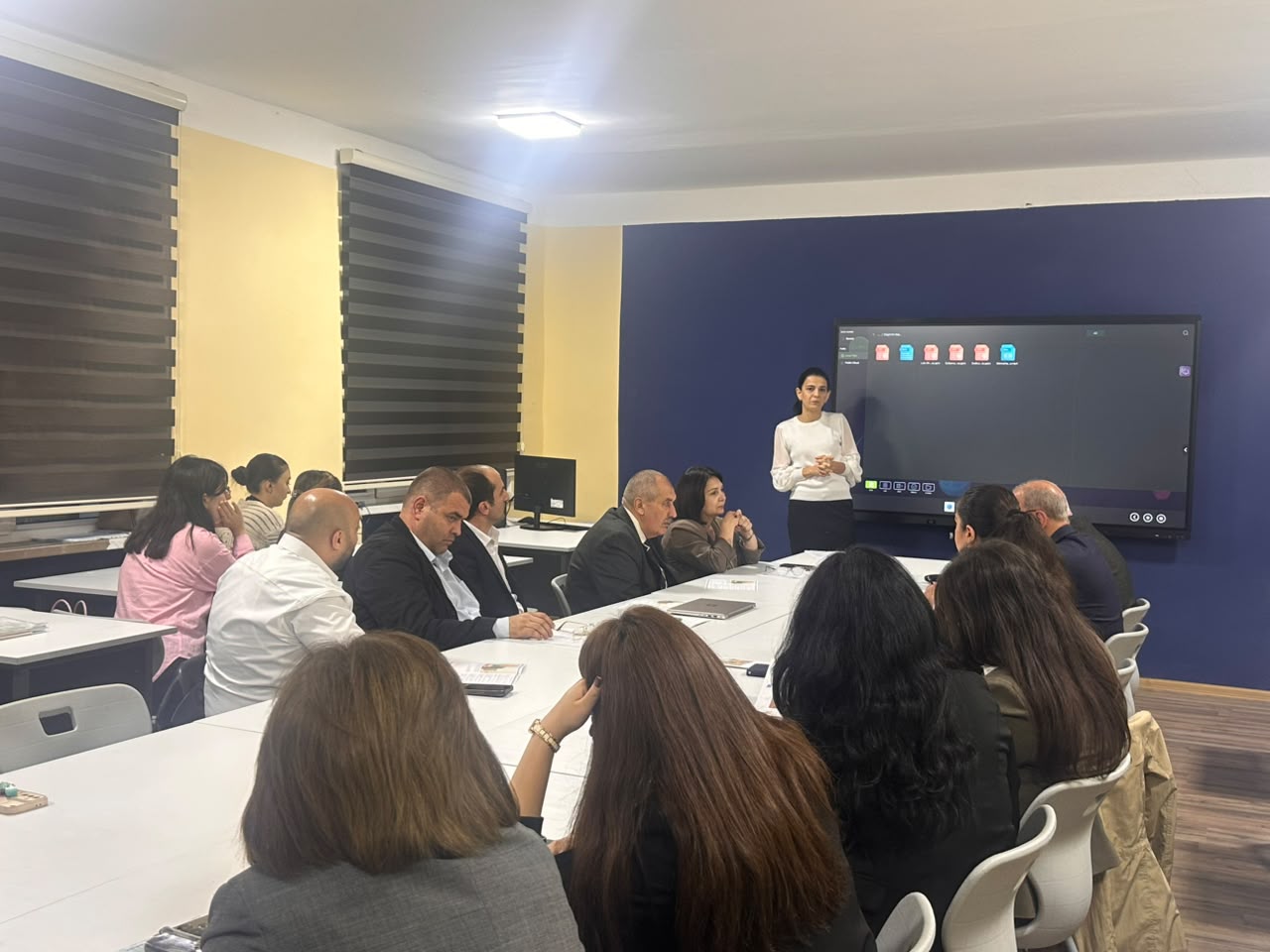
The roundtable continued with research presentations covering various areas by lecturers from the Department of Tourism Business and Marketing.
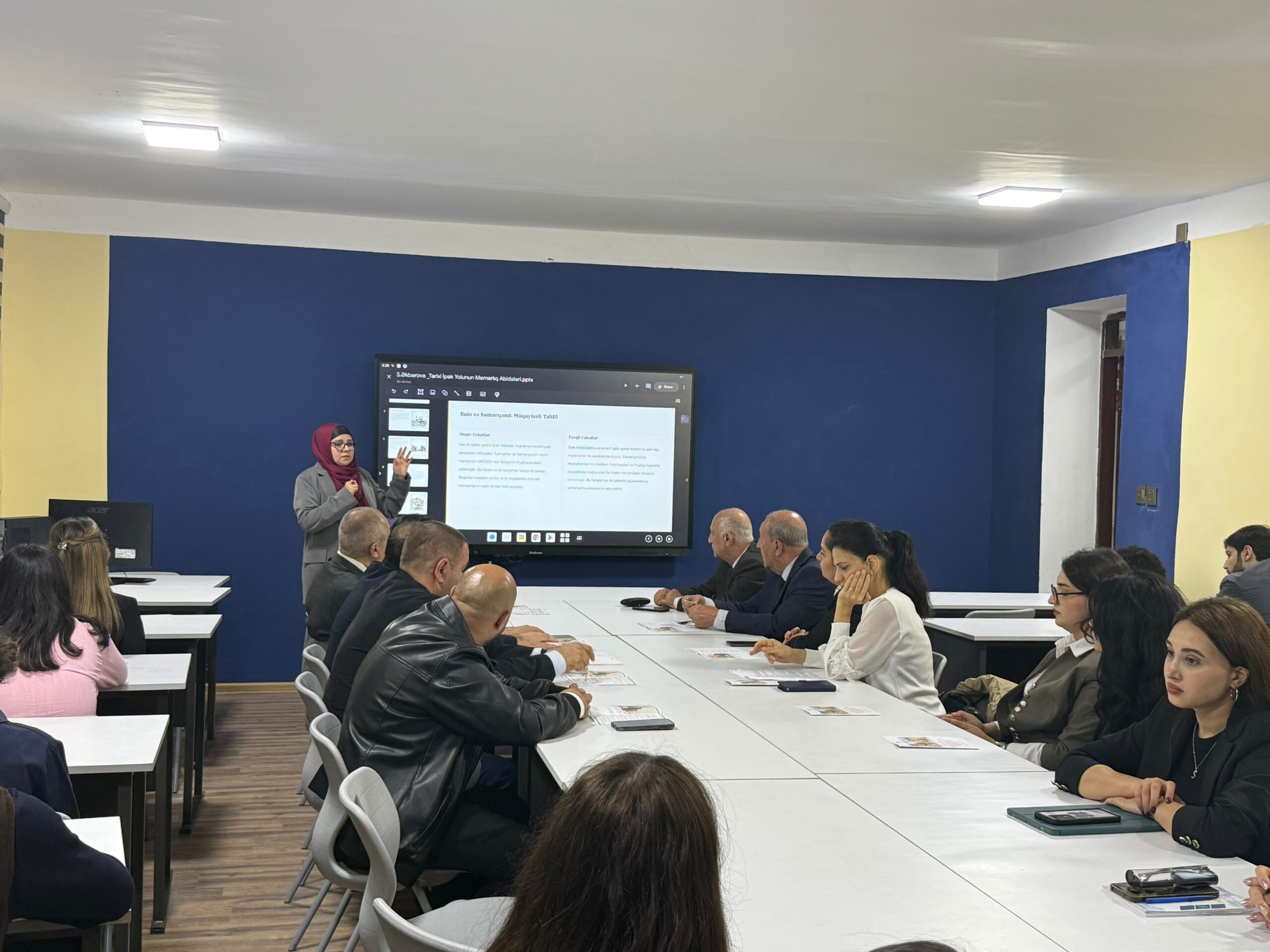
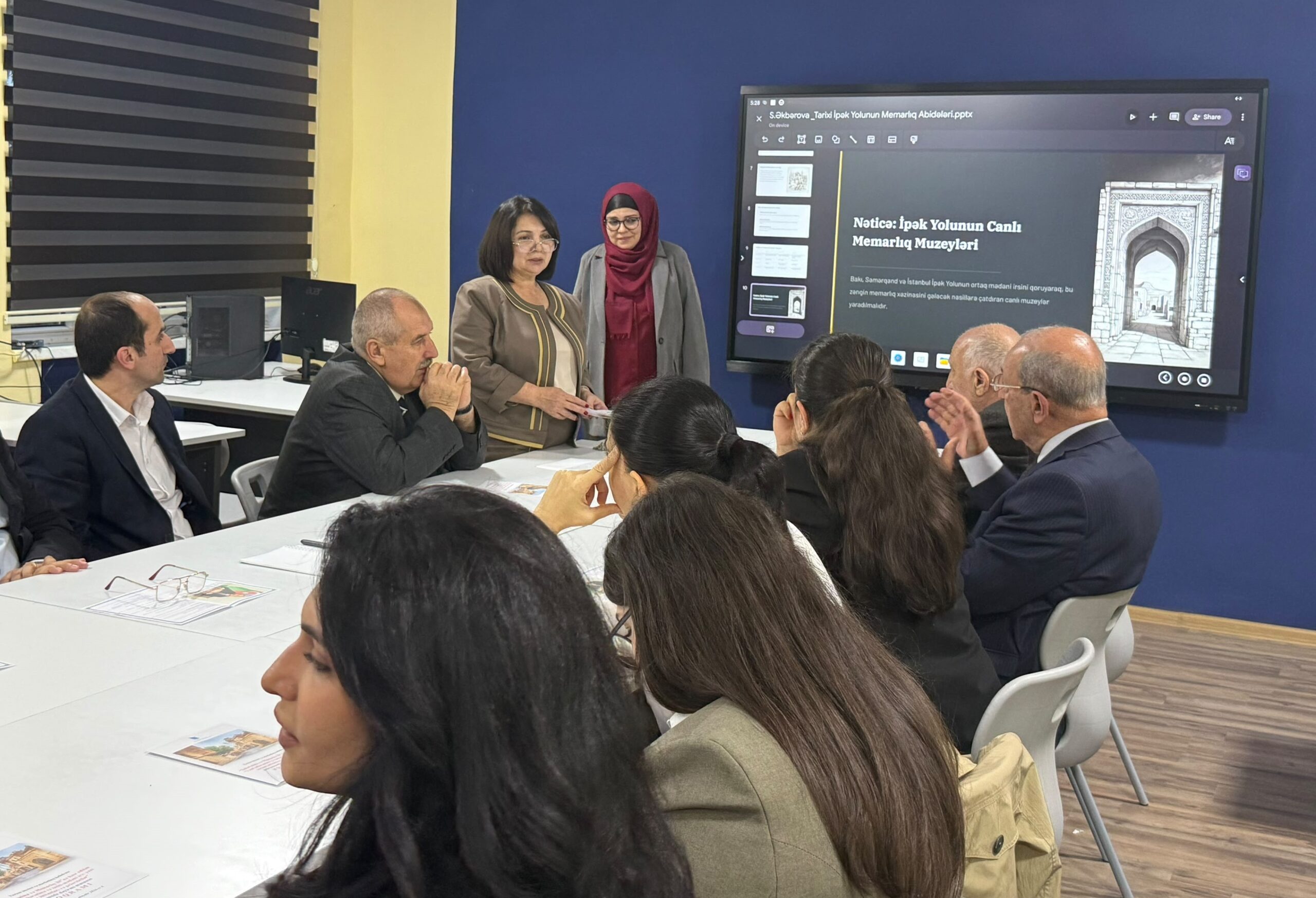
Samira Akbarova, Senior Lecturer at the department, delivered a presentation entitled “Tracing Architectural Monuments along the Historic Silk Road.” The presentation addressed the role of the historic Silk Road in shaping the architectural character of cities and developing cultural ties. Baku’s historical and architectural features were examined in comparison with those of other cities, and the impact of architectural heritage conservation on cultural tourism development and cities’ international tourism appeal was highlighted.
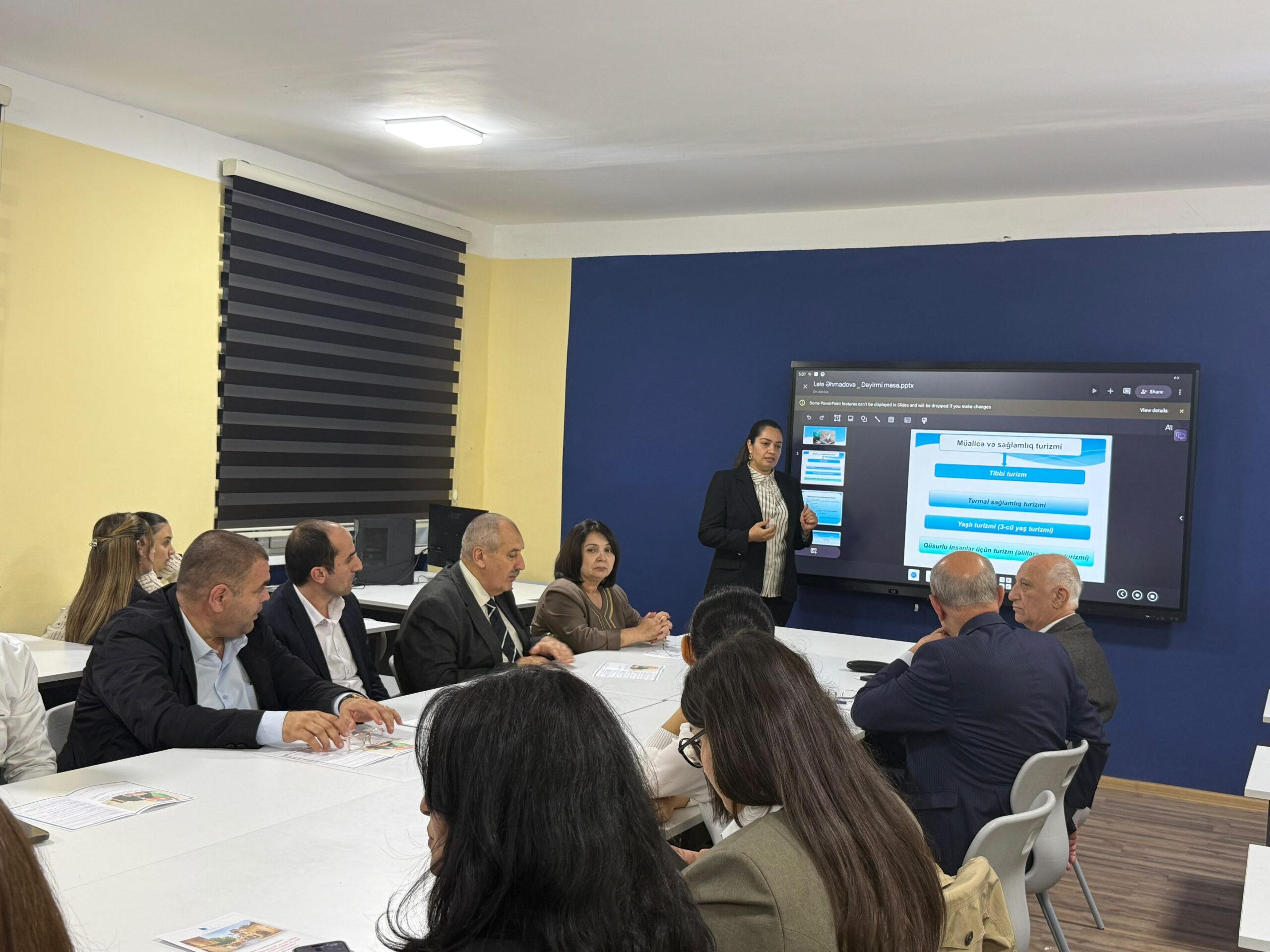
Lala Ahmadova, Senior Lecturer at the department, delivered a presentation entitled “The Development of Health Tourism in Urban Environments and New Trends,” discussing the healthy city concept, the creation of environmentally favourable urban environments and opportunities for health tourism development. The presentation emphasised the importance of green spaces, environmentally friendly infrastructure and tourism services supporting healthy lifestyles in enhancing cities’ competitiveness.
Aysel Gojayeva, a lecturer at the department, presented a paper entitled “The Formation of Tourism Cities in National Park Areas: International Experience and Azerbaijani Realities.” The presentation analysed the effective use of the tourism potential of national parks and specially protected natural areas, biodiversity conservation and ecotourism development. Comparing international experience with Azerbaijan’s existing opportunities, she noted the importance of protecting ecosystems, using natural resources responsibly and taking local communities’ socio-economic interests into account when developing tourism infrastructure.
Madina Guliyeva, a lecturer at the department, delivered a presentation entitled “Innovative Green Tourism Approaches and Development Prospects in Smart Cities.” The presentation examined innovative approaches to integrating smart city technologies into the tourism sector, applying digital solutions, increasing energy and resource efficiency, and reducing environmental impacts. It was noted that applying modern technologies in tourism services creates new opportunities for more efficient urban infrastructure management, improved tourist satisfaction and the development of an environmentally responsible tourism model.
Khadija Suleymanova, a lecturer at the department, delivered a presentation entitled “Tourism-Oriented Urban Planning: Modern Trends, Tourist Appeal and a Balanced Approach to Historical Heritage Conservation.” She emphasised the importance of maintaining a balance between tourism infrastructure development and the preservation of historical and cultural heritage. The presentation addressed enhancing cities’ tourism appeal, improving the functionality of public spaces, creating an inclusive and accessible tourism environment, and preserving local cultural identity in urban planning processes.
The roundtable discussions highlighted the importance of integrating green urban planning principles into the tourism sector, preserving historical, cultural and natural heritage, applying innovative technologies and adopting modern approaches that support sustainable urban development. Particular emphasis was placed on the importance of scientific and practical approaches to promoting environmentally responsible tourism models, using resources efficiently, supporting local community development and creating healthy, safe and inclusive urban environments for future generations.
It should be noted that organising such scientific and educational events is of significant importance at Mingachevir State University in promoting quality education, directing scientific knowledge towards solving practical problems, developing environmental thinking and strengthening professional competencies in sustainable tourism. Guided by the principles of green development, social responsibility, innovation and cultural heritage conservation, the university continues its efforts to contribute to the region’s sustainable socio-economic development.