
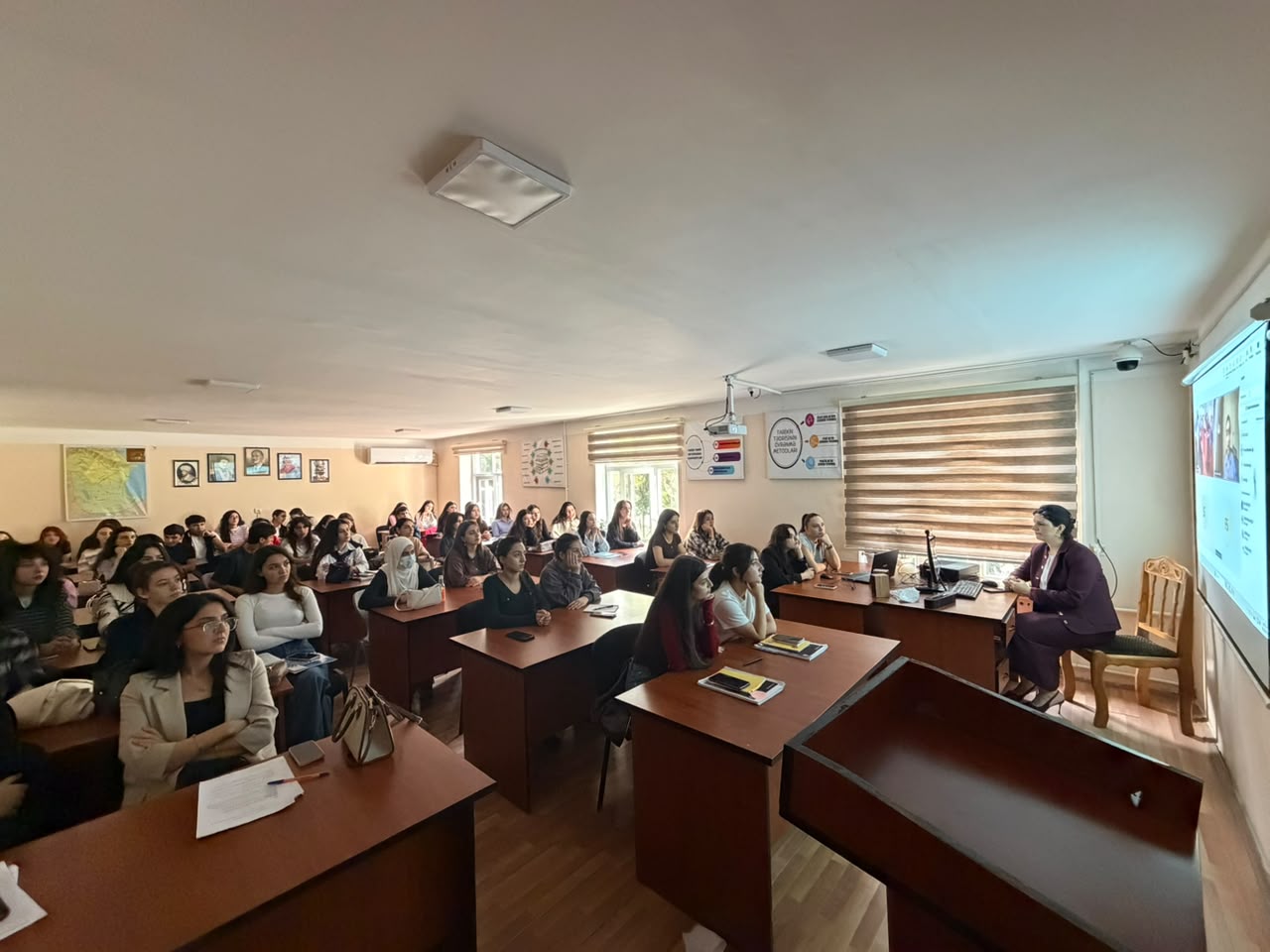
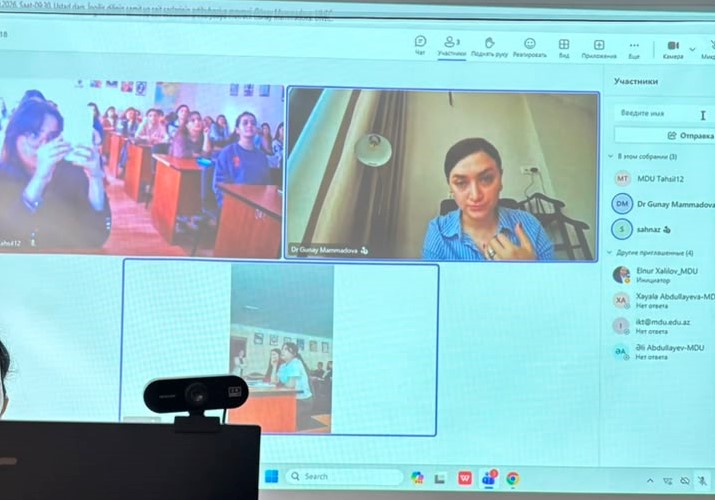
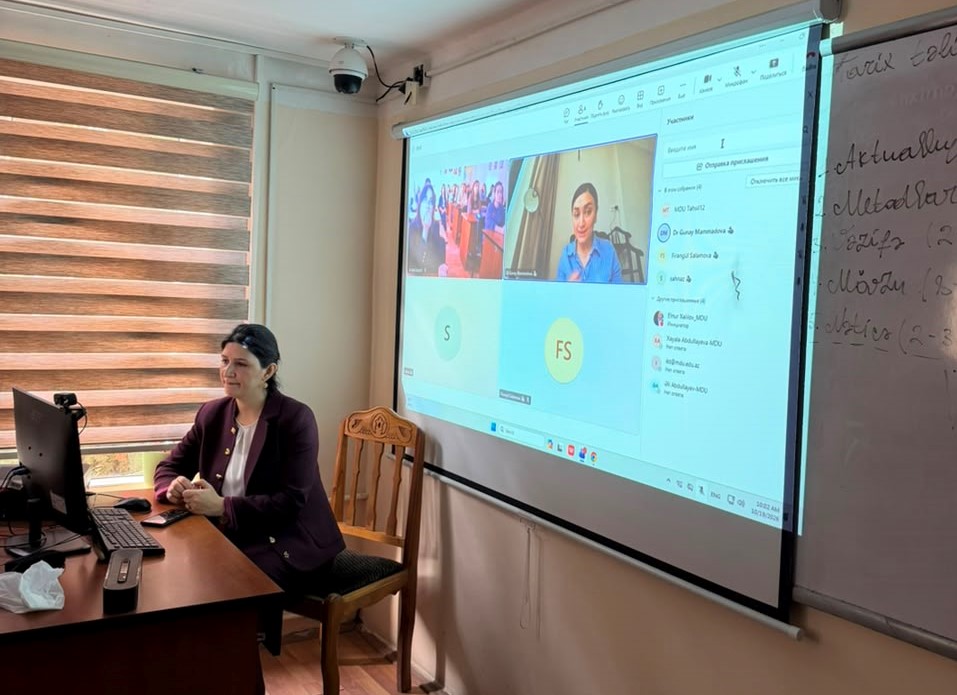
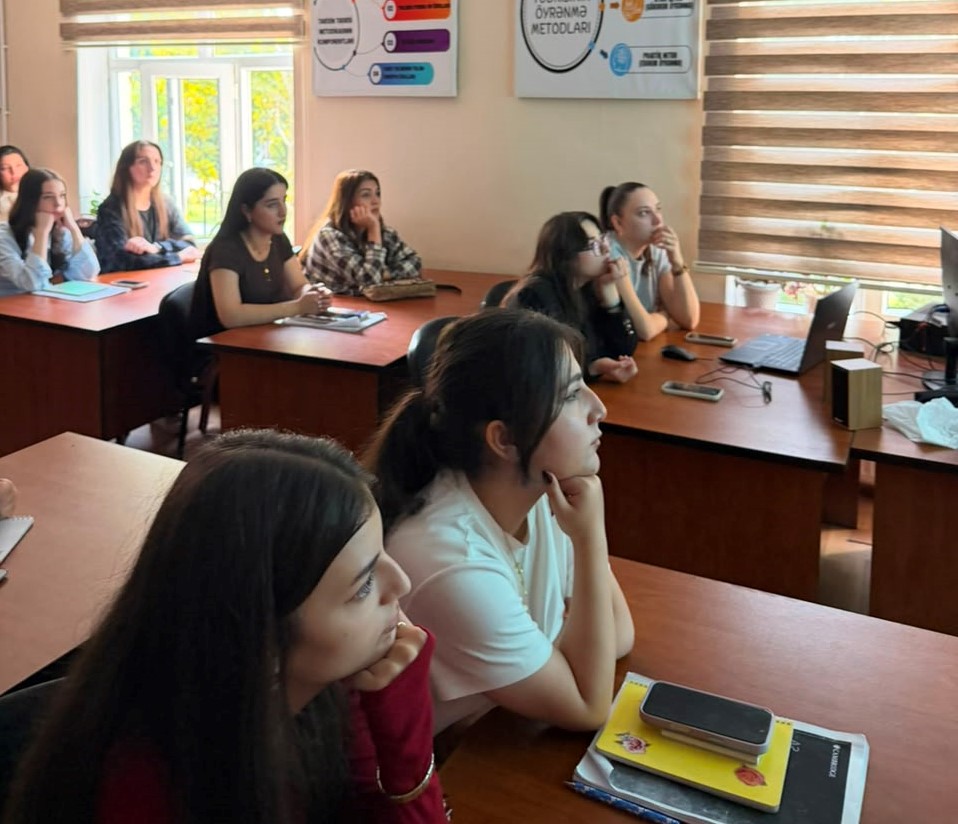
On 19 October 2026, an online masterclass entitled “The articulation of English consonant and vowel sounds” was held by the Department of Foreign Languages of the Faculty of Pedagogy at Mingachevir State University (MDU).
Attended by the department’s academic staff and students, the masterclass aimed to expand knowledge of the phonetic features of English, develop accurate pronunciation and oral communication skills, and support the consolidation of theoretical knowledge through practical exercises.
The masterclass was delivered by Gunay Mammadova, founder of the “Ustadım” education brand, a staff member at Azerbaijan State University of Economics (UNEC) and a PhD in Philology.
During the theoretical part of the session, Gunay Mammadova explained how English vowel and consonant sounds are produced, including their place and manner of articulation. She emphasised the role of accurate pronunciation in developing clear and intelligible speech, listening comprehension and communication skills. Particular attention was paid to the difficulties Azerbaijani speakers encounter when pronouncing English sounds, and ways to overcome these challenges were explained.
During the practical part, students applied what they had learned by reading English texts aloud. The speaker listened to their pronunciation, worked individually with each student on the correct articulation of sounds and provided relevant recommendations. Throughout the interactive session, students’ questions were answered and various pronunciation examples were examined.
Based on individual feedback and active participation, the masterclass helped increase students’ interest in language learning, strengthen their confidence and improve their practical communication skills. The online format also enabled the exchange of knowledge and experience between representatives of different higher education institutions.
Holding such masterclasses at Mingachevir State University is valuable in promoting quality education and student-centred teaching, applying modern teaching approaches and expanding opportunities for continuous learning. Developing students’ foreign language skills contributes to their ability to access international academic resources, their readiness for intercultural communication and their future professional activities.