
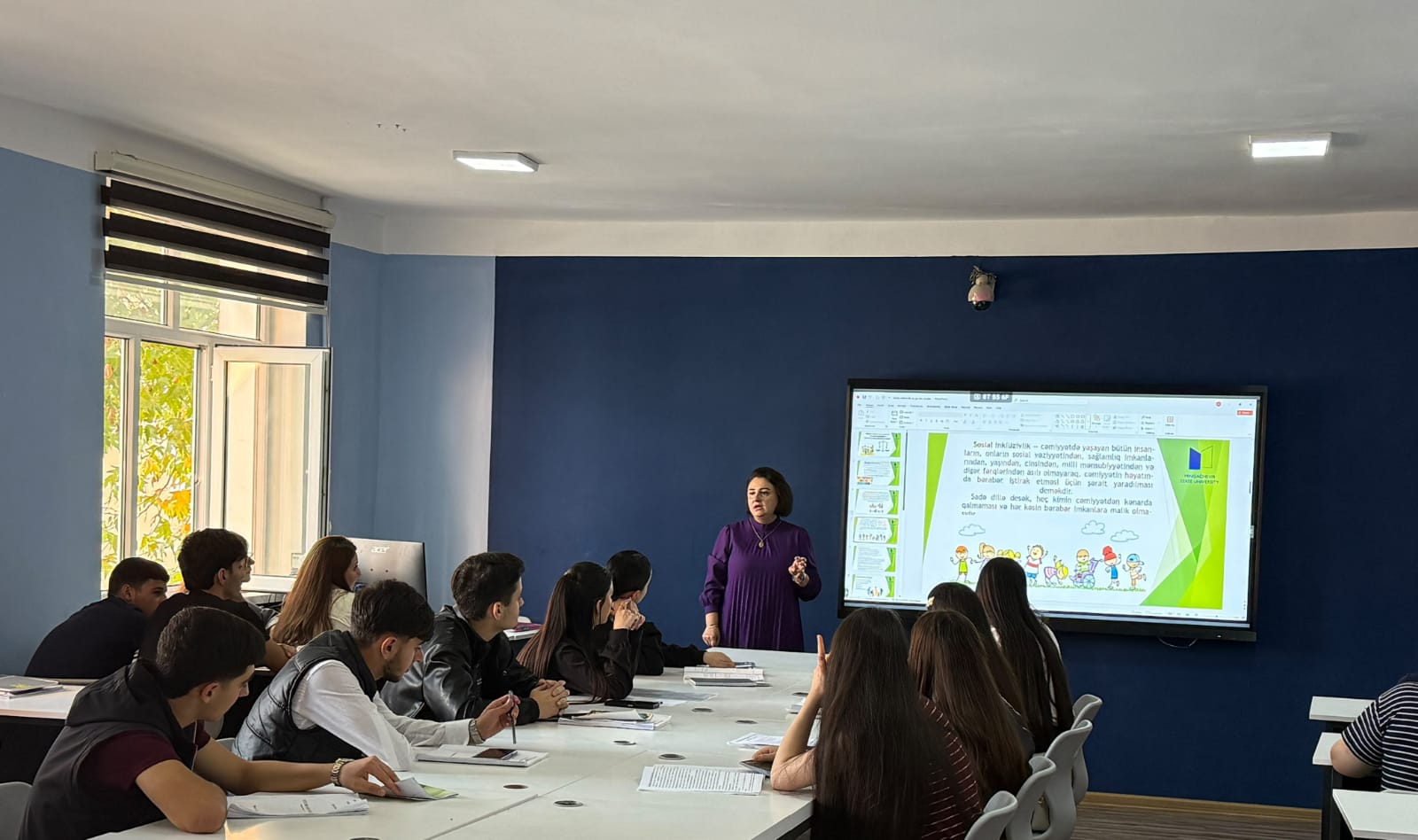
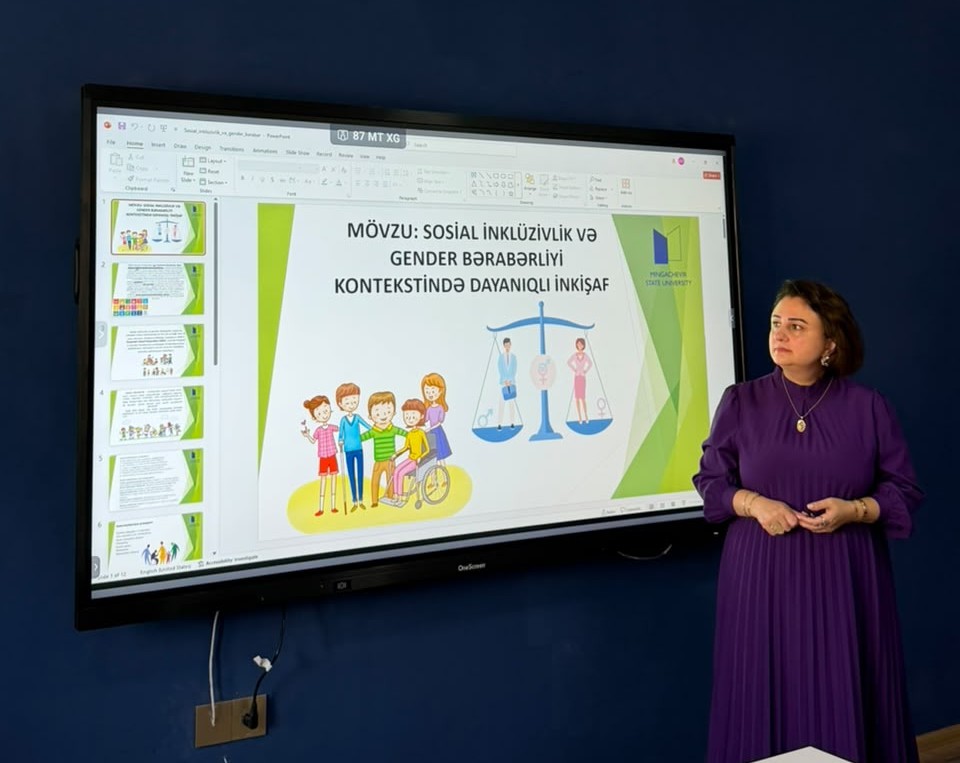
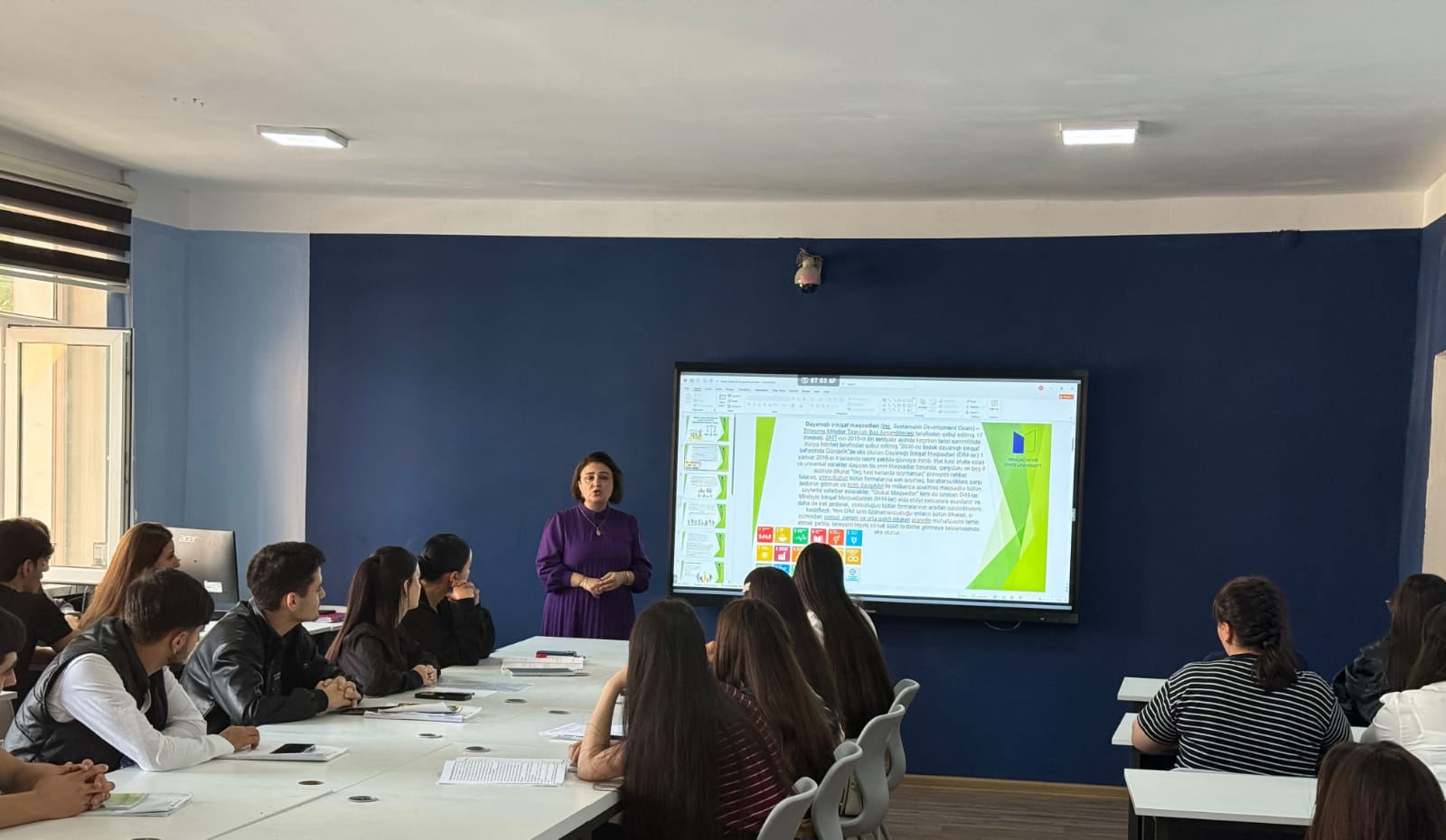
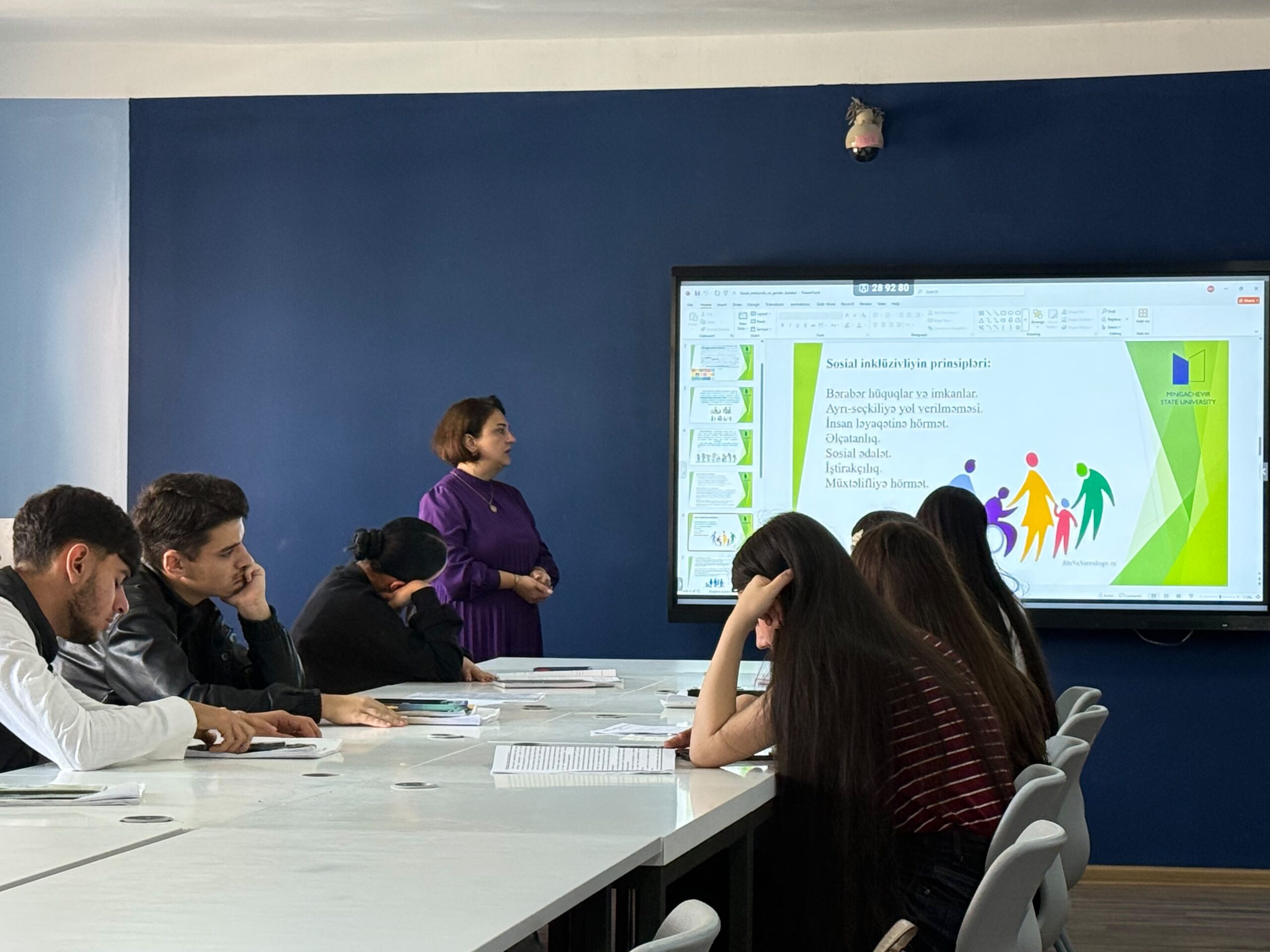
On October 13, 2026, a scientific debate on “Sustainable development in the context of social inclusion and gender equality” was organized by Elmira Khalilova, Senior Lecturer at the Department of Economics of Mingachevir State University.
The main objective of the event was to discuss the social aspects of sustainable development, the role of gender equality in economic and social progress, and the importance of creating equal opportunities for all segments of society. During the debate, it was emphasized that sustainable development is not limited to economic growth indicators but also entails ensuring social justice, respecting human rights, expanding opportunities for inclusive participation, and improving societal well-being.
The debate featured an exchange of views on women’s economic participation, gender disparities in the labor market, employment opportunities for vulnerable social groups, and social protection mechanisms. It was noted that ensuring equal opportunities in the labor market, eliminating discrimination, and improving social protection mechanisms make significant contributions to human capital development, increased economic activity, and the reduction of social inequality.
The discussions also highlighted the importance of education, vocational training, and lifelong learning opportunities in strengthening social inclusion. It was emphasized that creating equal opportunities for education and development facilitates individuals’ integration into the labor market, enables them to realize their professional potential, and strengthens the socio-economic resilience of society.
The event underscored that building an inclusive society is not only an important aspect of social policy but also a key component of effective economic management. It was noted that promoting gender equality, actively engaging vulnerable groups in economic and social life, and expanding opportunities for diverse social groups to participate in decision-making processes contribute to creating a more equitable, sustainable, and competitive economic environment.
The scientific debate was also significant in developing participants’ critical approaches to socio-economic processes, analytical thinking skills, and a culture of discussion on addressing societal challenges. Examining the topic from various perspectives contributed to a deeper understanding of the social dimension of sustainable development and increased awareness of gender equality and social inclusion issues.
Scientific and awareness-raising initiatives implemented by Mingachevir State University in this field contribute to promoting equal opportunities, strengthening the principles of social responsibility and inclusion, and preparing professionals capable of assessing contemporary economic challenges. Focusing on the social aspects of sustainable development in the University’s teaching and research activities represents an important direction in contributing to the formation of a more equitable, inclusive, and well-being-oriented society.