


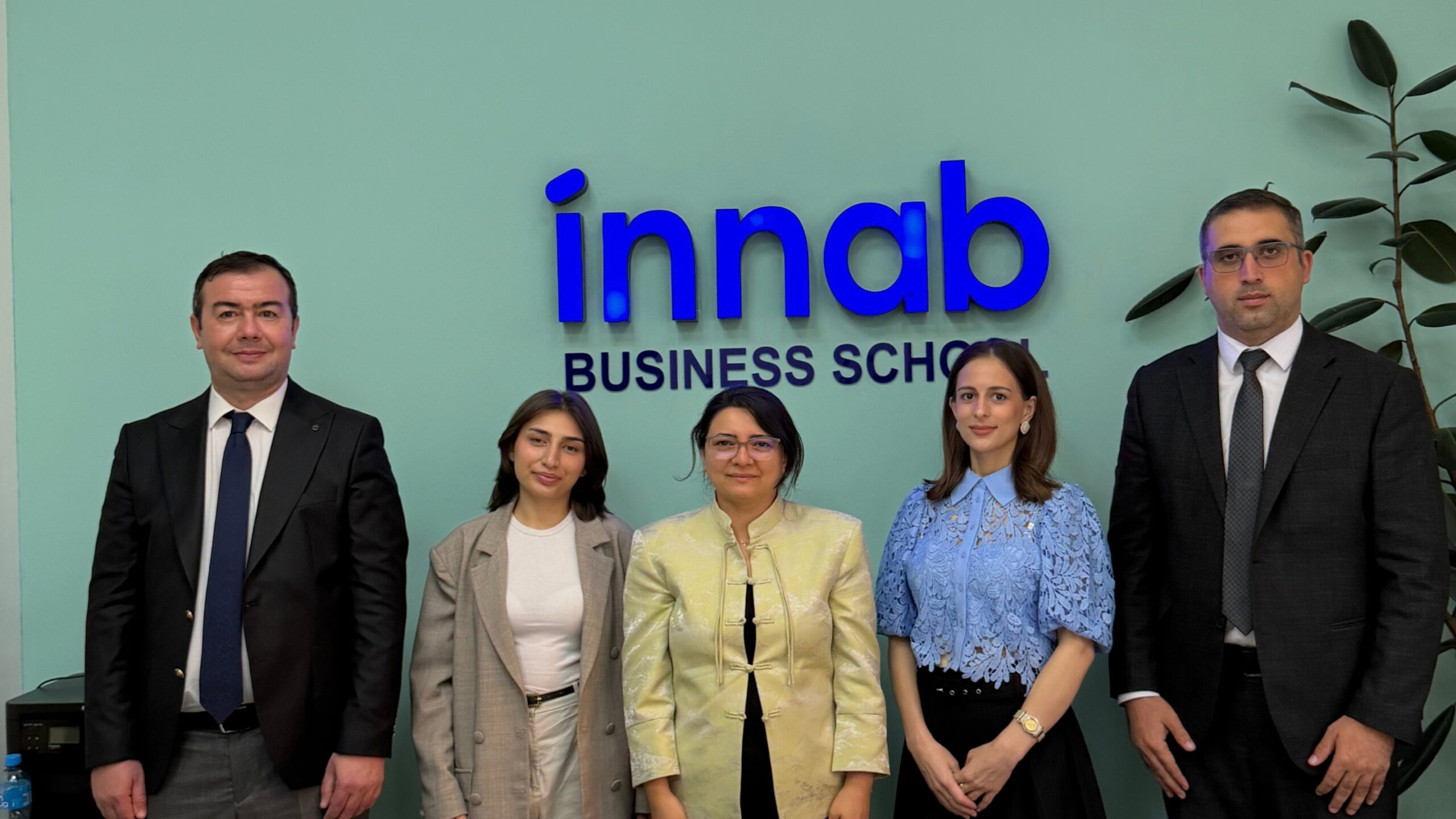
On September 14, 2026, Mingachevir State University and INNAB Business School signed a Memorandum of Cooperation aimed at expanding collaboration in education, professional development, digital skills, and university-business partnerships.
The Memorandum was signed by Natavan Namazova, Vice-Rector for Science and Innovation at Mingachevir State University, and Rauf Hajiyev, Director of INNAB Business School.
The main objective of the new partnership is to develop the knowledge and skills of students and graduates in line with the evolving demands of the modern labor market, strengthen their practical training, expand access to professional and international certification opportunities, and foster sustainable links between academia and the business sector.
Within the framework of the Memorandum, training programs are expected to be organized in data analytics, Excel, Power BI, SQL, Python, business statistics, data visualization, and other related areas, with a particular focus on enhancing the digital competencies of students, graduates, and university staff. In addition, the cooperation envisages preparation for international and professional certification programs, practical training sessions, workshops, masterclasses, case studies, mentoring activities, and the implementation of various joint projects.
One of the key areas of cooperation is the expansion of career opportunities for students and graduates. Planned activities include career planning, CV preparation and interview skills, personal branding, labor market readiness, strengthening links with employers, as well as organizing career days and job fairs.
The Memorandum will also create opportunities for conducting joint research, developing analytical projects and methodological resources, increasing the involvement of business representatives in the University’s educational and career-oriented initiatives, and jointly exploring local and international project and grant opportunities.
It should be noted that the new partnership between MSU and INNAB Business School is expected to contribute to human capital development, improve students’ adaptability to the future labor market, strengthen their digital and analytical skills, and support the development of a more sustainable model of university-business cooperation.