


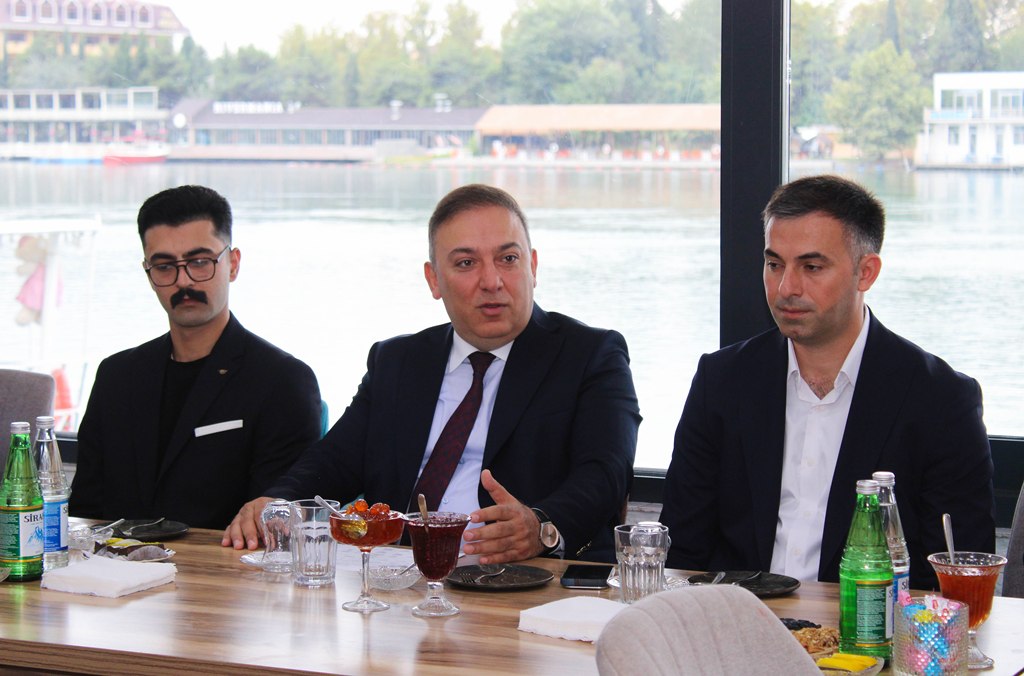
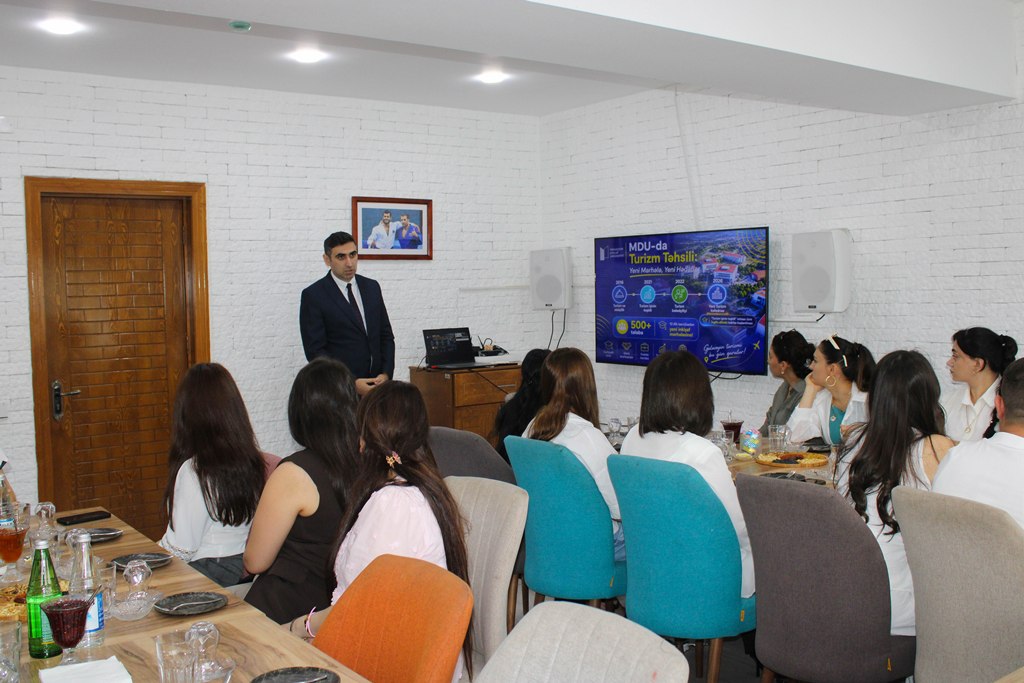
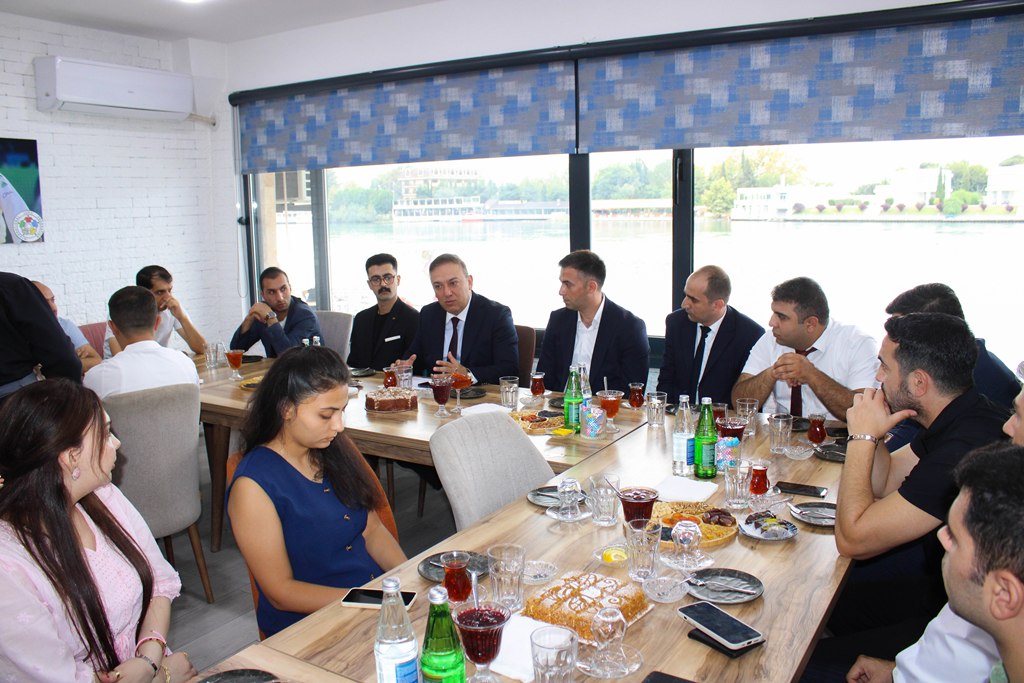

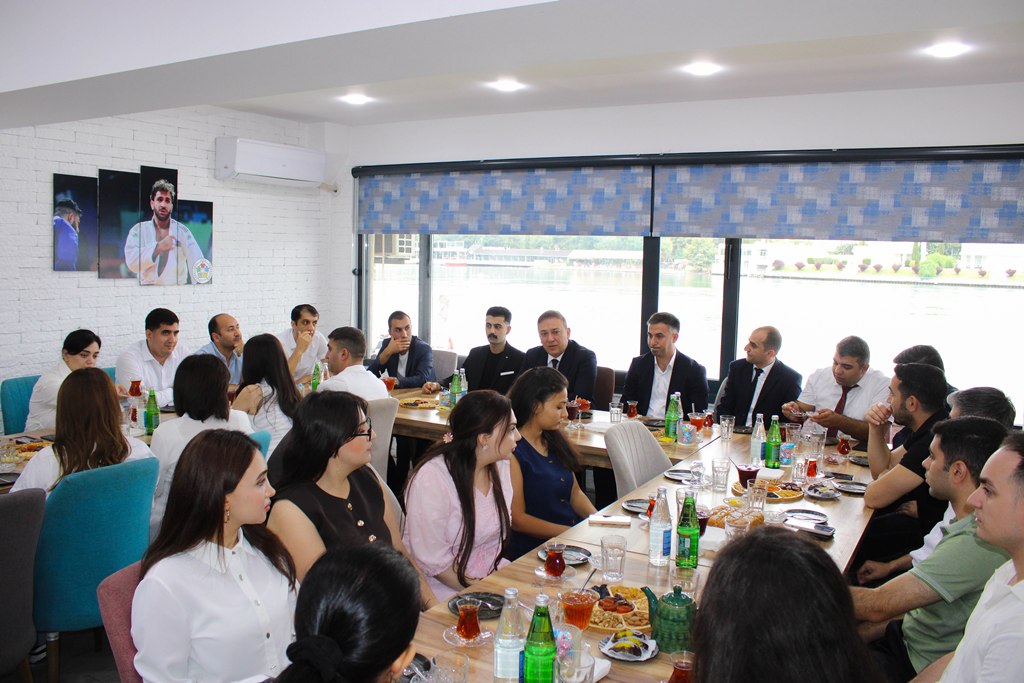


On August 31, 2026, Rector of Mingachevir State University Anar Eminov held a meeting with the faculty members of the newly established Tourism and Marketing Department, candidates who achieved successful results in the recruitment competition, the leadership of the Mingachevir Regional Tourism Office, as well as representatives of the tourism and marketing industries.
The main purpose of the meeting was to exchange views on shaping the activities of the newly established department in line with the requirements of the modern tourism industry, integrating labor market expectations into the educational process, complementing students’ theoretical knowledge with real-world work experience, establishing sustainable cooperation mechanisms with the public and private sectors, and transforming the tourism potential of Mingachevir and the region into opportunities for education, practical training and applied research.
Speaking at the meeting, Rector Anar Eminov congratulated the university community and students on the establishment of the Tourism and Marketing Department and wished the department success in its activities. The Rector noted that the dynamic development of the tourism industry, the emergence of new approaches in the service sector, and changing labor market requirements necessitate a new approach to professional training in this field. In this regard, the department’s activities should be based not only on modern teaching approaches, but also on close cooperation with the real sector, practical training and applied research.
It was noted that Mingachevir State University provides professional training in tourism-related programs at both bachelor’s and master’s levels. The establishment of the new department creates new opportunities for the more systematic coordination of education, practical training, research and industry cooperation in this field. In the process of establishing the department, the experience of Türkiye’s Dokuz Eylül University in tourism education, as well as proposals and requests received through cooperation with institutions operating in various areas of the tourism sector, have been taken into consideration. Representatives of the industry emphasized in their communications with the university the growing need for specialists with practical skills, capable of using modern technologies and management tools, proficient in foreign languages, and prepared for the real work environment.
Anar Eminov emphasized that, starting from the 2026/2027 academic year, Mingachevir State University will, for the first time, begin training specialists in tourism in English as well. He stated that organizing tourism education in an international language environment will make an important contribution to students’ acquisition of competencies aligned with the requirements of the global tourism market, their ability to establish professional communication with international tourists and foreign partners, and the expansion of international cooperation and career opportunities. The Rector noted that this initiative will contribute to the internationalization of tourism education at the university and enhance the competitiveness of its graduates.
During the meeting, extensive discussions were held on the requirements that will be expected from tourism professionals by 2030, the positions in which graduates will be able to work directly upon entering the labor market, and the adaptation of curricula to the professional skills of the future. The importance of digital technologies, tourism marketing, data analysis, foreign languages, customer experience management, communication, innovative thinking, service quality, management and sustainable tourism approaches as key competencies of future tourism professionals was emphasized.
Industry representatives put forward proposals on incorporating courses and modules reflecting the needs of the real sector into curricula, increasing the share of students’ practical training conducted in real enterprises during their studies, and expanding opportunities for continuous cooperation with hotels, restaurants, tourism companies and other service-sector enterprises. At the same time, the importance of developing students not merely as interns, but as active participants in the design and implementation of real projects was emphasized.
Particular attention was paid during the discussions to ensuring that the educational process equips Mingachevir State University graduates with the practical skills necessary to work in hospitality, restaurants and the broader service sector, tourism companies, tourism product development and marketing, destination management, event and service organization, as well as tourism-related positions in government institutions.
The expansion of applied research in tourism was another major area of discussion. Views were exchanged on directing the university’s academic potential toward the real needs of the tourism industry, systematically studying the tourism resources of Mingachevir and the region, developing new tourism products and routes, analyzing tourist flows, and applying research findings in practice.
In this regard, the idea of transforming Mingachevir and the region’s tourism potential into a living educational and research environment for the university came to the forefront. The meeting addressed the integration of the city’s natural, cultural, historical and recreational resources into students’ educational, practical and project activities, the study of the local tourism ecosystem, and the university’s role in promoting the region’s tourism opportunities more extensively.
An initiative to establish the “Mingachevir State University Tourism Industry Council” was also put forward at the meeting in order to make cooperation between the university and the tourism industry more systematic and sustainable. It was proposed that the Council be formed with the participation of Mingachevir State University faculty members, hotel managers, tourism companies, representatives of the restaurant and service sectors, as well as the regional representation of the State Tourism Agency.
The new platform is intended to serve as a sustainable cooperation mechanism for aligning tourism education with changing labor market requirements, regularly improving curricula with the participation of industry representatives, strengthening students’ practical training, increasing internship and employment opportunities, and implementing joint projects and applied research. One of the Council’s priorities will also be to ensure the rapid transfer of emerging industry needs to the university and the flexible adaptation of the educational process to these changes.
The leadership of the Mingachevir Regional Tourism Office and industry representatives expressed their interest in developing long-term cooperation with the university and stated their readiness to participate in initiatives aimed at strengthening students’ practical training, implementing joint projects, expanding internship opportunities, and promoting the tourism potential of the region.
Faculty members and candidates who achieved successful results in the recruitment competition shared their views on organizing the department’s educational and research activities, applying modern teaching methods, involving industry representatives in the educational process, expanding students’ participation in practical projects, and promoting applied research addressing current challenges in the tourism sector.
It was agreed that the proposals raised during the meeting would be taken into consideration in shaping the main areas of activity of the Tourism and Marketing Department, strengthening the institutional foundations of university–industry cooperation, and continuing efforts to prepare students in line with the requirements of the modern tourism sector.
With the launch of the new department, Mingachevir State University is creating broader opportunities to develop tourism education, practical training, applied research and industry cooperation within a unified ecosystem, while also transforming the tourism potential of Mingachevir and the region into new knowledge, projects and innovative initiatives.