
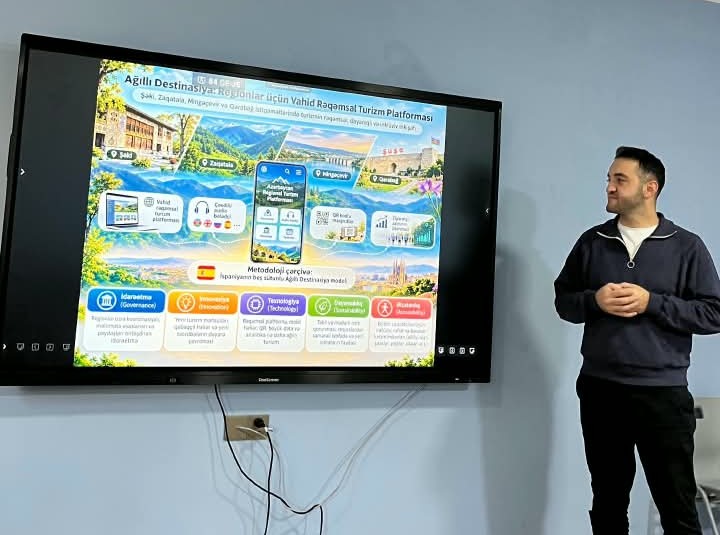
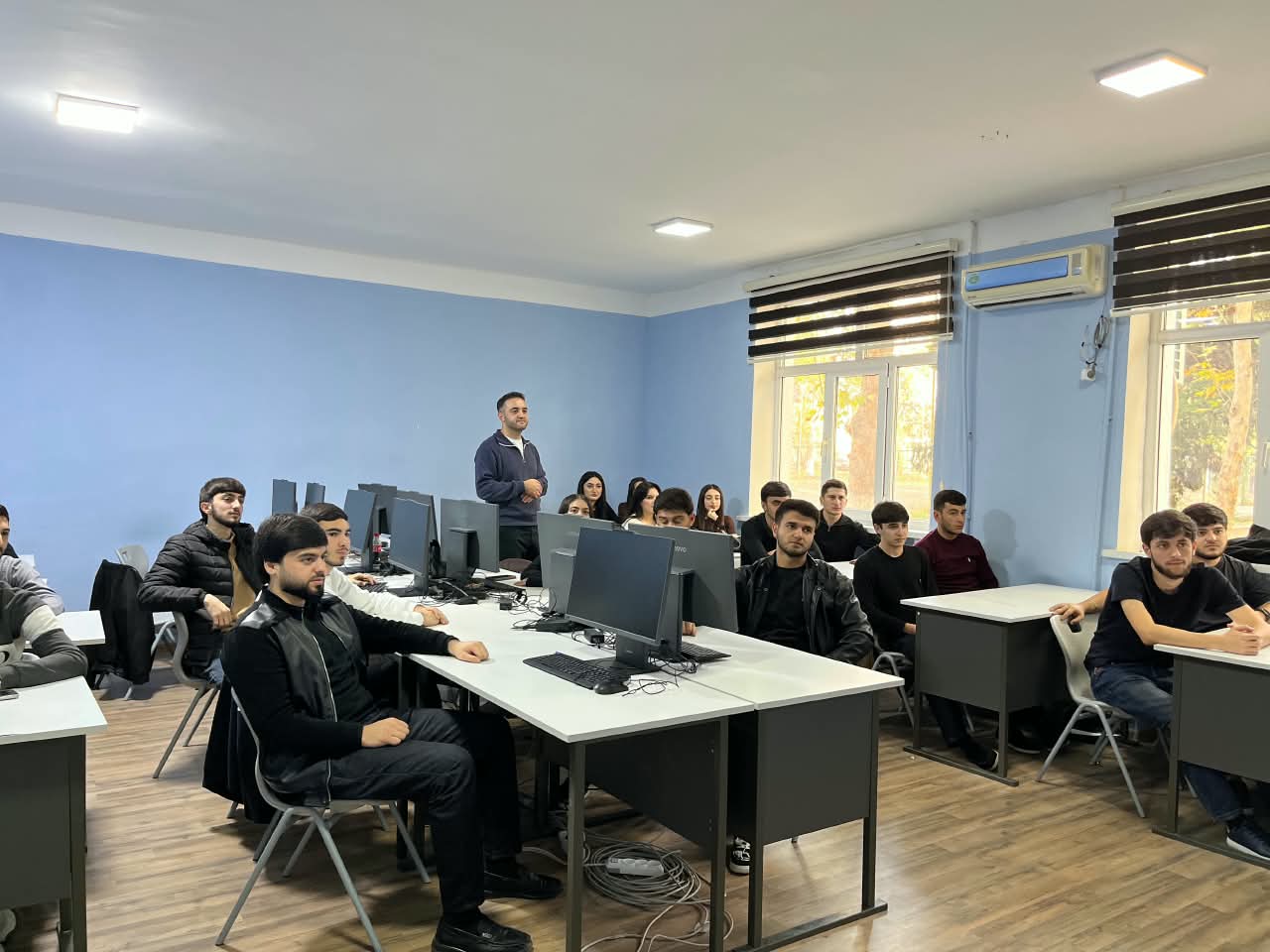
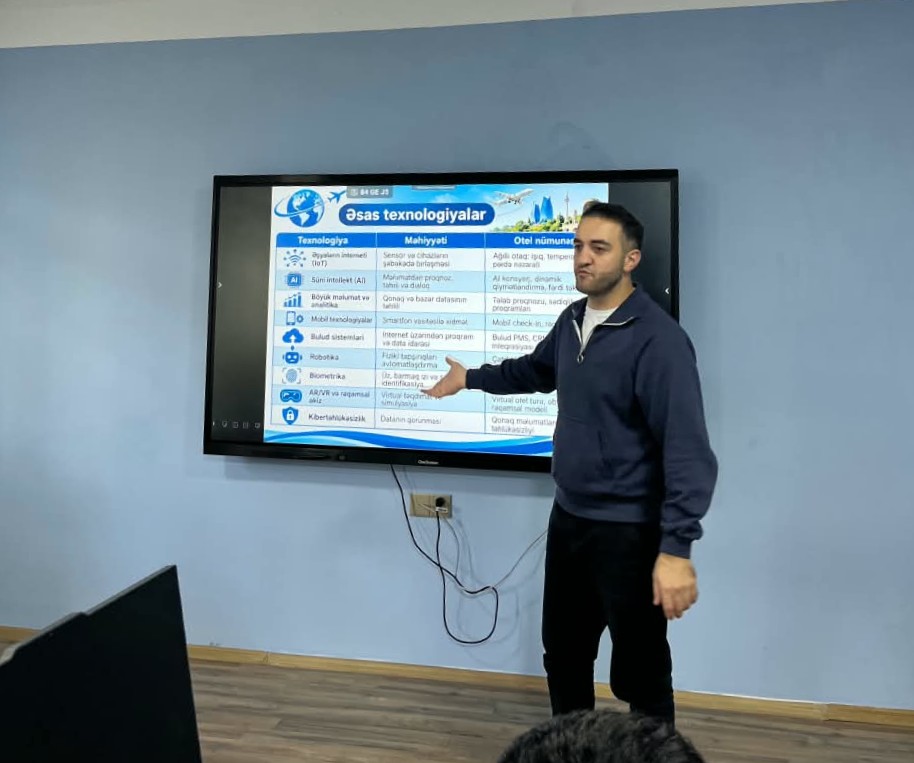
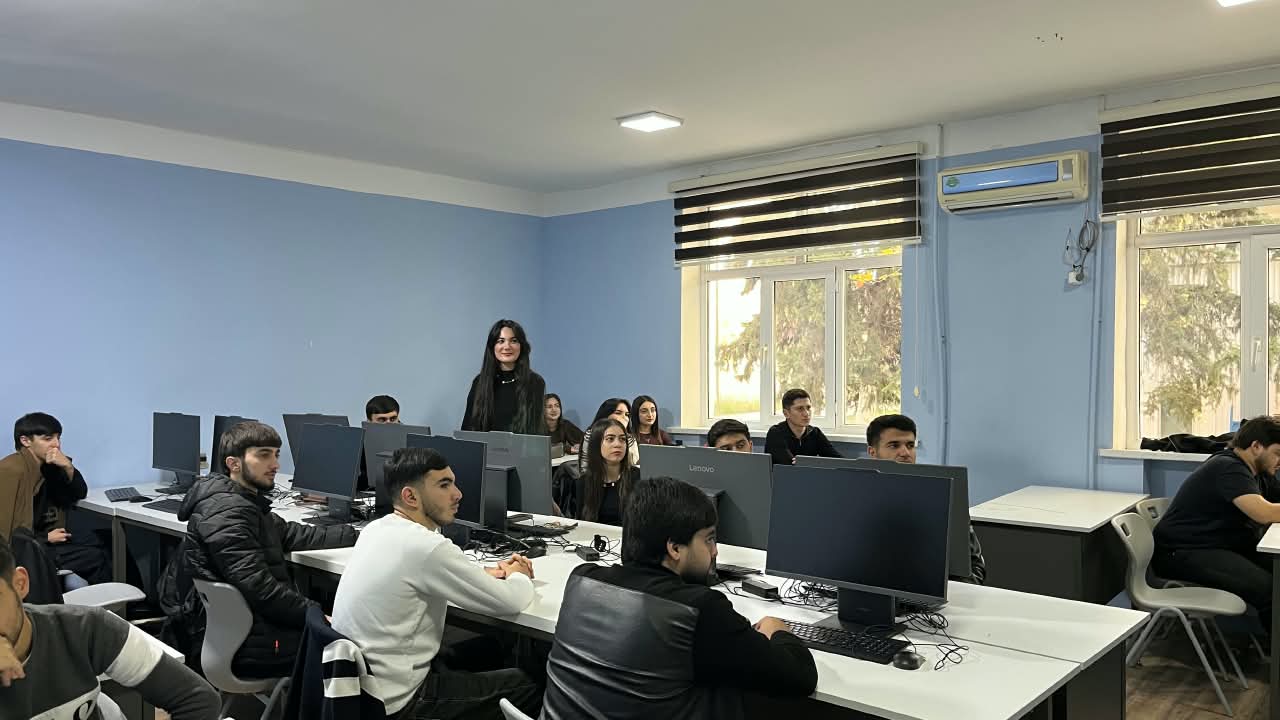
On November 19, 2026, Mingachevir State University (MSU) held a seminar on “Smart Tourism Technologies” with the aim of exploring digital transformation in the tourism sector, the application of innovative solutions, and the impact of modern technologies on service quality.
The seminar was organized by Islam Islamzade, lecturer at the Department of Tourism Business and Marketing, and attended by third-year students enrolled in the Tourism Management program.
Within the framework of the seminar, participants discussed the application of digital technologies in the tourism and hospitality sectors, artificial intelligence-based solutions, smart service systems, innovative management approaches, and the impact of modern technologies on guest satisfaction. Particular attention was given to the role of digital platforms in improving the accessibility of tourism services, optimizing service processes, creating personalized customer experiences, and strengthening the competitiveness of tourism businesses.
During the discussions, emphasis was placed on the opportunities offered by smart tourism technologies not only in improving service quality but also in ensuring the efficient use of tourism resources, reducing time and energy losses in operational processes, supporting data-driven decision-making, and promoting environmentally responsible management. It was noted that integrating digital innovations into tourism activities creates opportunities for developing more flexible, accessible, and sustainable tourism services, as well as supporting the long-term development of the sector.
The strategic importance of innovation and modern infrastructure in the development of the tourism sector was also highlighted during the seminar. In this context, attention was drawn to the role of technological innovations in stimulating entrepreneurial initiatives, creating new service models, strengthening the management capacity of tourism enterprises, and expanding cooperation opportunities between the tourism industry and the technology sector.
The event was significant in terms of expanding students’ knowledge of modern tourism technologies, developing their digital literacy and innovative thinking skills, and helping them understand the possibilities of applying acquired theoretical knowledge in their future professional activities. At the same time, the discussions contributed to enhancing students’ understanding of the evolving requirements of a tourism environment shaped by technological innovations.
It should be noted that integrating digital transformation into the educational process, fostering an innovation-oriented learning environment, developing students’ digital competencies in line with the requirements of the modern labor market, and expanding cooperation with the real sector are among the priority areas of Mingachevir State University. Such initiatives contribute to strengthening the University’s institutional activities based on the principles of quality education, innovation, technological development, and a sustainable future.