
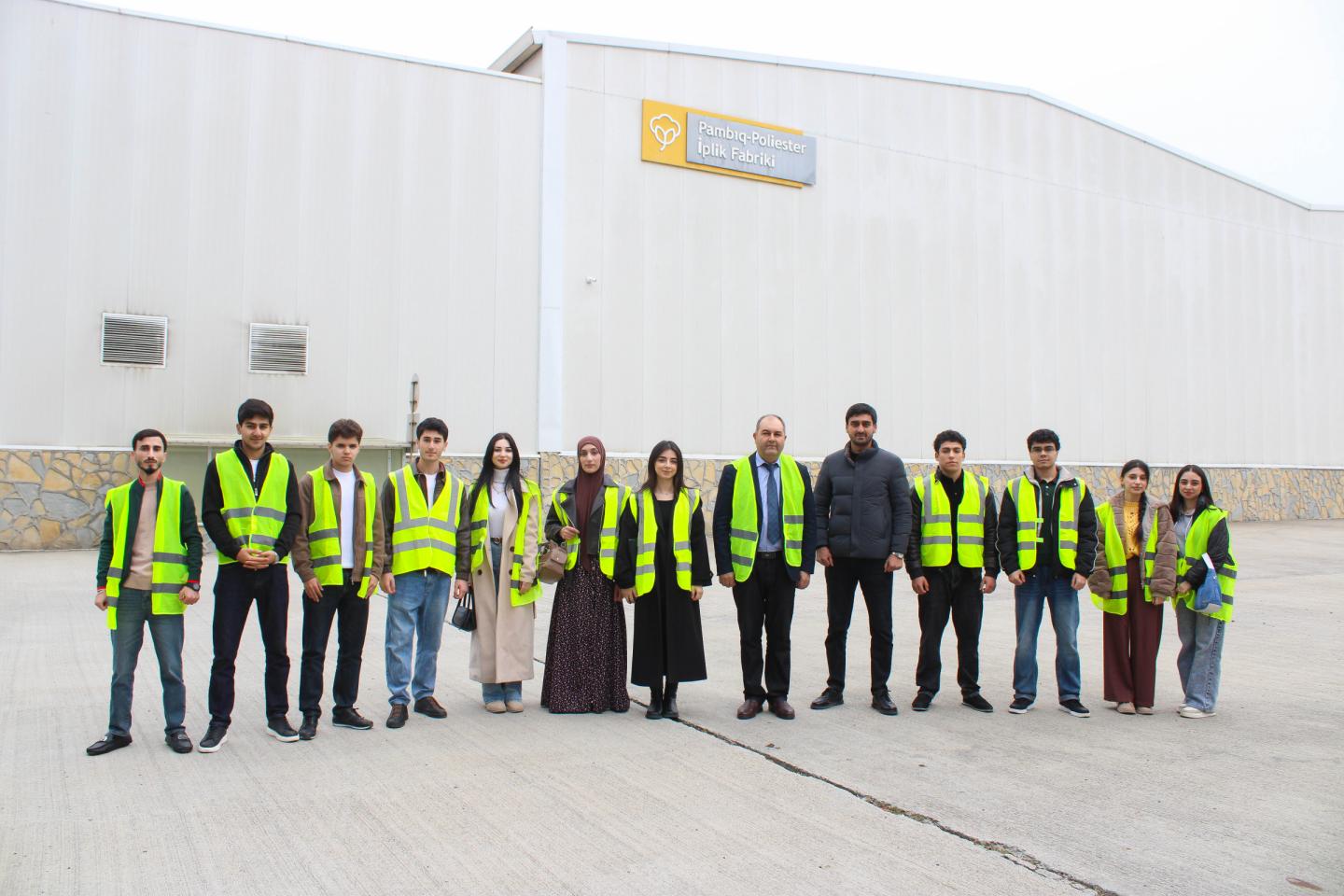
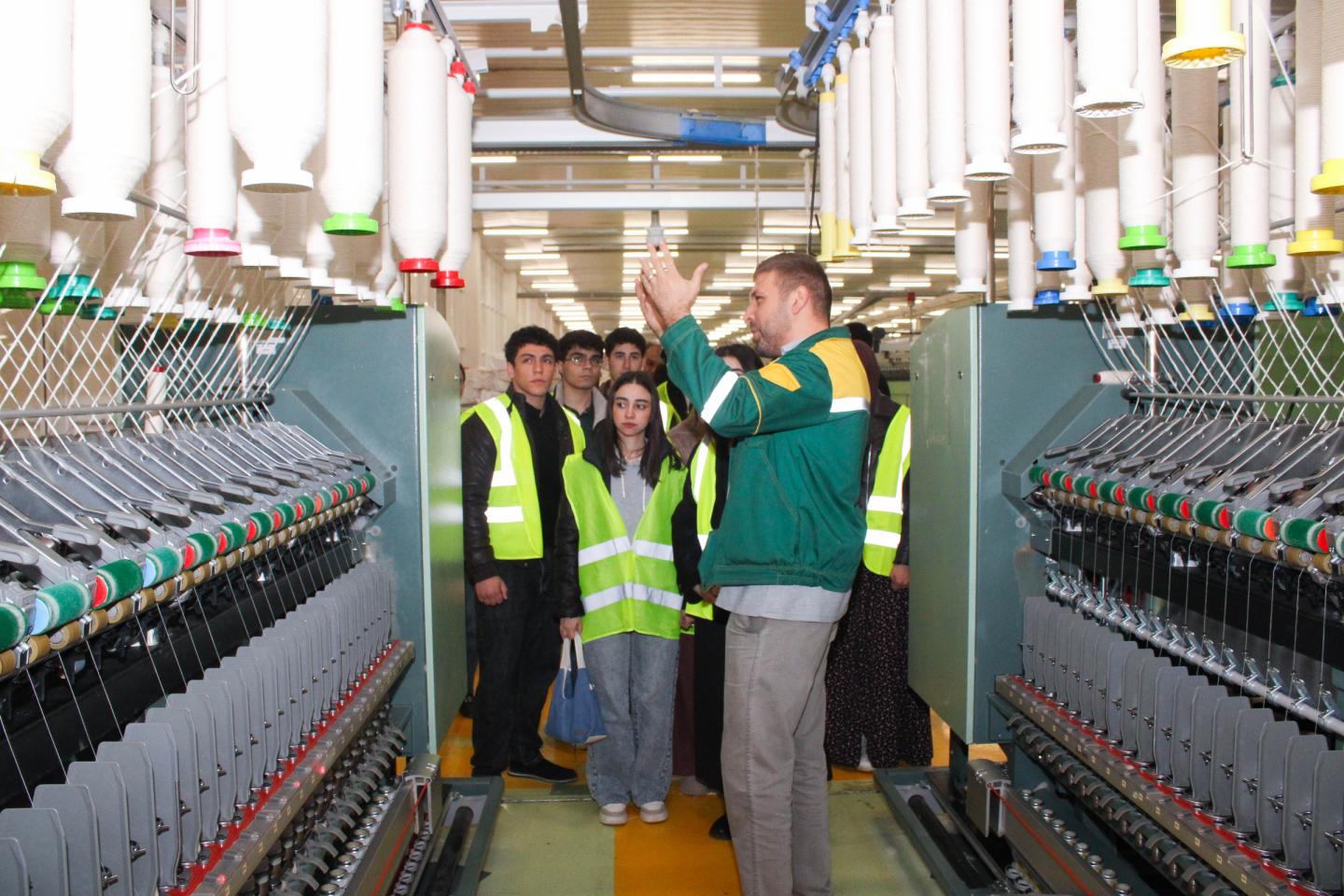
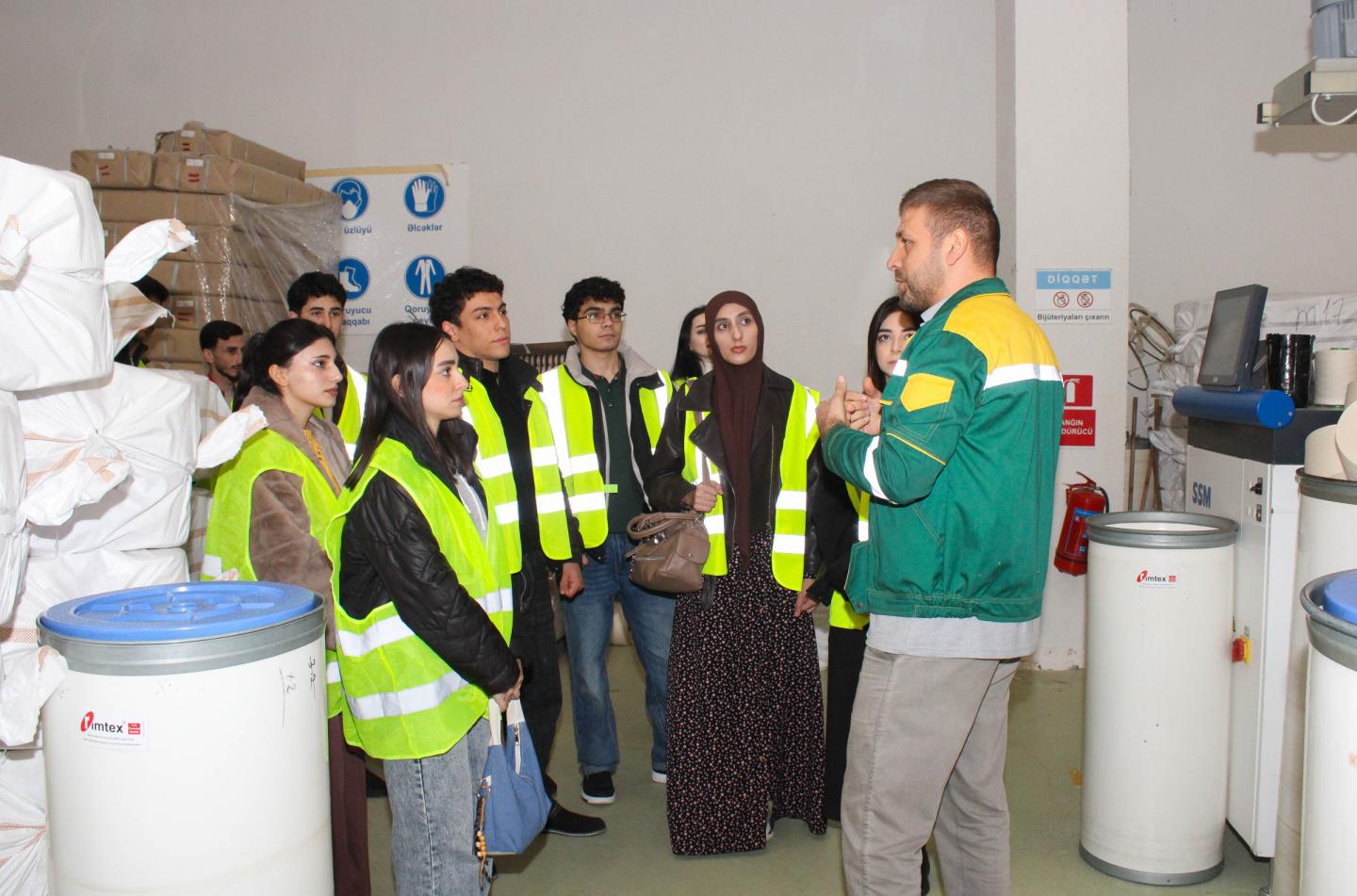
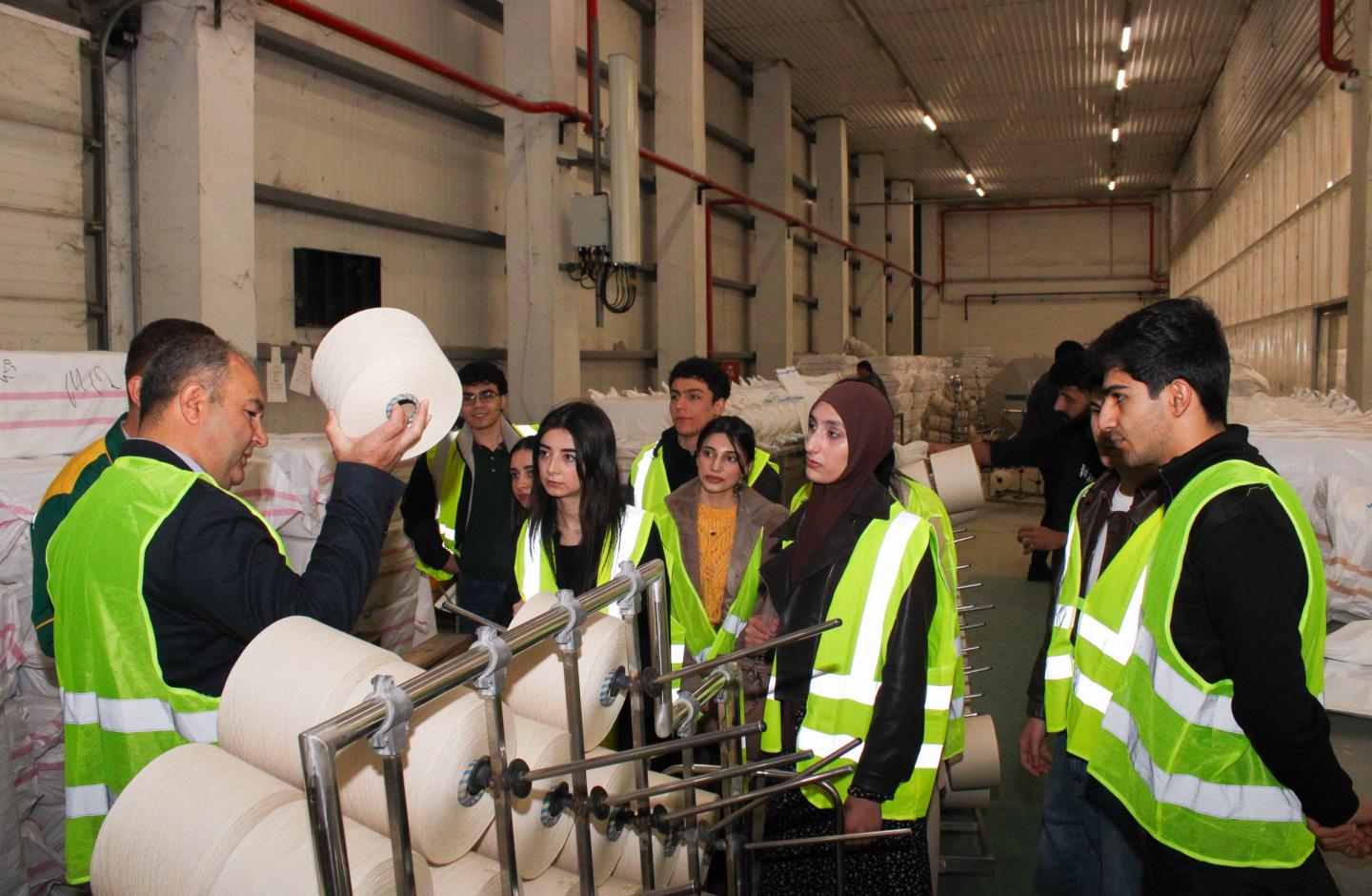
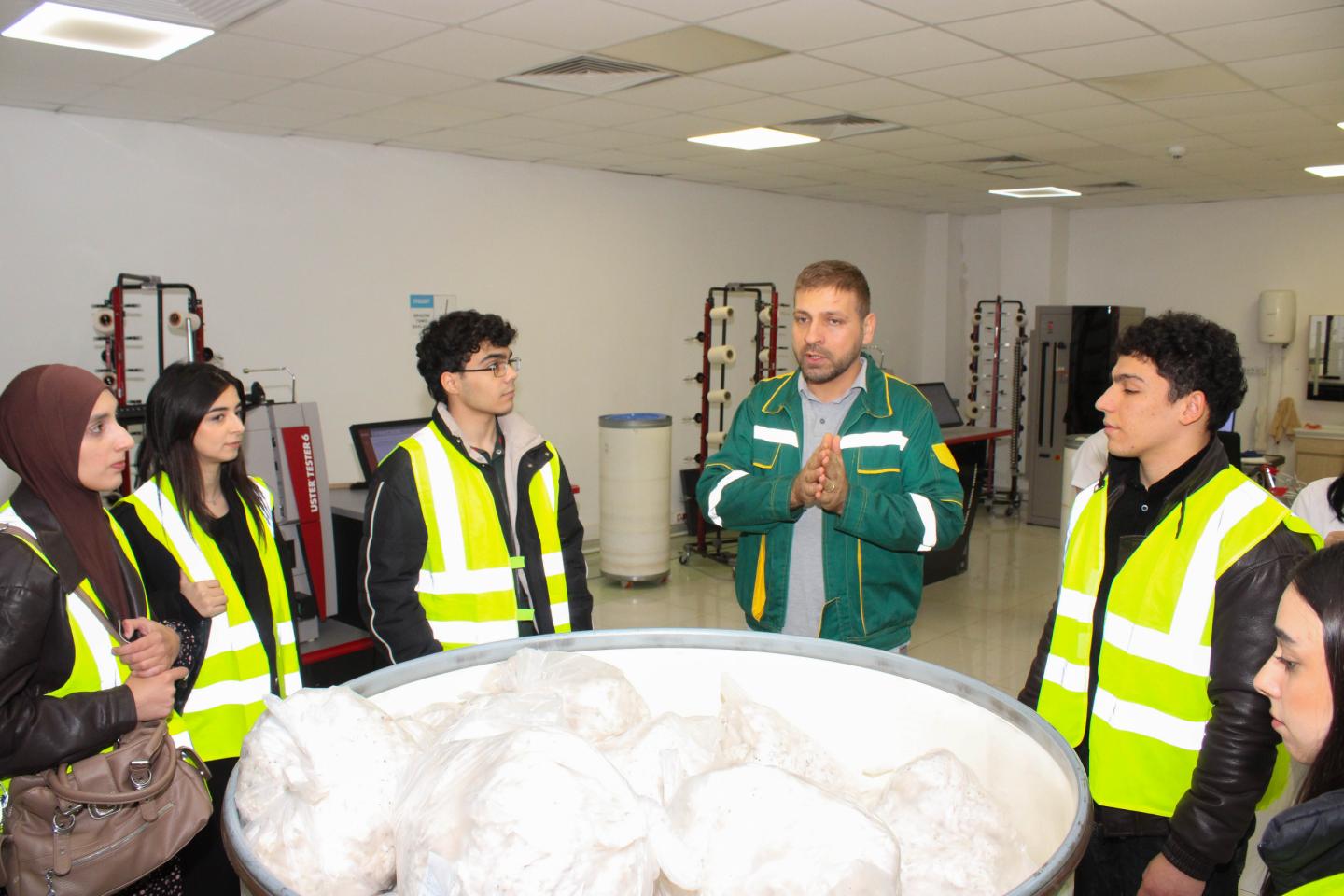
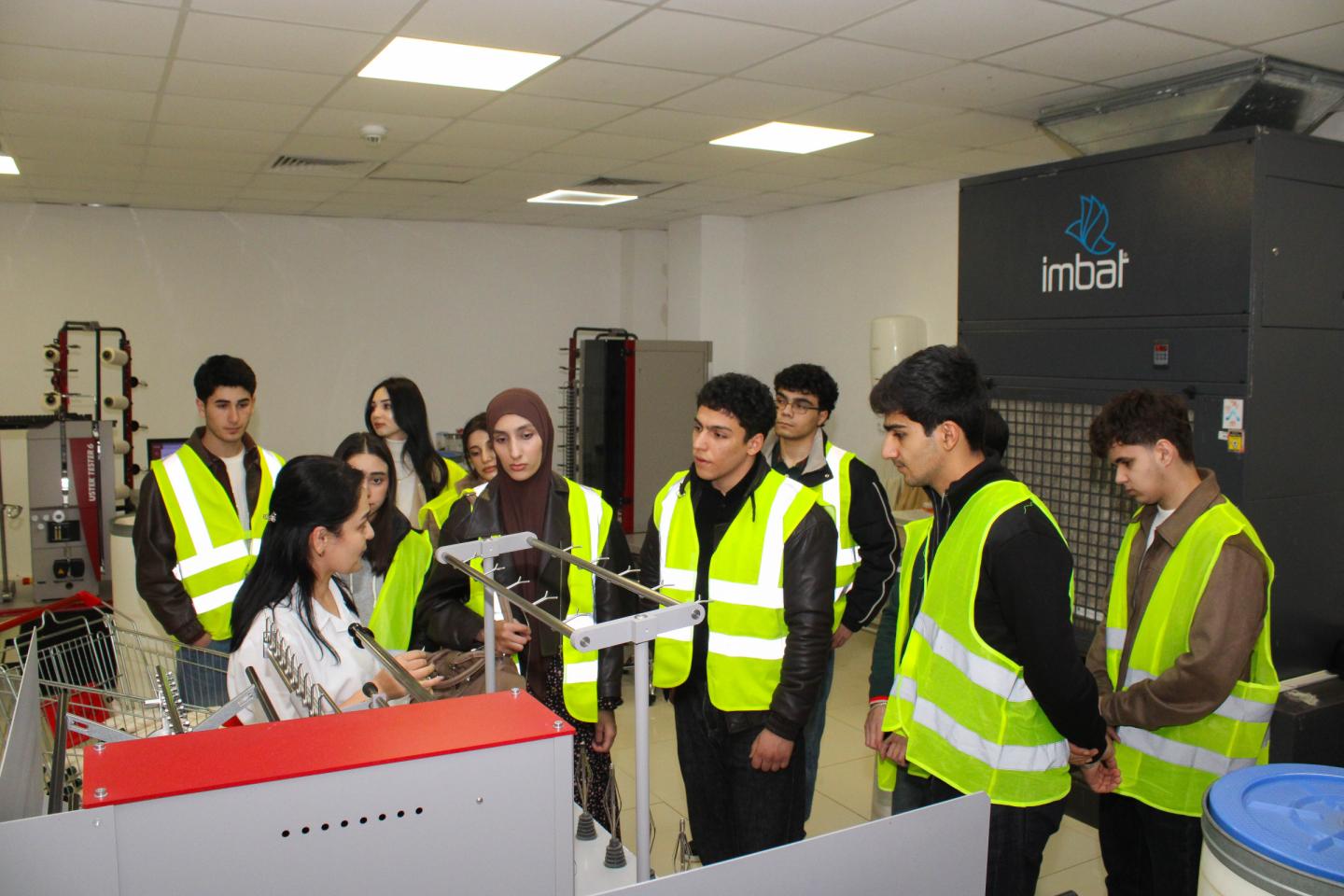
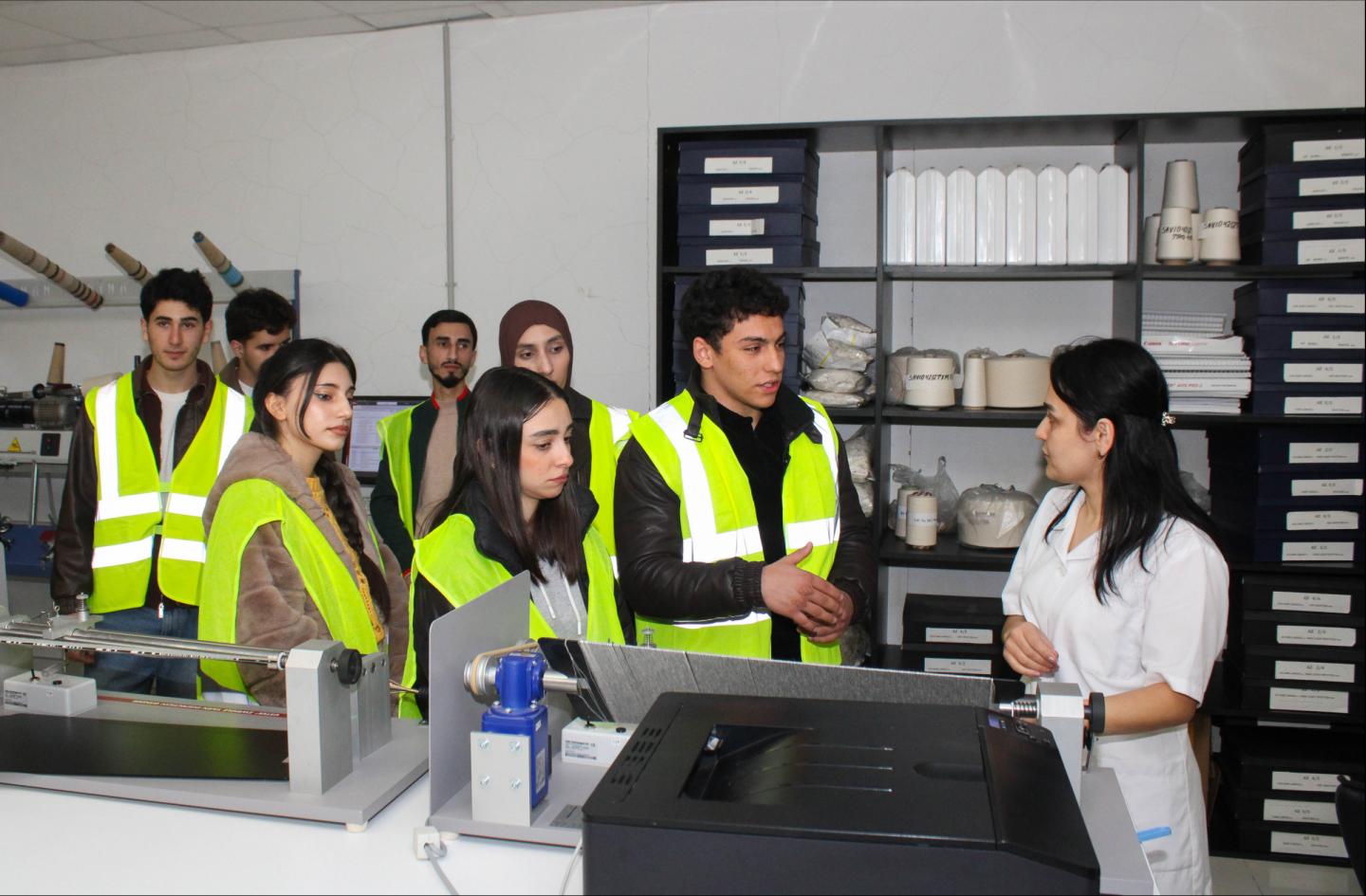
On 19 November 2026, students majoring in Industrial Engineering at Mingachevir State University (MDU) visited Mingachevir Textile LLC, a resident company of Mingachevir Industrial Park. The visit was organised by Associate Professor Mahir Ismayilov, Head of MDU’s Department of Mechanics, and Tunzala Alifova, a teaching assistant in the department. Its purpose was to reinforce the students’ theoretical knowledge through practical examples and introduce them to modern textile technologies.
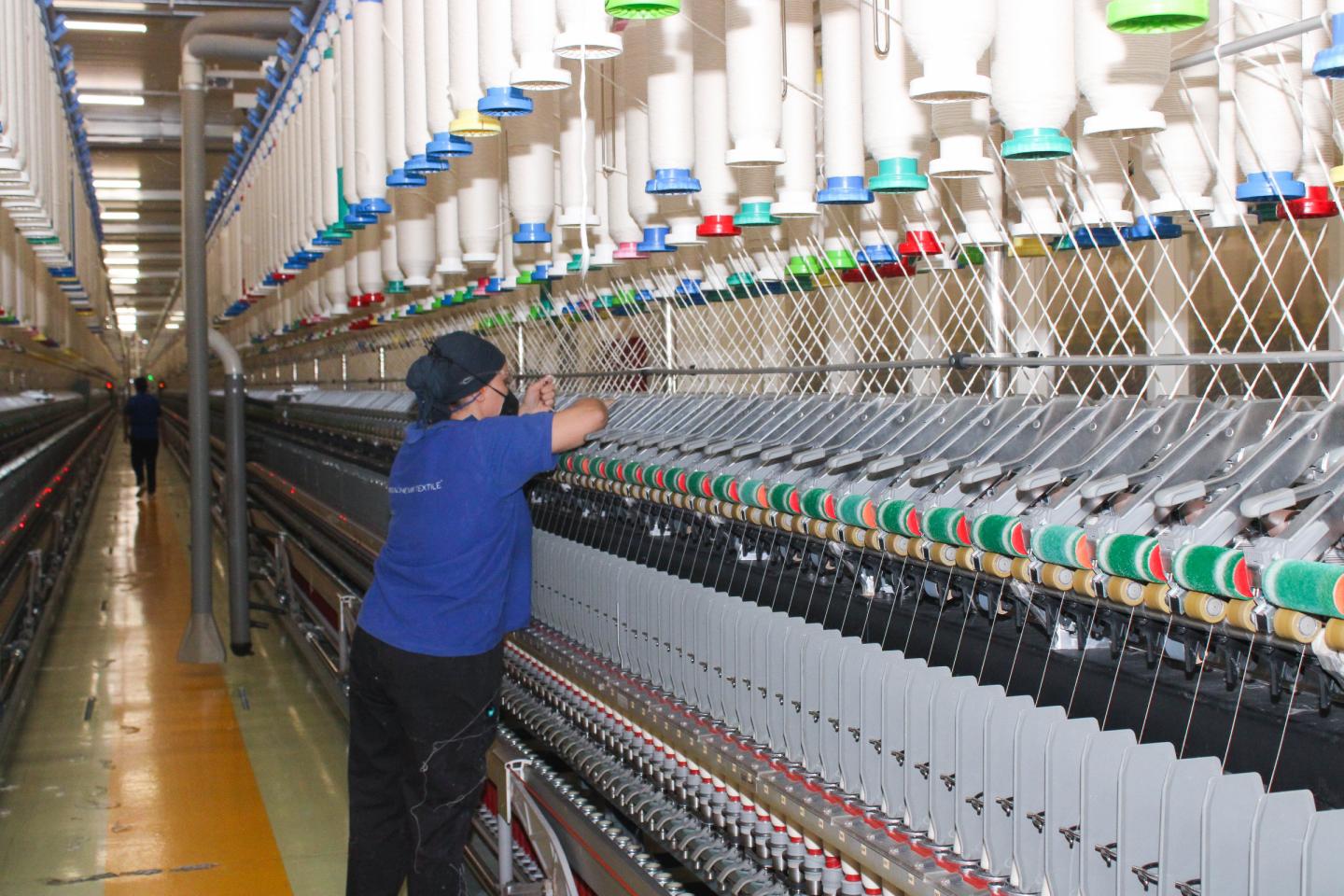
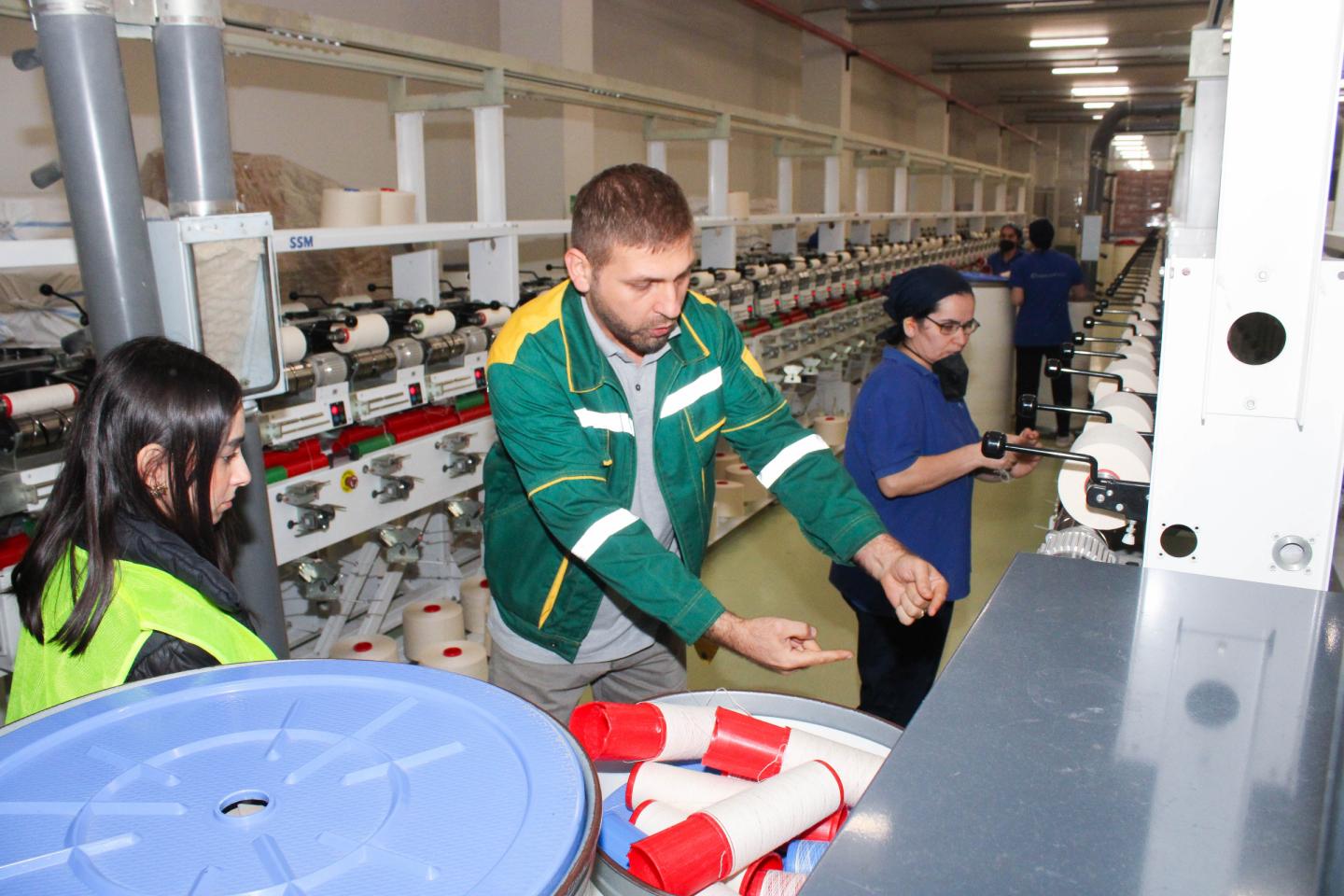
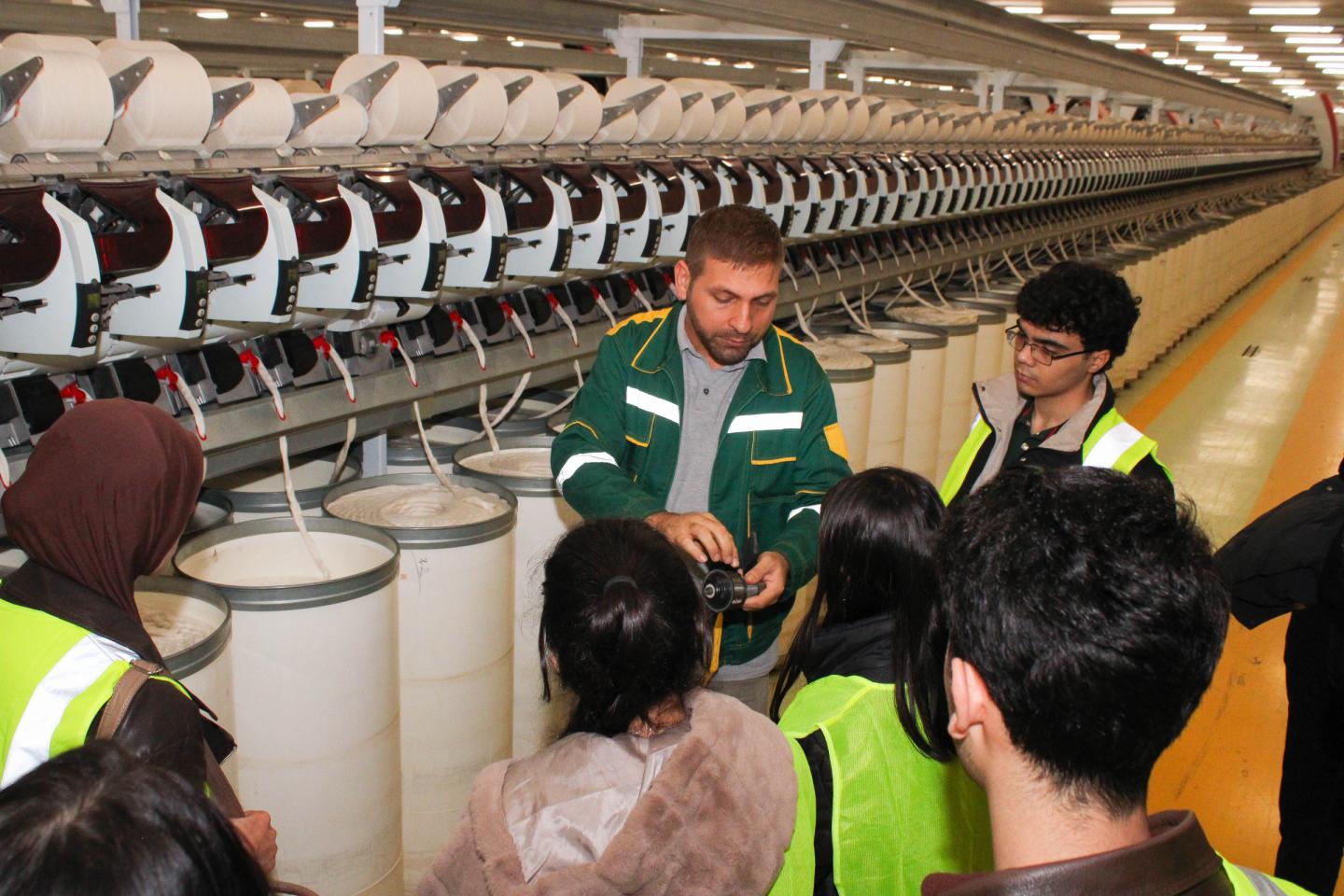
At the company’s cotton-polyester yarn factory, the students observed how the production line operates, how the machinery works, and in what sequence the operations are carried out. They learned how cotton fibre is spun into yarn using ring and open-end spinning methods and how the choice of spinning method affects the yarn’s properties and applications.
Observing the production line gave the students an opportunity to see how individual operations are coordinated. Comparing the spinning methods also helped them understand, through a practical example, how the choice of production process affects the quality characteristics of the finished product. These considerations are important in industrial engineering for production planning, the efficient use of resources, and product quality control.
The visit also covered occupational health and safety in manufacturing. The students learned about the duties of production line workers and the safety rules to follow when operating machinery and moving through production areas. They were also shown how workstations are organised to meet these requirements.
On 28 September 2026, Mingachevir State University and Mingachevir Textile LLC signed a memorandum of cooperation. At the signing meeting, the parties discussed opportunities to organise industrial placements for students, conduct applied research based on the company’s technological needs, and identify topics for master’s theses.
Visits of this kind help integrate university–industry cooperation into teaching. Observing production processes first-hand allows students to better understand the practical applications of industrial engineering and become familiar with the kinds of production issues they may encounter in their future careers.