
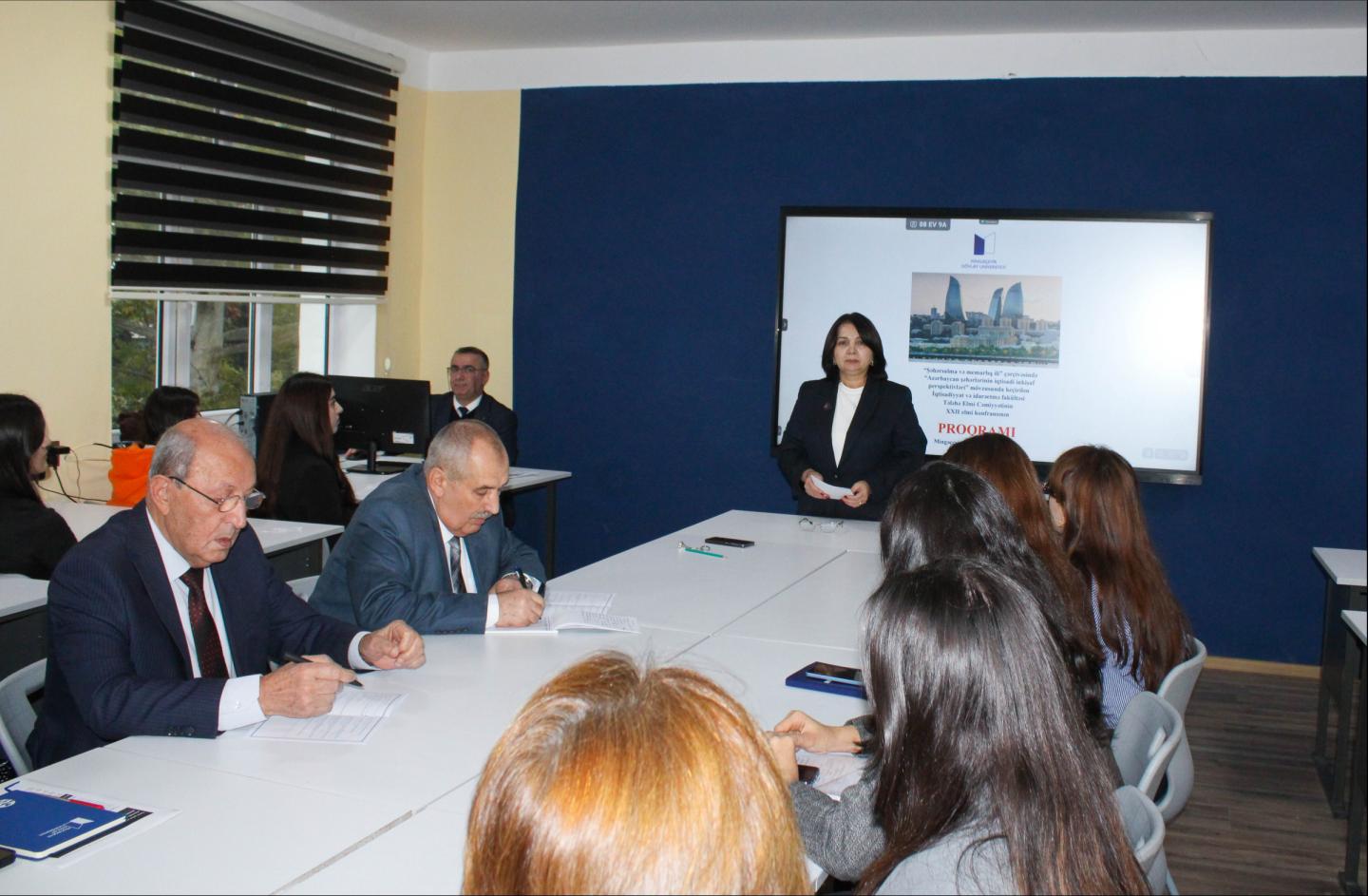
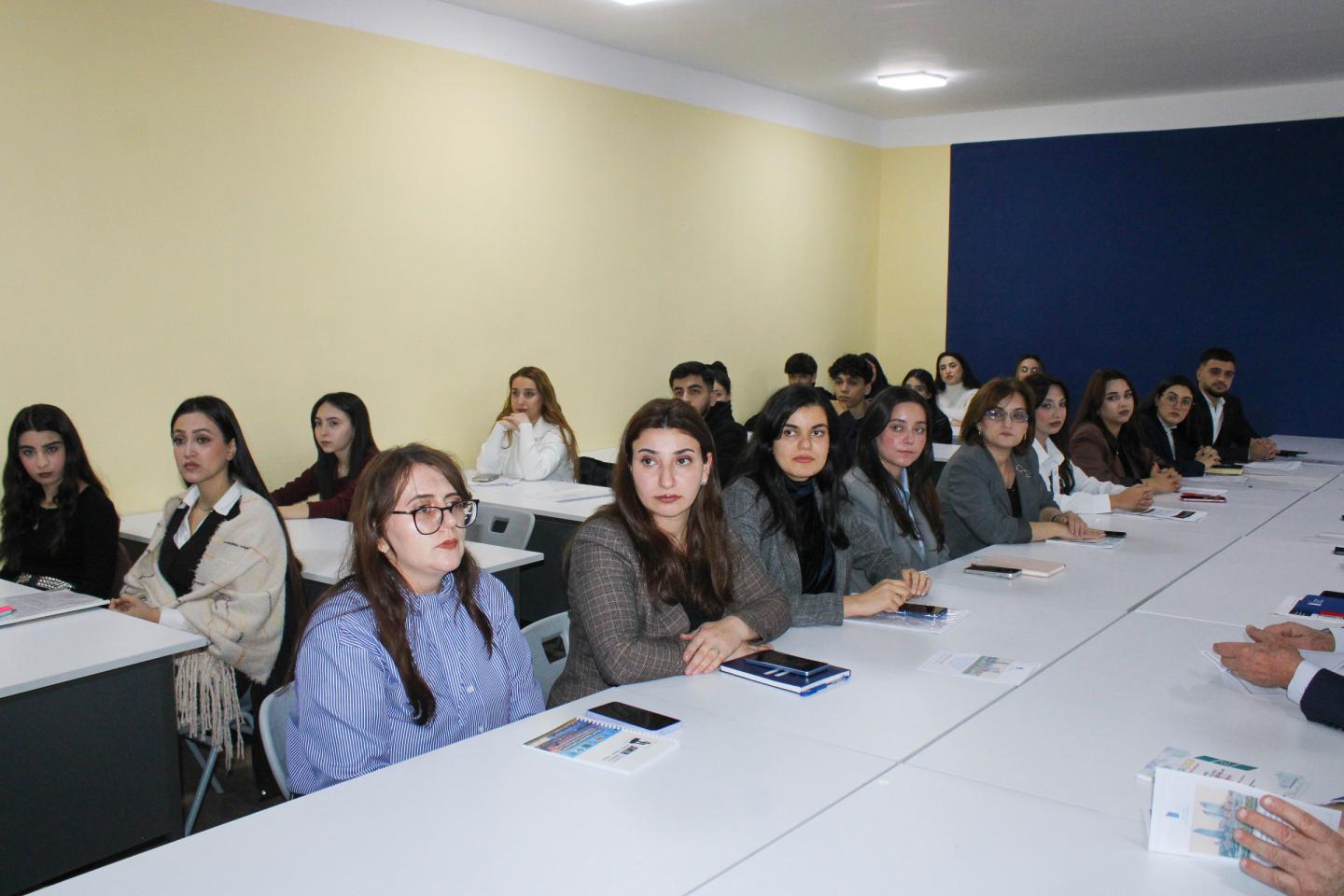
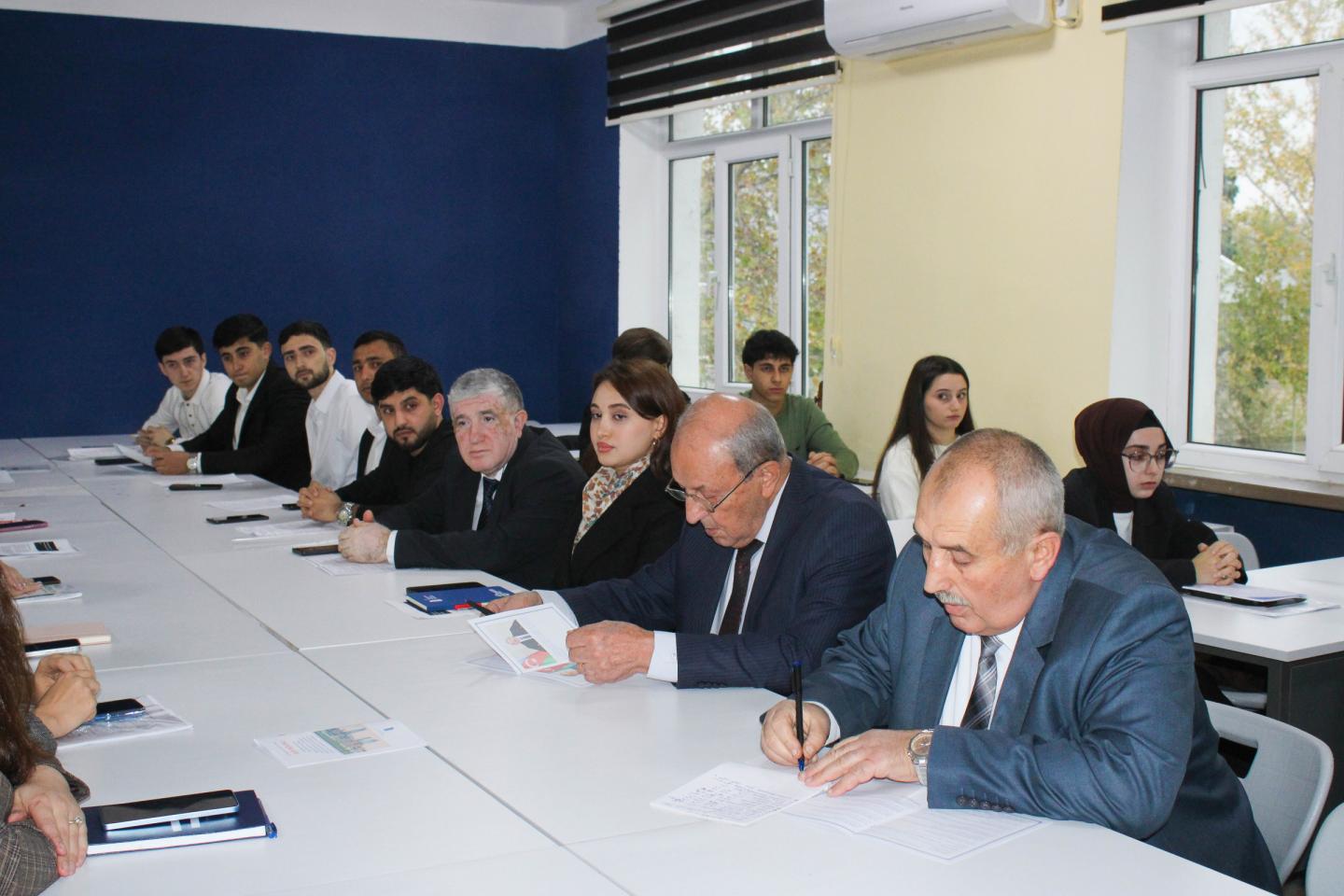
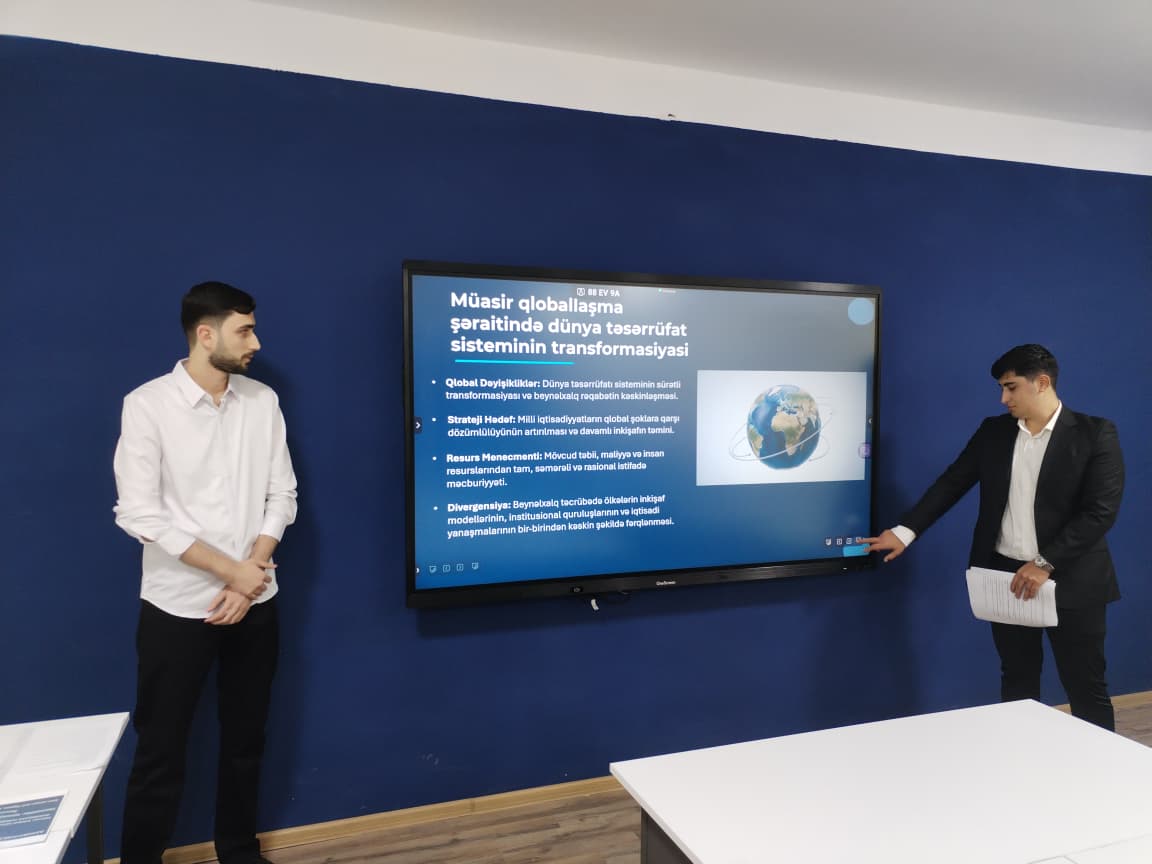
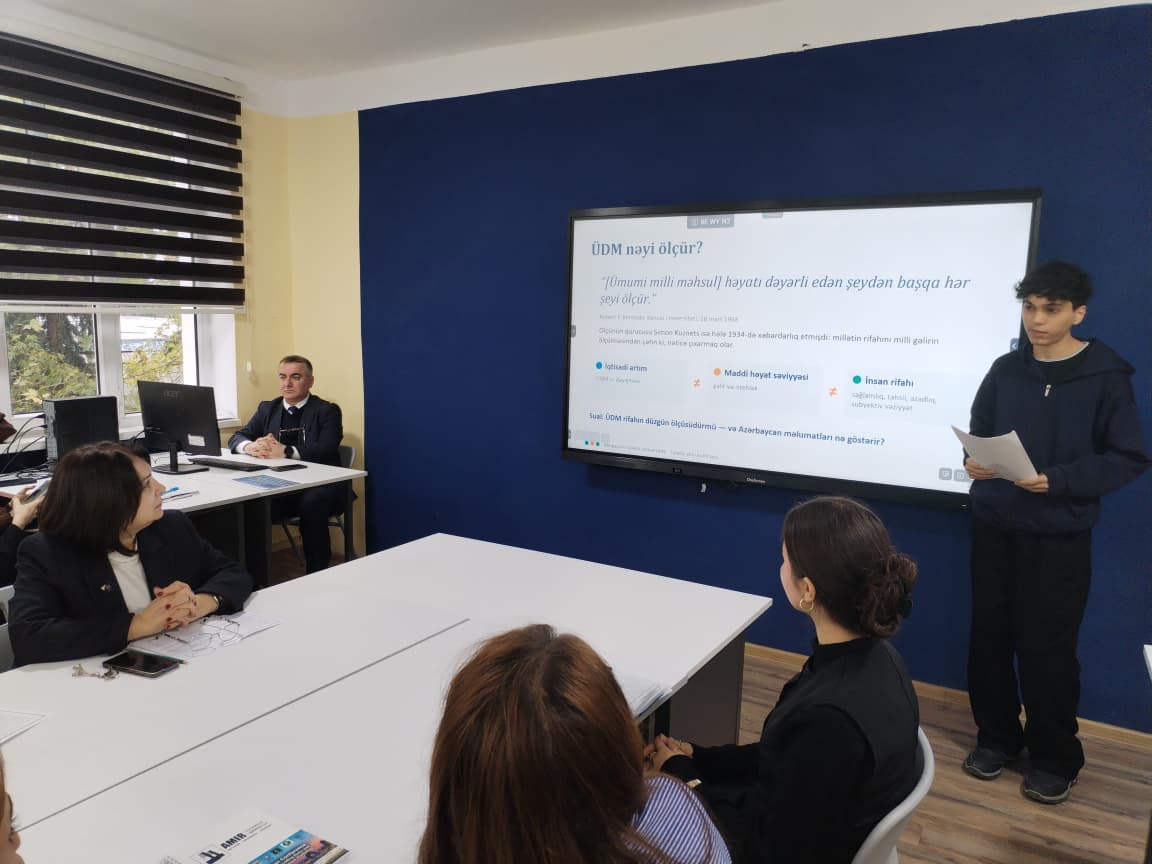
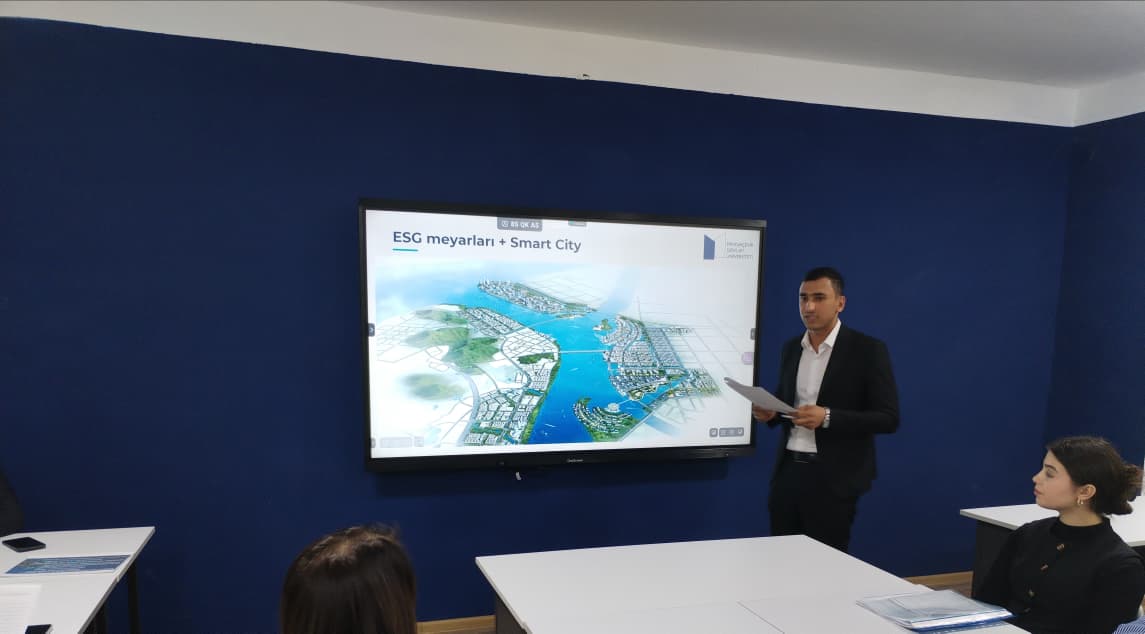
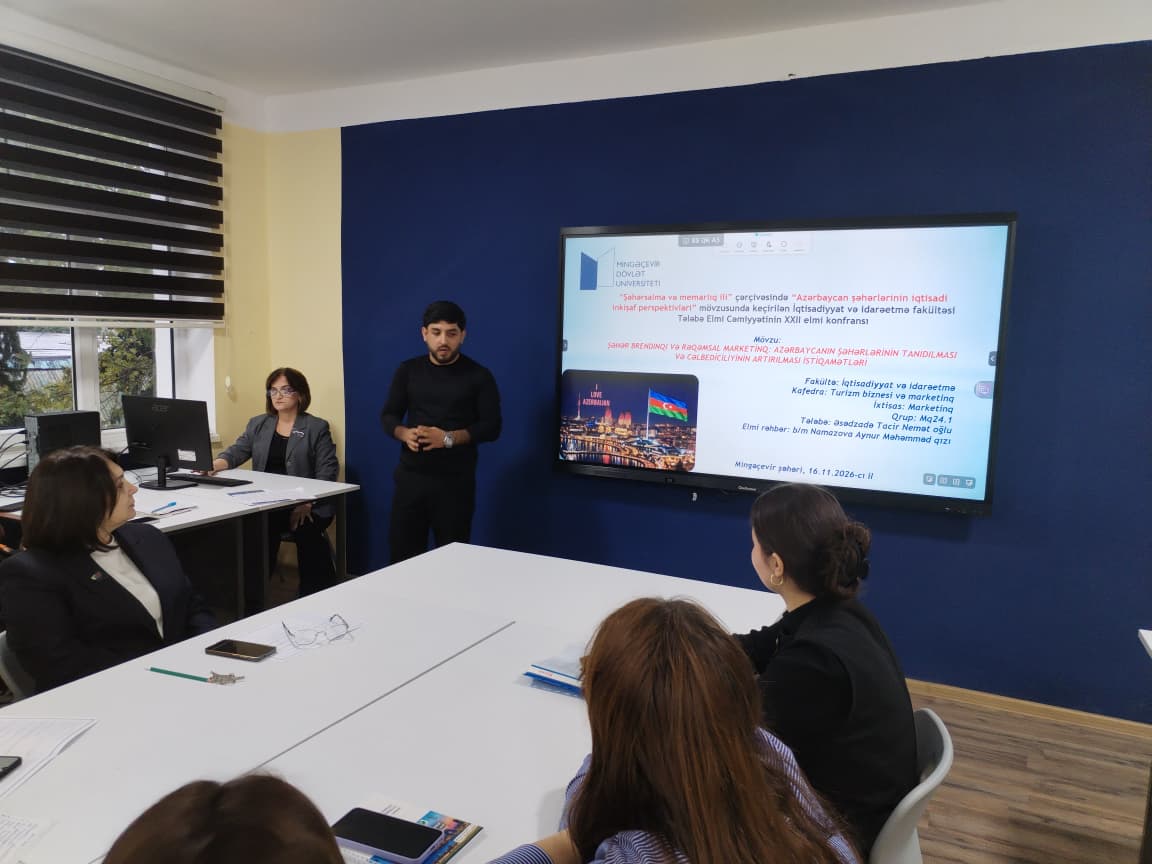
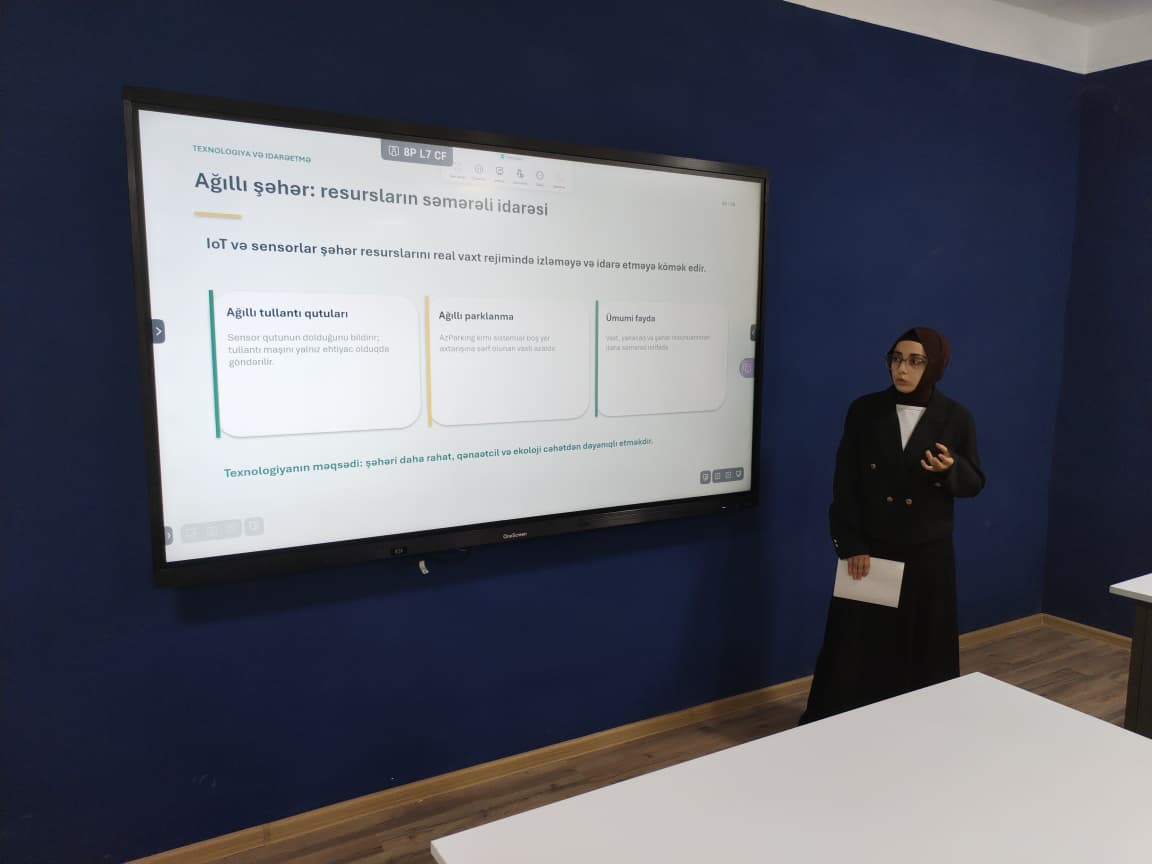
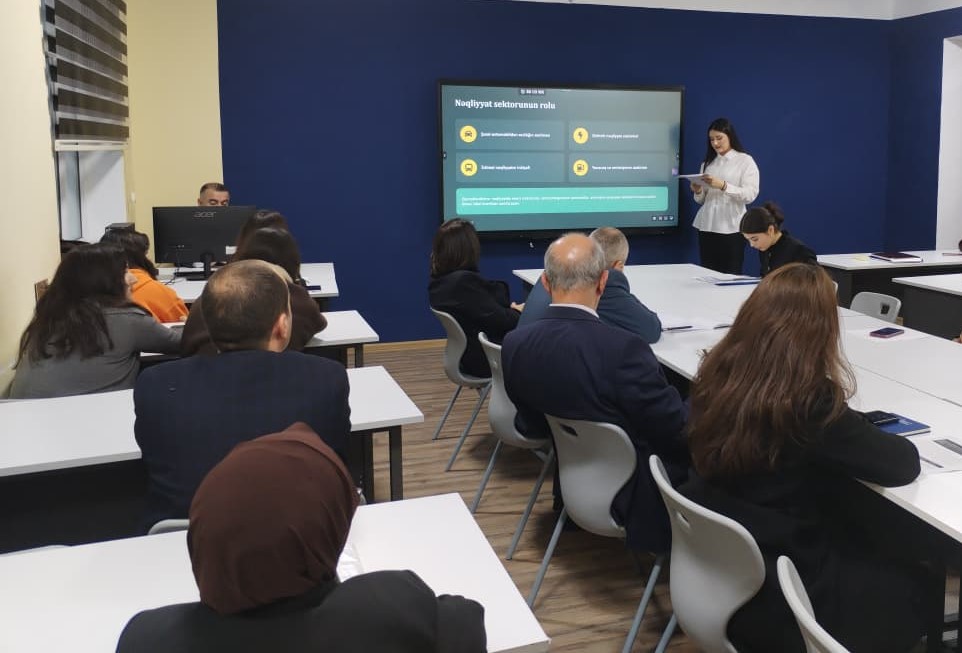
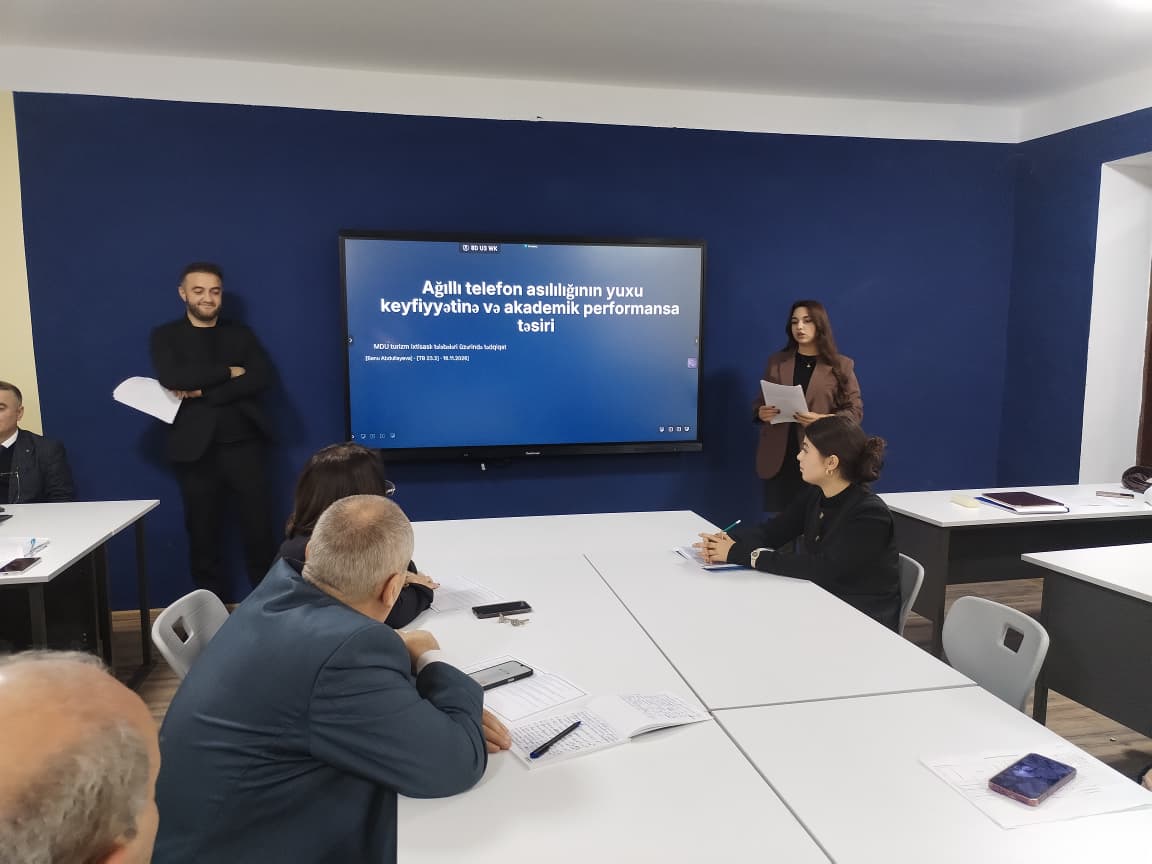
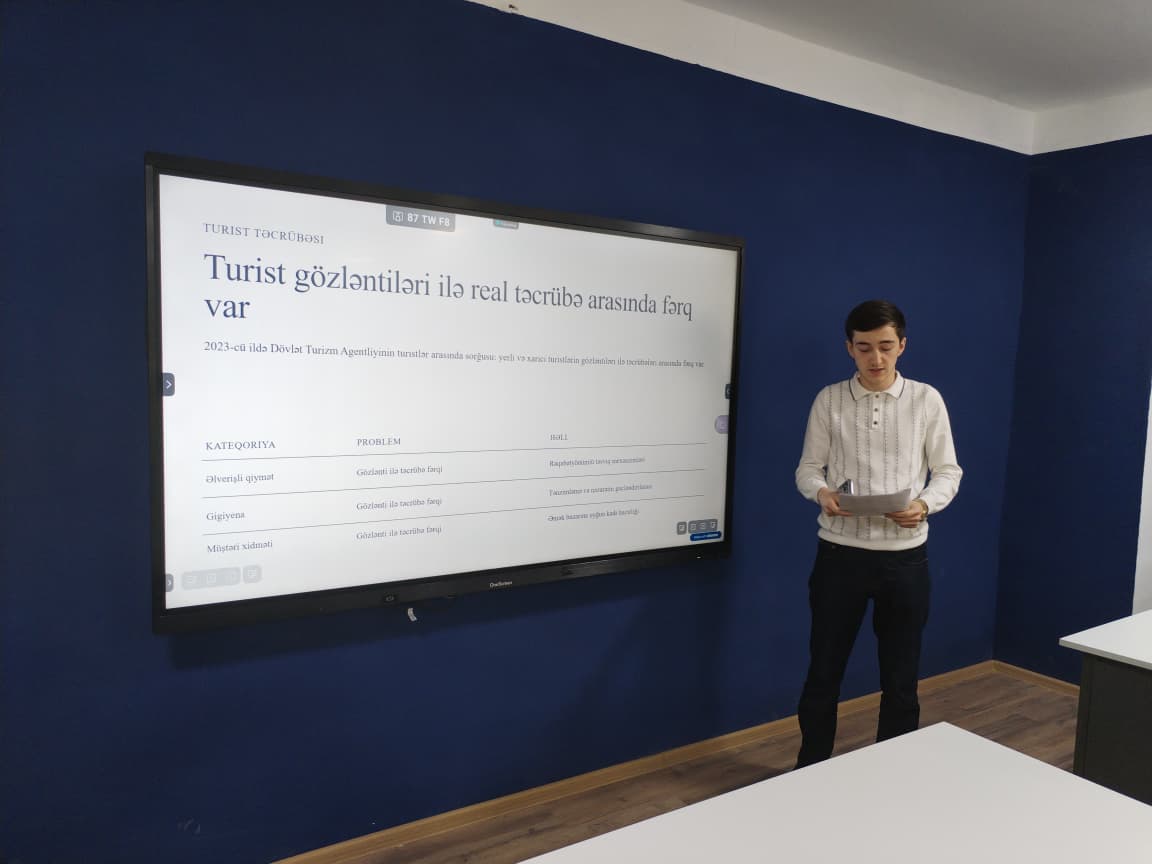
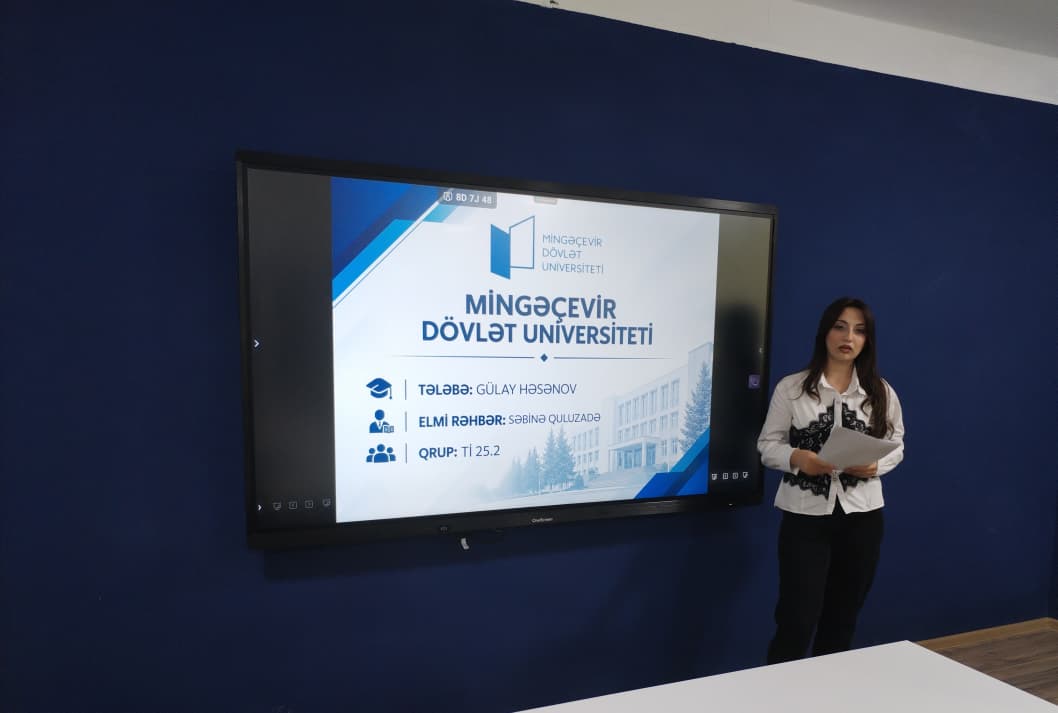
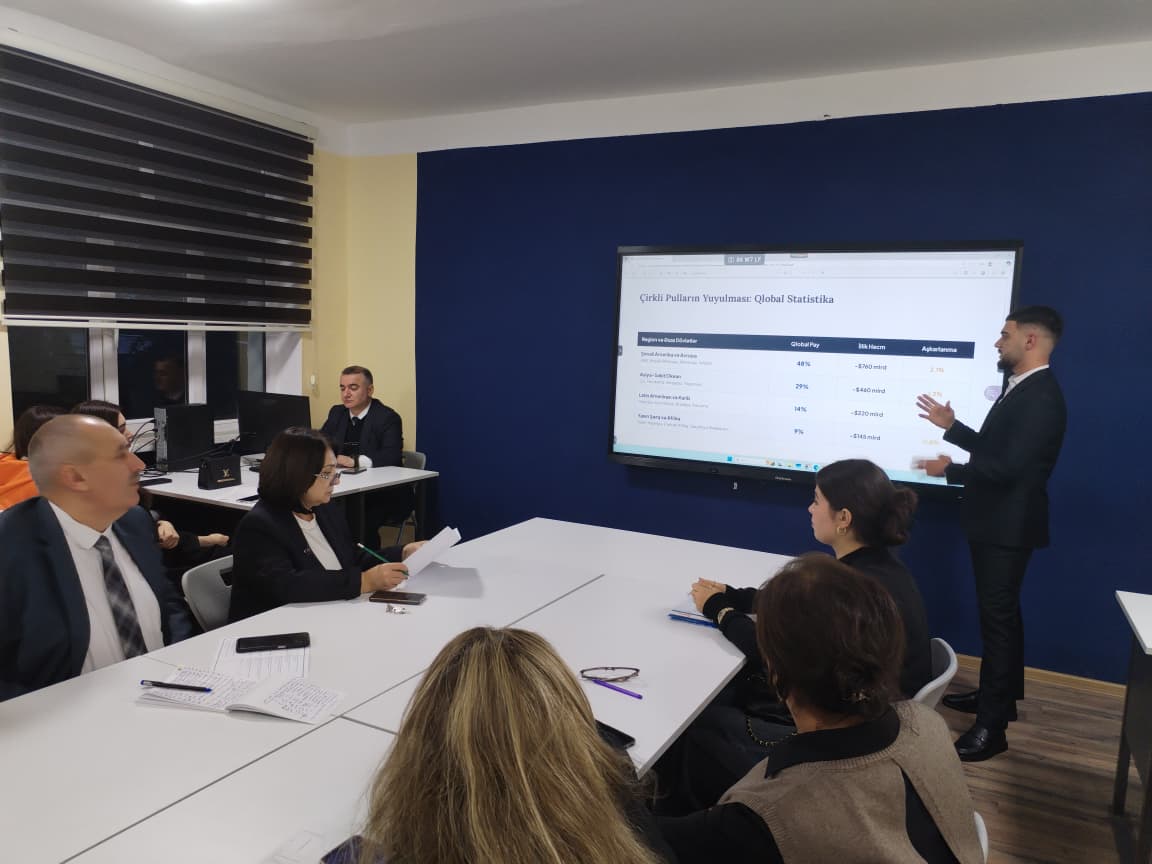
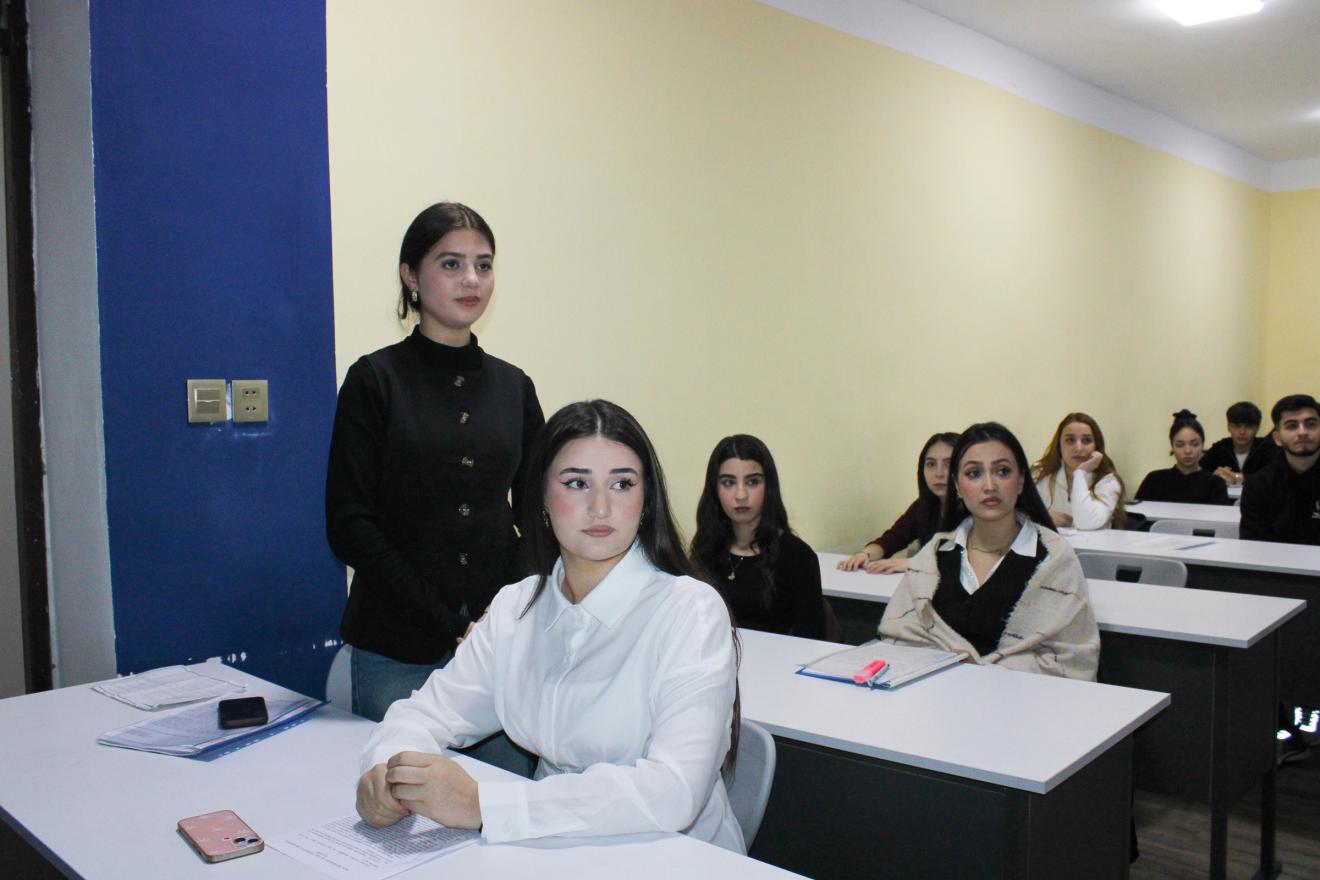
On 16 November 2026, the 22nd Scientific Conference of the Student Scientific Society was held at the Faculty of Economics and Management of Mingachevir State University (MSU) as part of the “Year of Urban Planning and Architecture.” The conference, dedicated to the theme “Economic Development Prospects of Azerbaijani Cities,” featured research presentations by 14 students from different degree programmes and years of study within the faculty.
Opening the conference, Nushaba Gadimli, Dean of the Faculty of Economics and Management, spoke about the economic development prospects of Azerbaijani cities. She highlighted the importance of exploring issues related to urban economics and regional development through student research and wished the presenters success. Following an overview of the research topics, the students delivered their presentations.
The main aim of the conference was to increase students’ interest in research, develop their research, analytical and academic presentation skills, promote the study of national cultural heritage and examine issues related to contemporary urban development from an academic perspective.
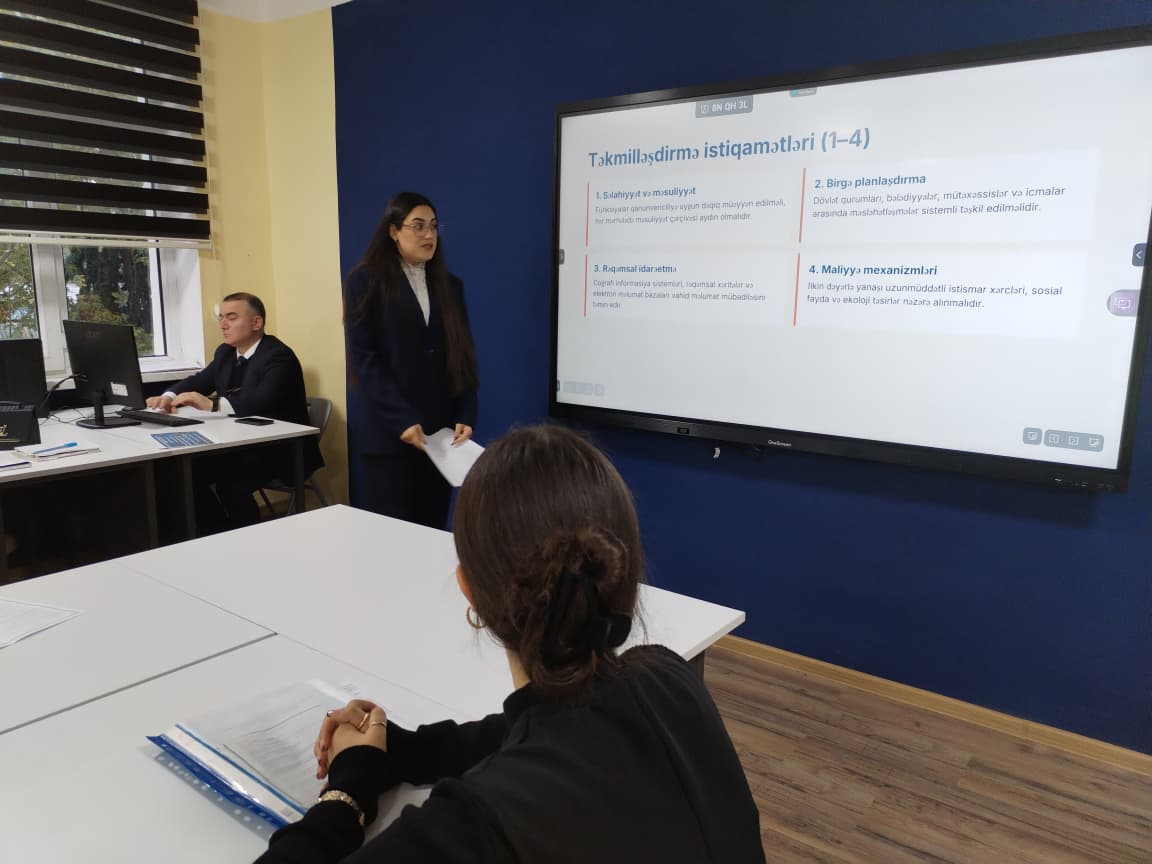
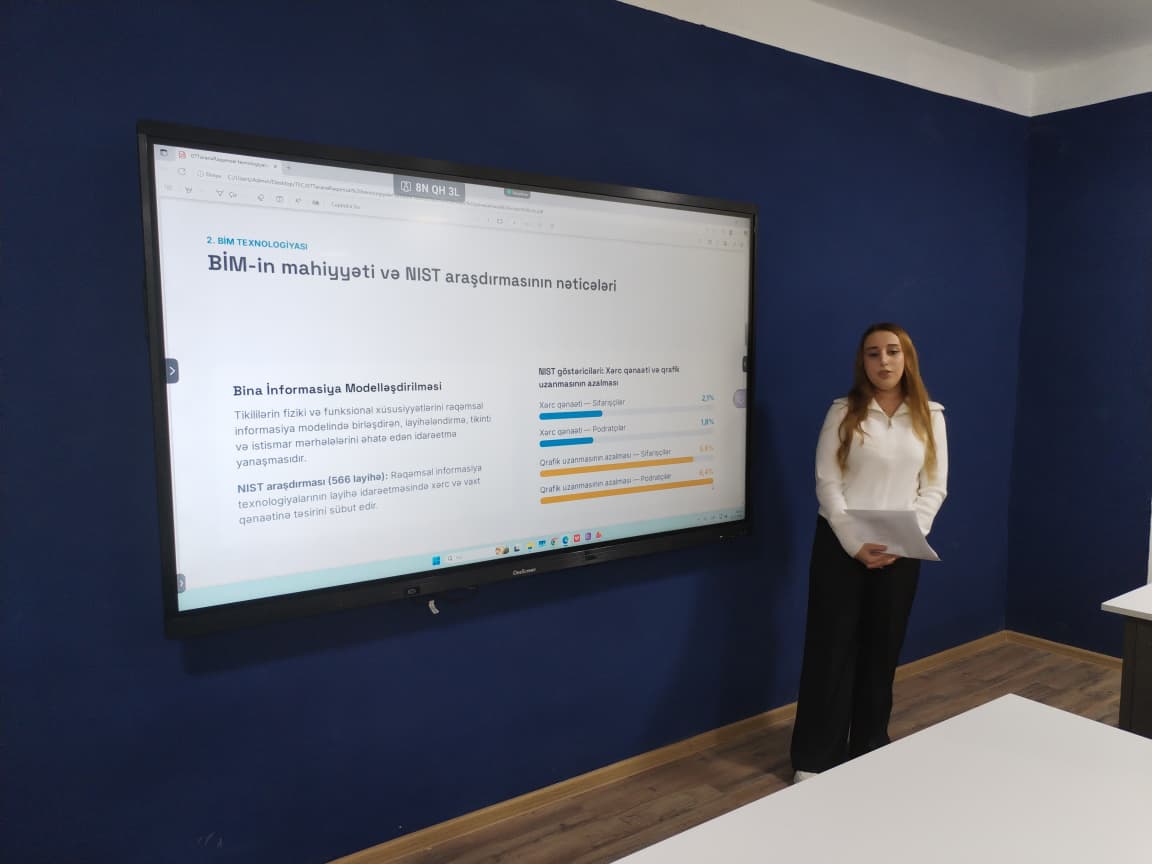
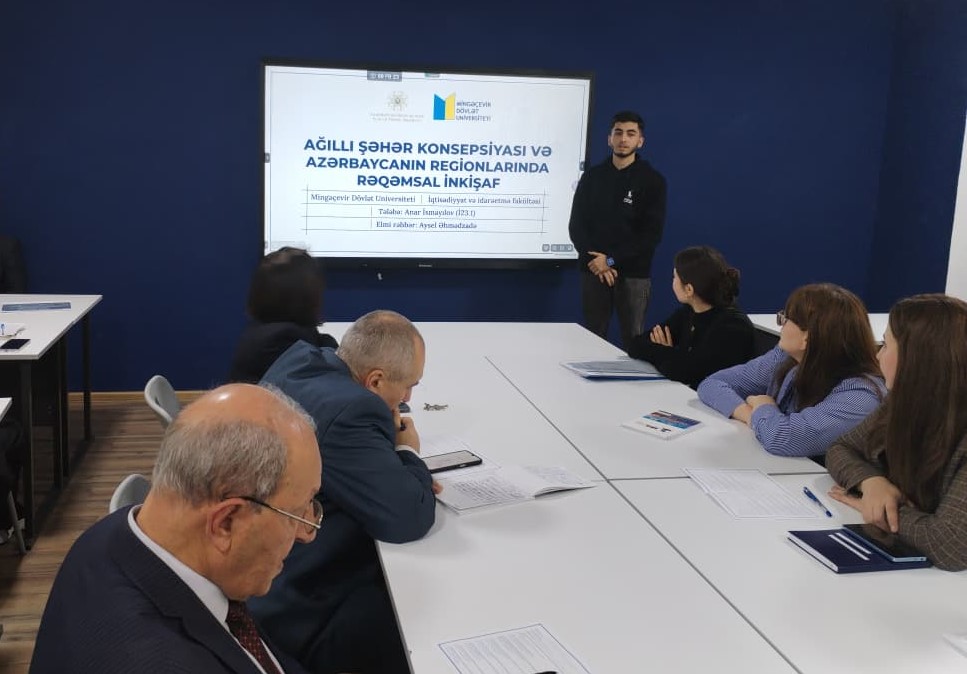
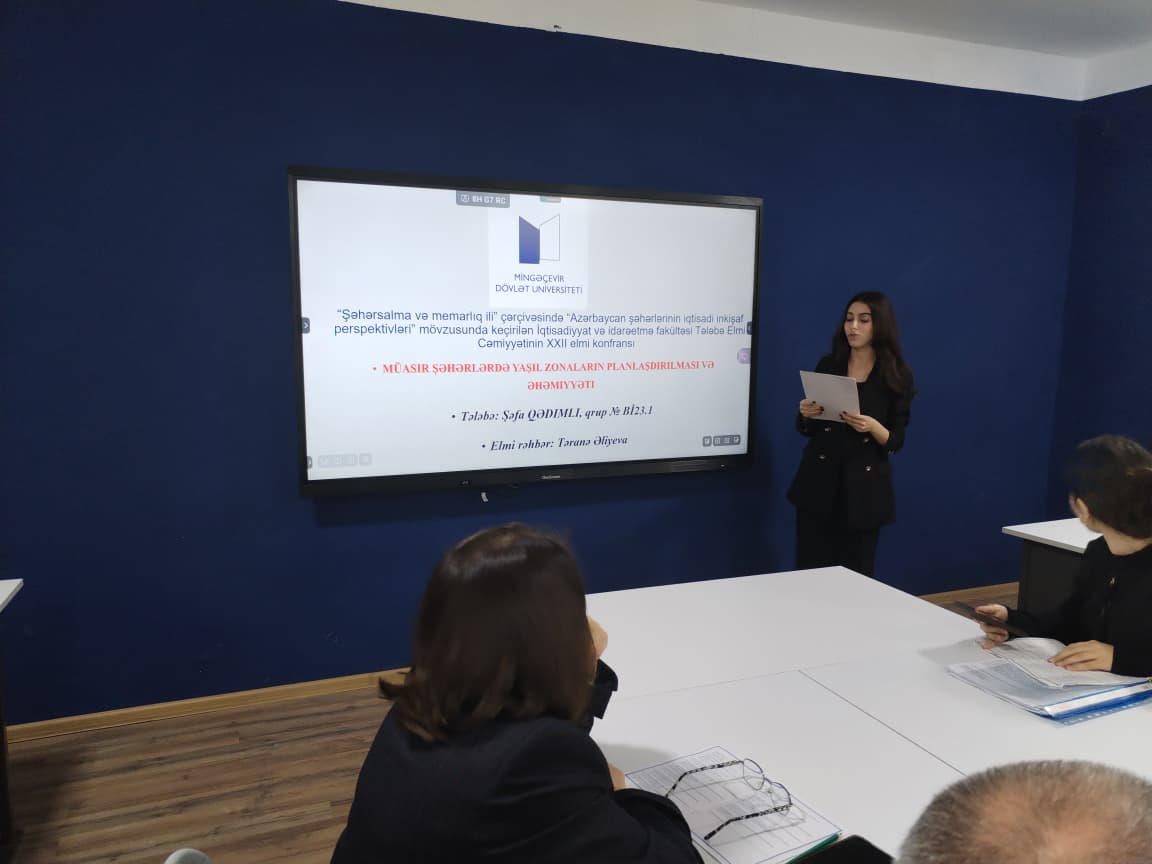
The presentations covered economic growth, the efficiency of investment in urban infrastructure, city branding and digital marketing, and cooperation between state and municipal authorities in urban planning. Students also presented their research on green space planning, smart city solutions and the use of digital technologies in urban planning. Other topics included workforce training in tourism, the relationship between students’ digital habits, sleep quality and academic performance, and financial oversight in the banking sector.
The presentations examined the financial and economic efficiency of urban infrastructure investment, using Mingachevir as a case study. They also explored how AI-based digital models could be used to preserve architectural heritage and manage tourist flows in historic urban settings. These studies made it possible to consider the economic development of cities from the perspectives of investment, environmental planning and cultural heritage preservation.
The conference gave students an opportunity to investigate local development issues and present their findings in an academic setting. The presentations on green urban environments, digital solutions and tourism explored urban development prospects in light of economic, environmental and social factors.