
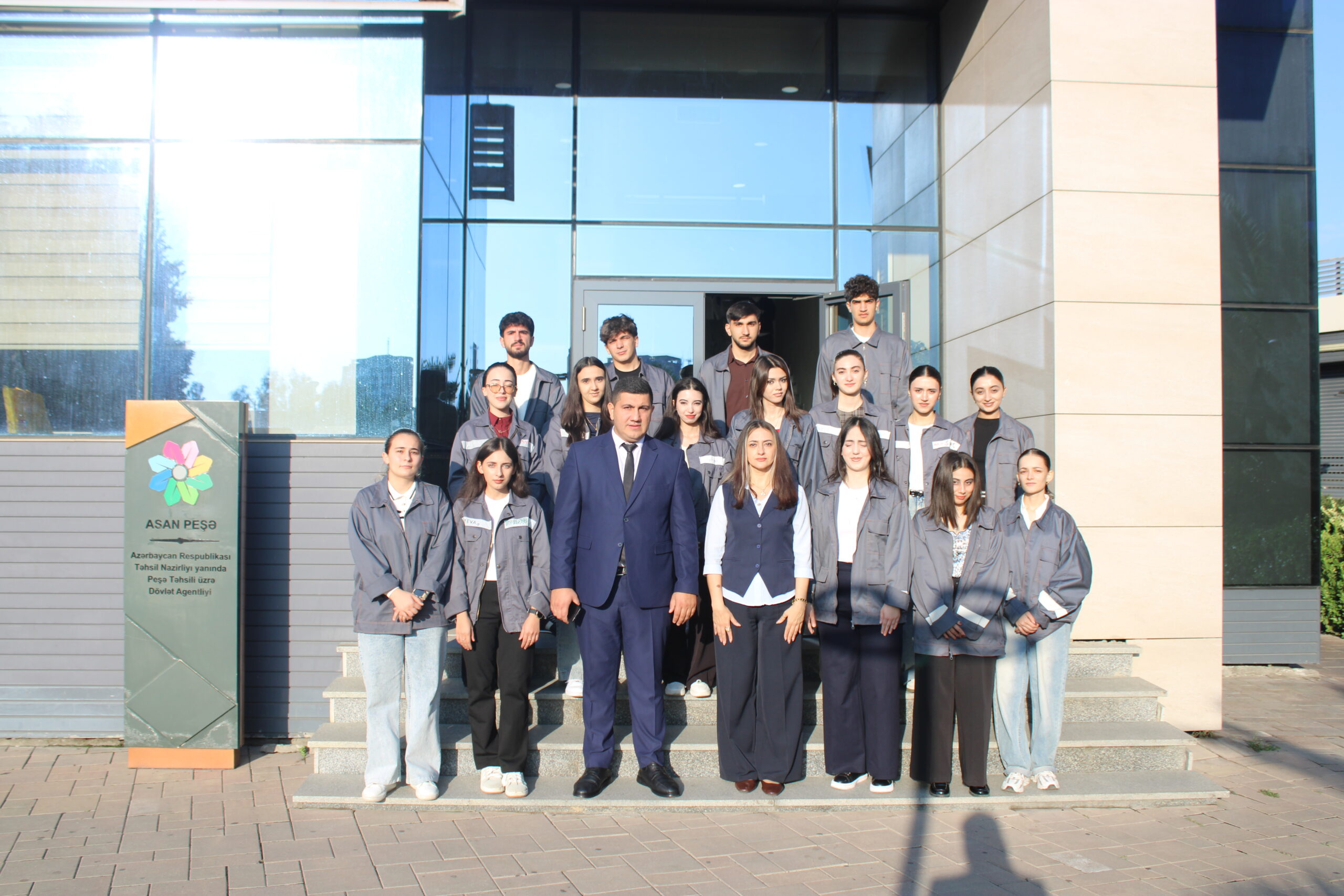
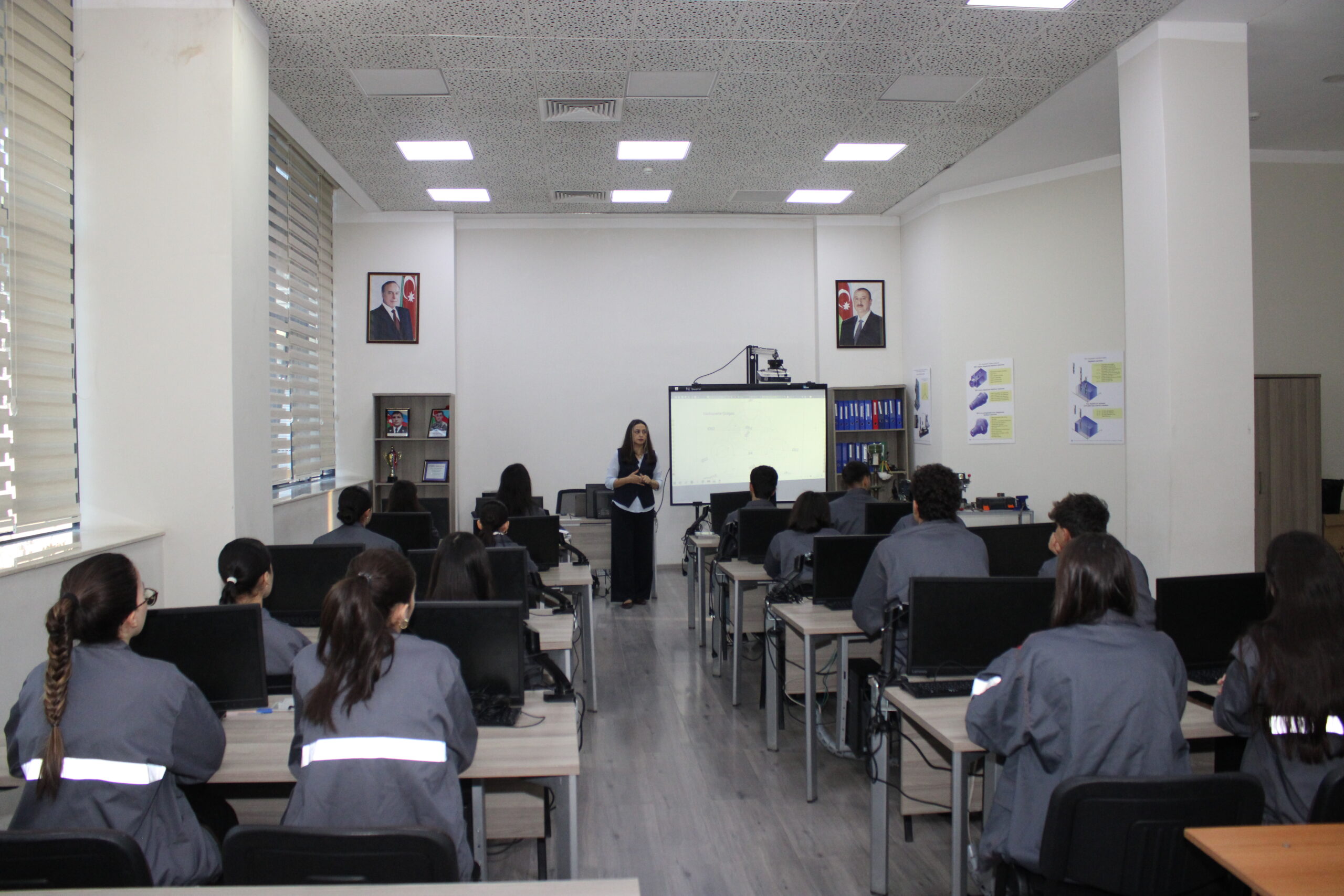
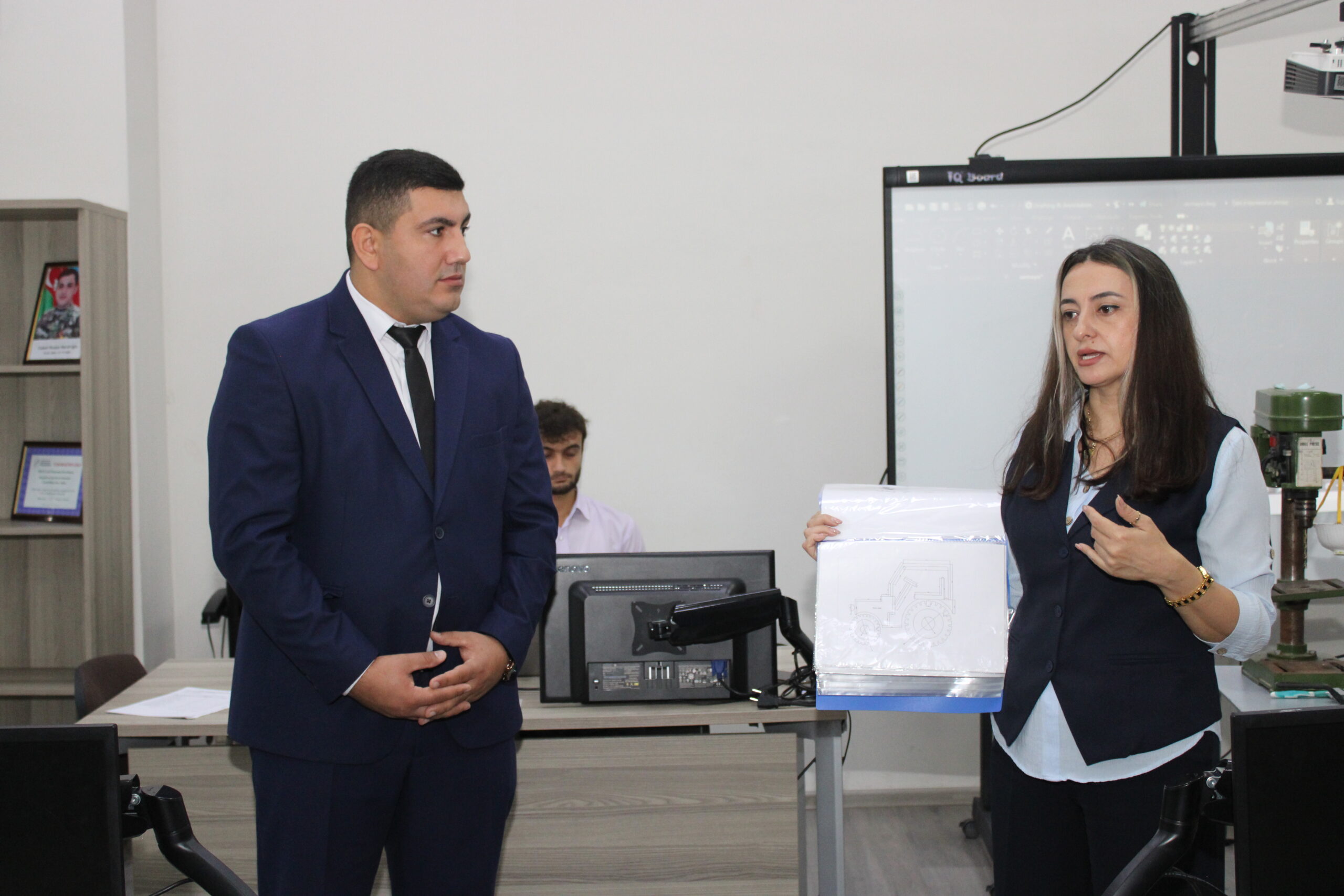
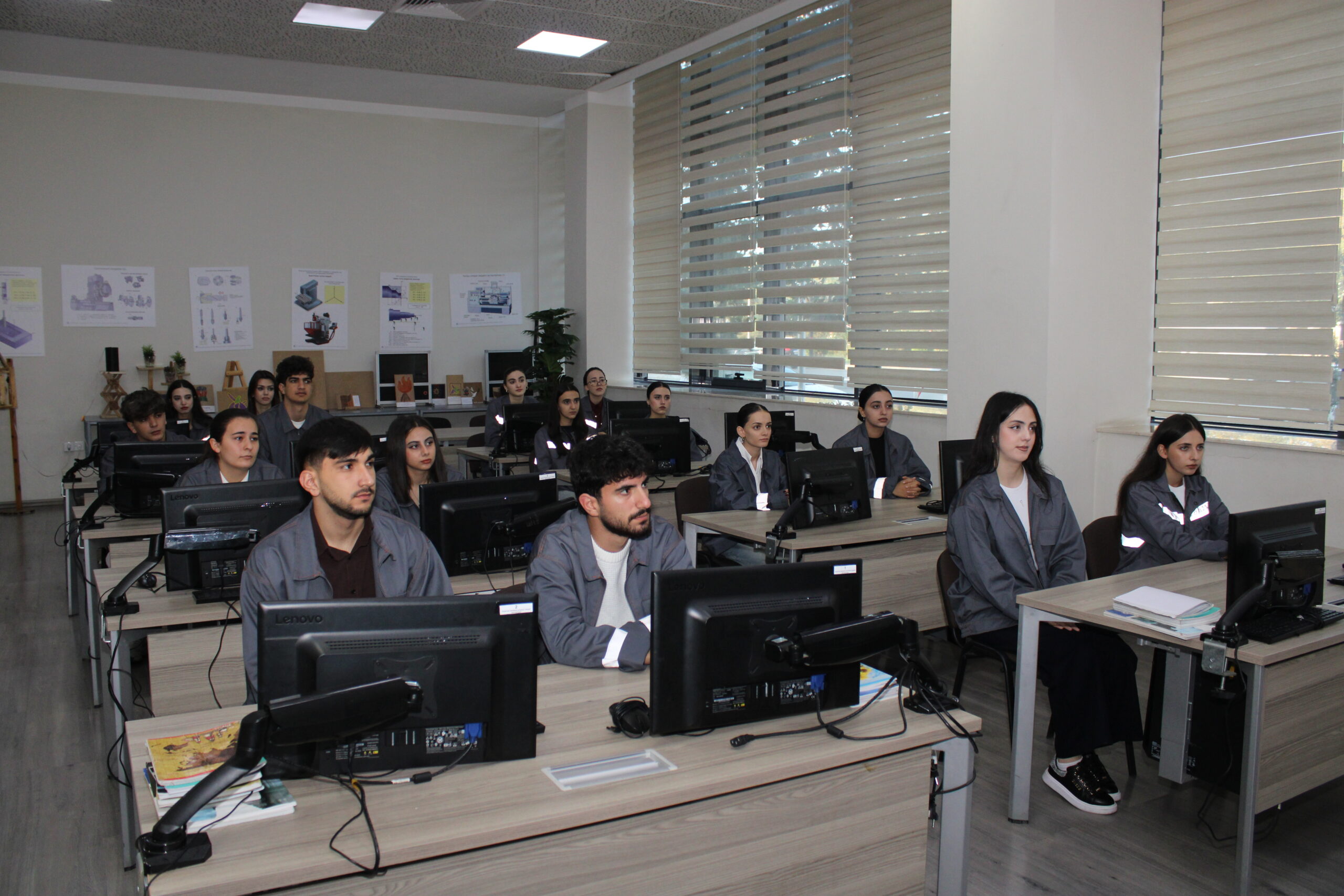
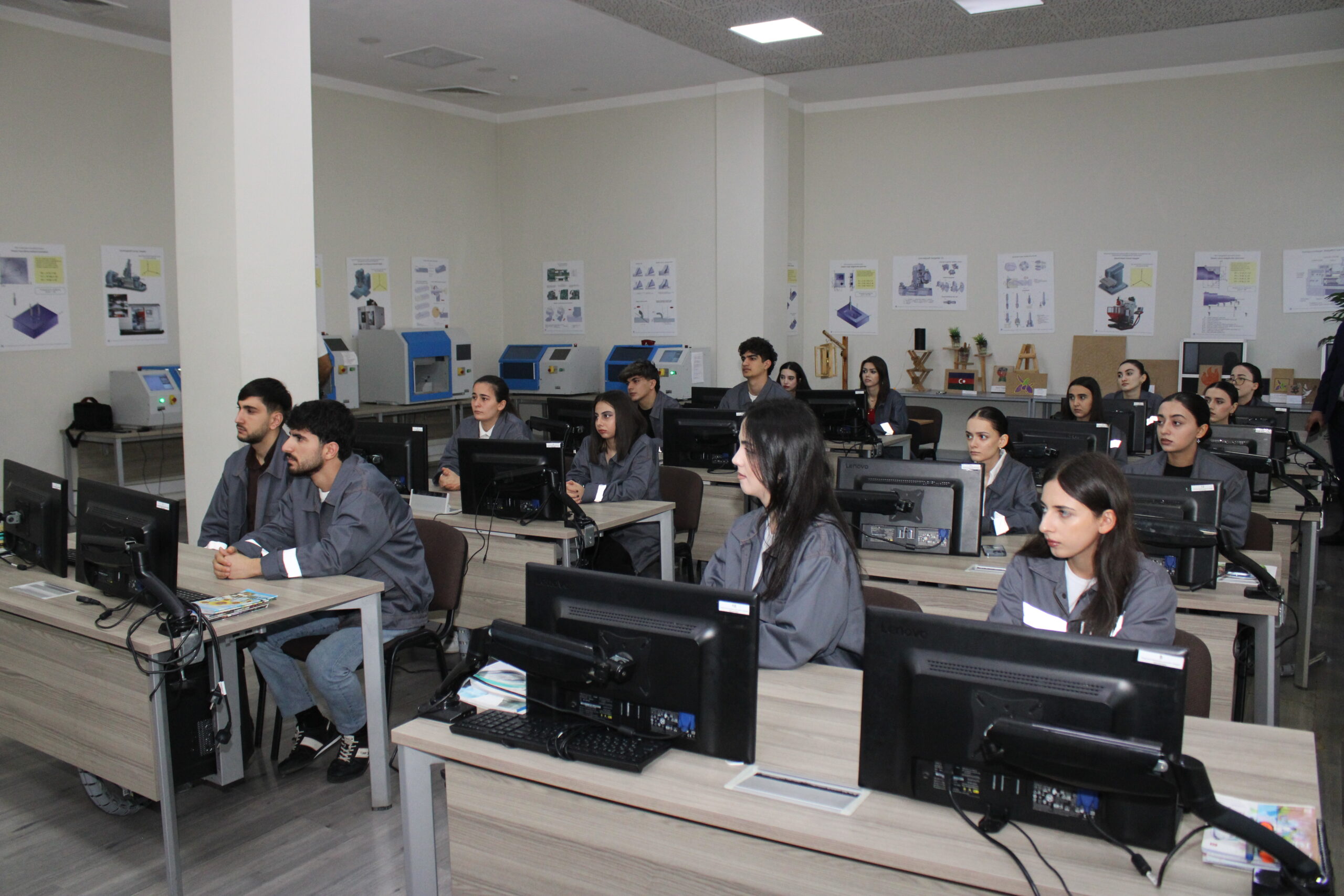
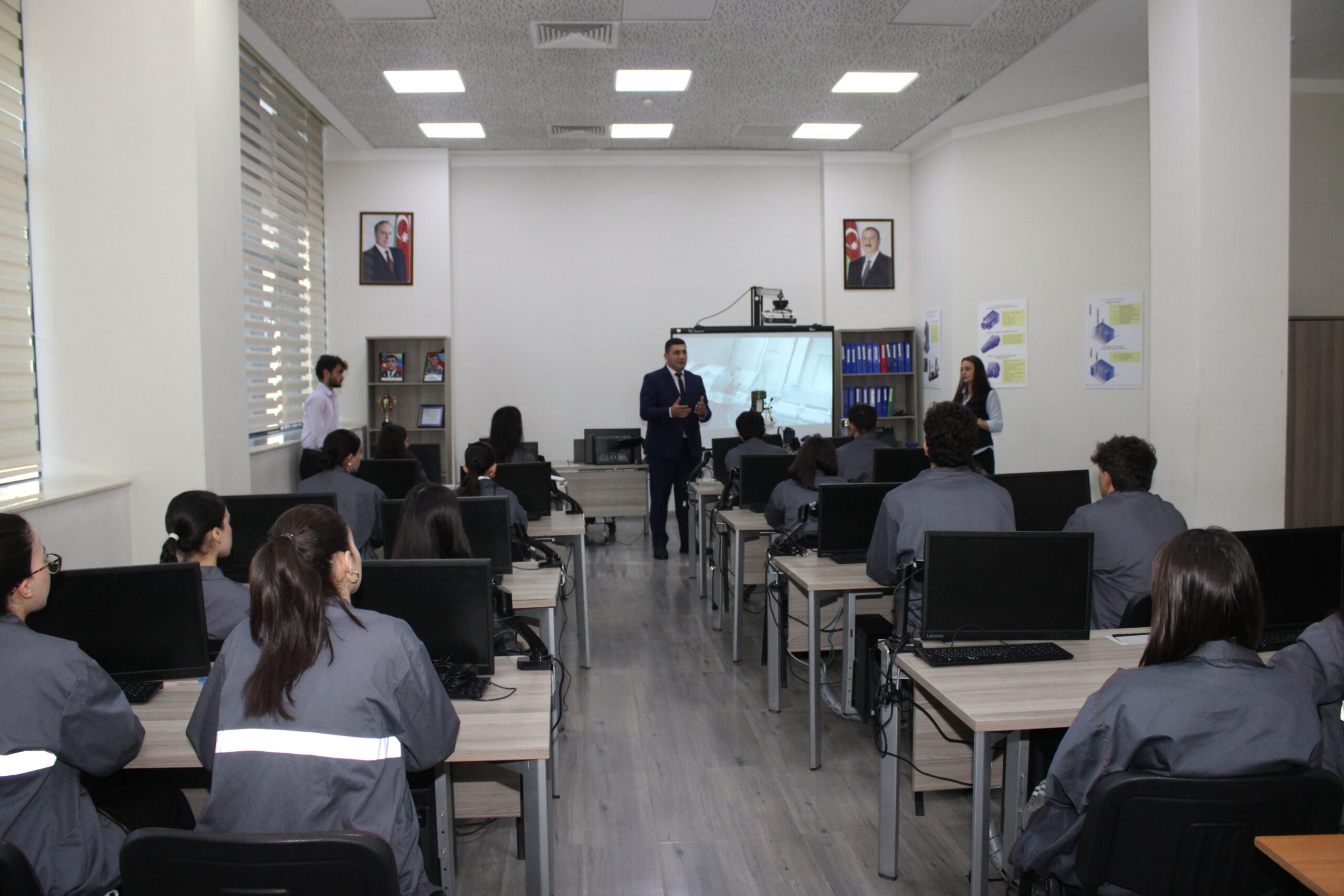
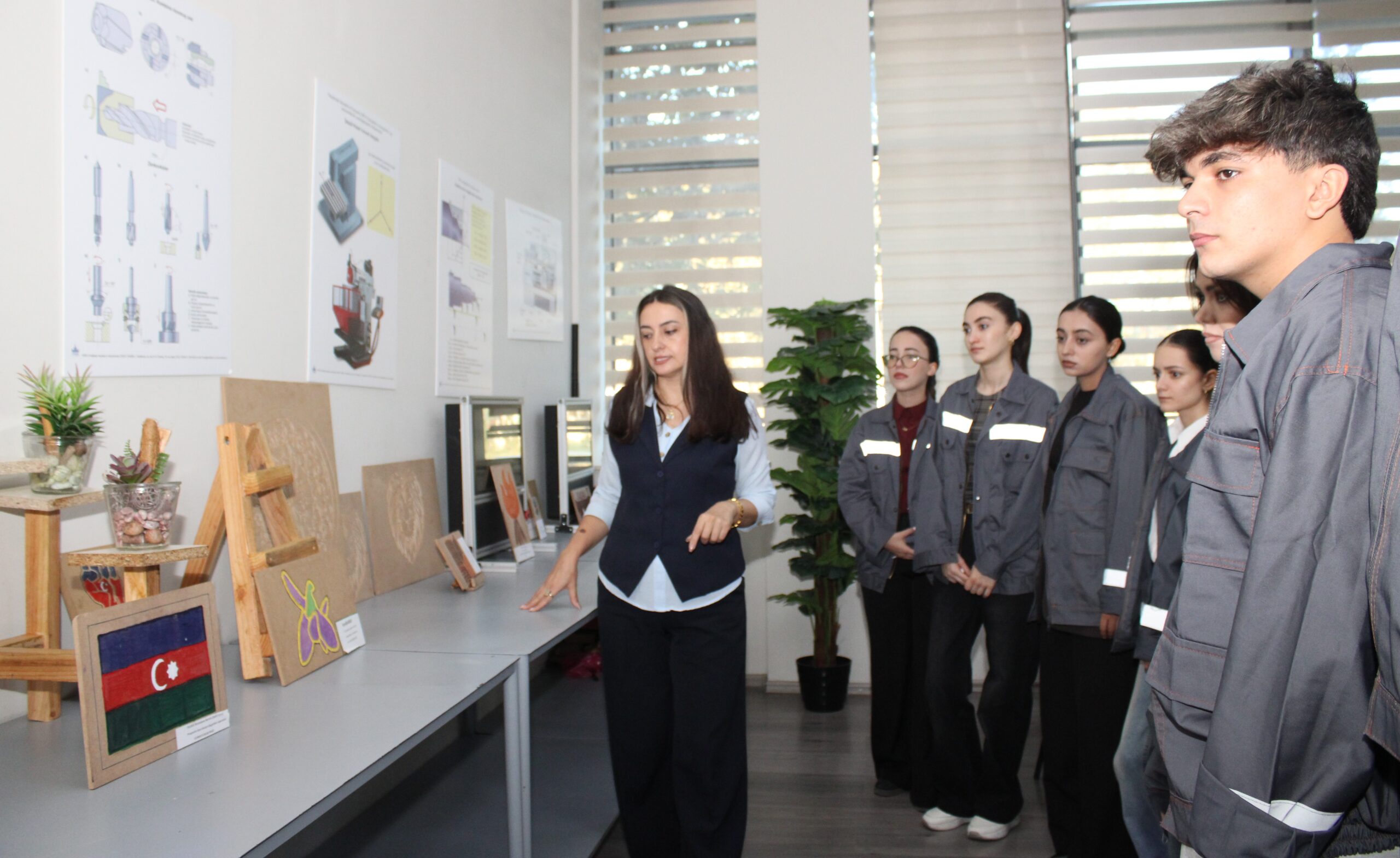
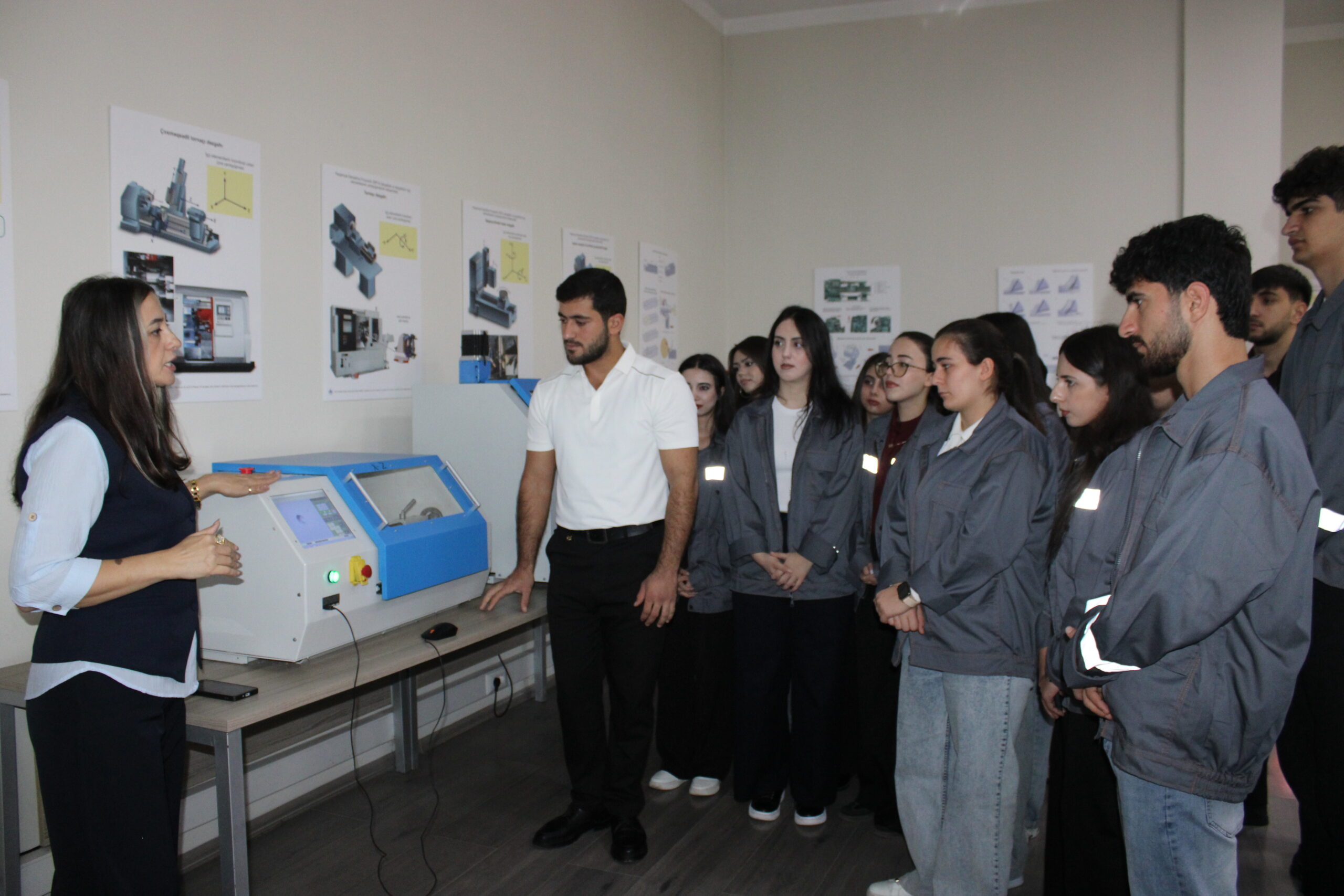
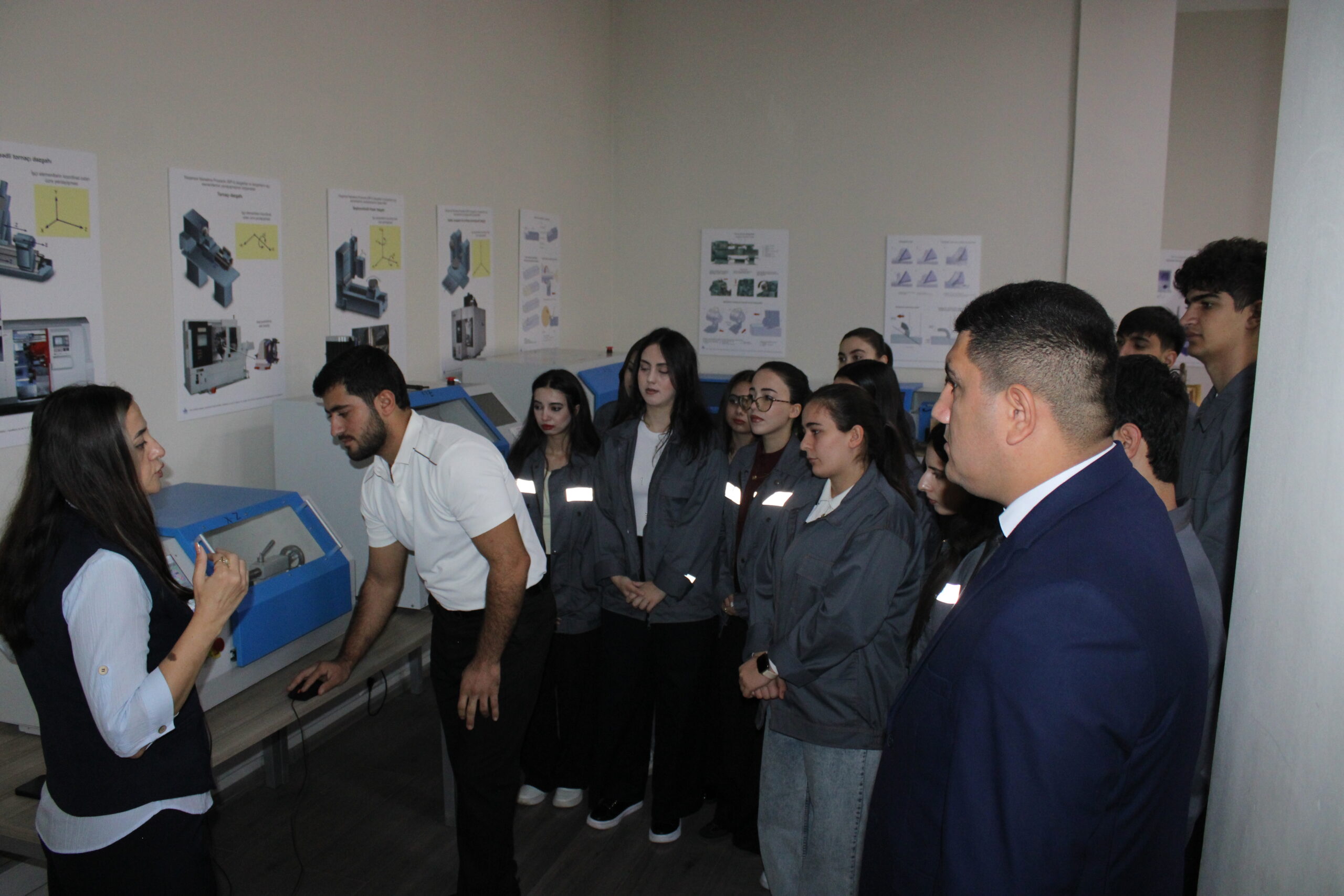
On October 23, 2026, a practical masterclass was held at the “ASAN Peşə” Education Center for students majoring in Technology Teaching at Mingachevir State University (MSU), as part of the “Technology of Manufacturing Wood Products” course. The session was organized to connect students’ theoretical knowledge with modern industrial practice and develop their digital skills and practical competencies.
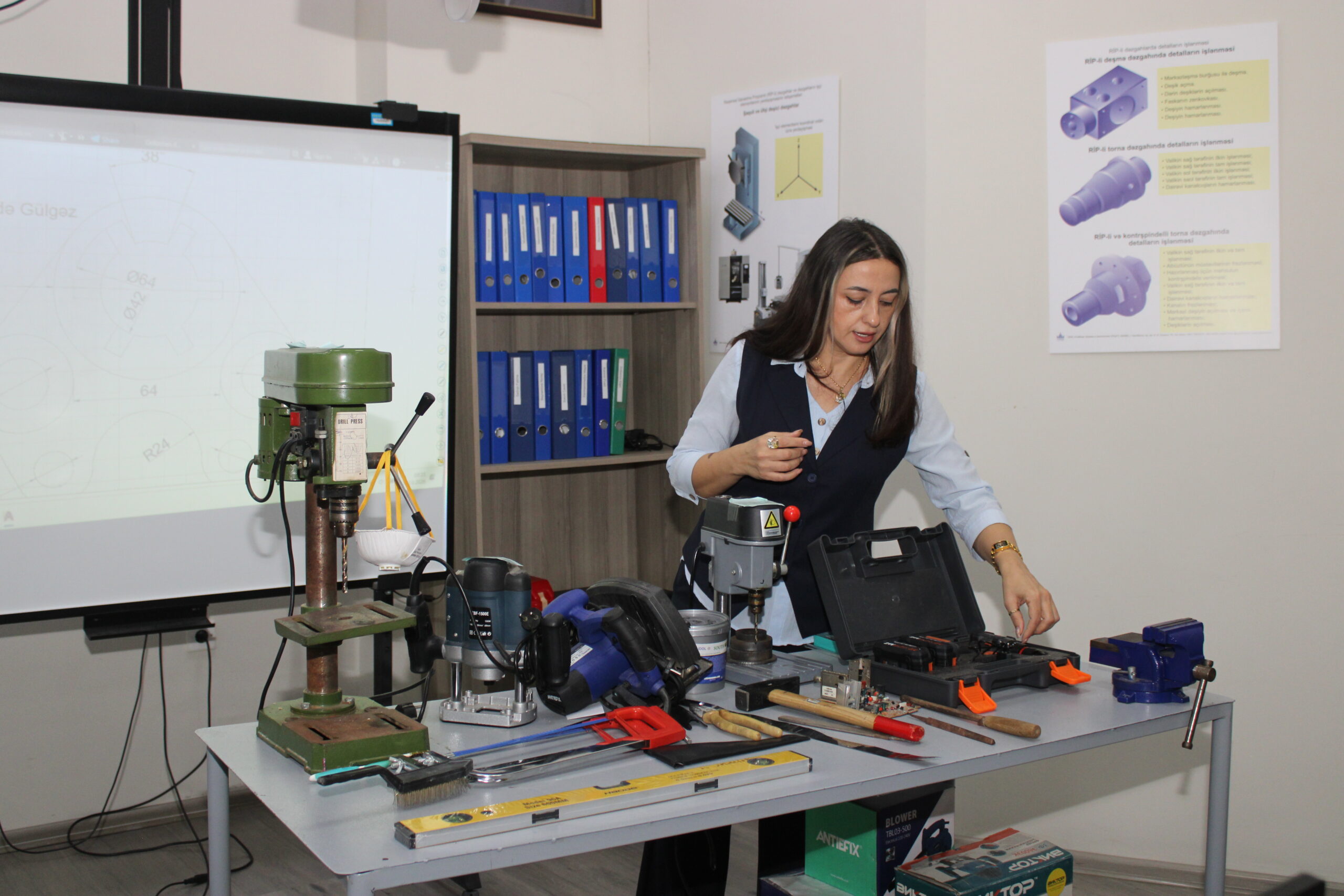
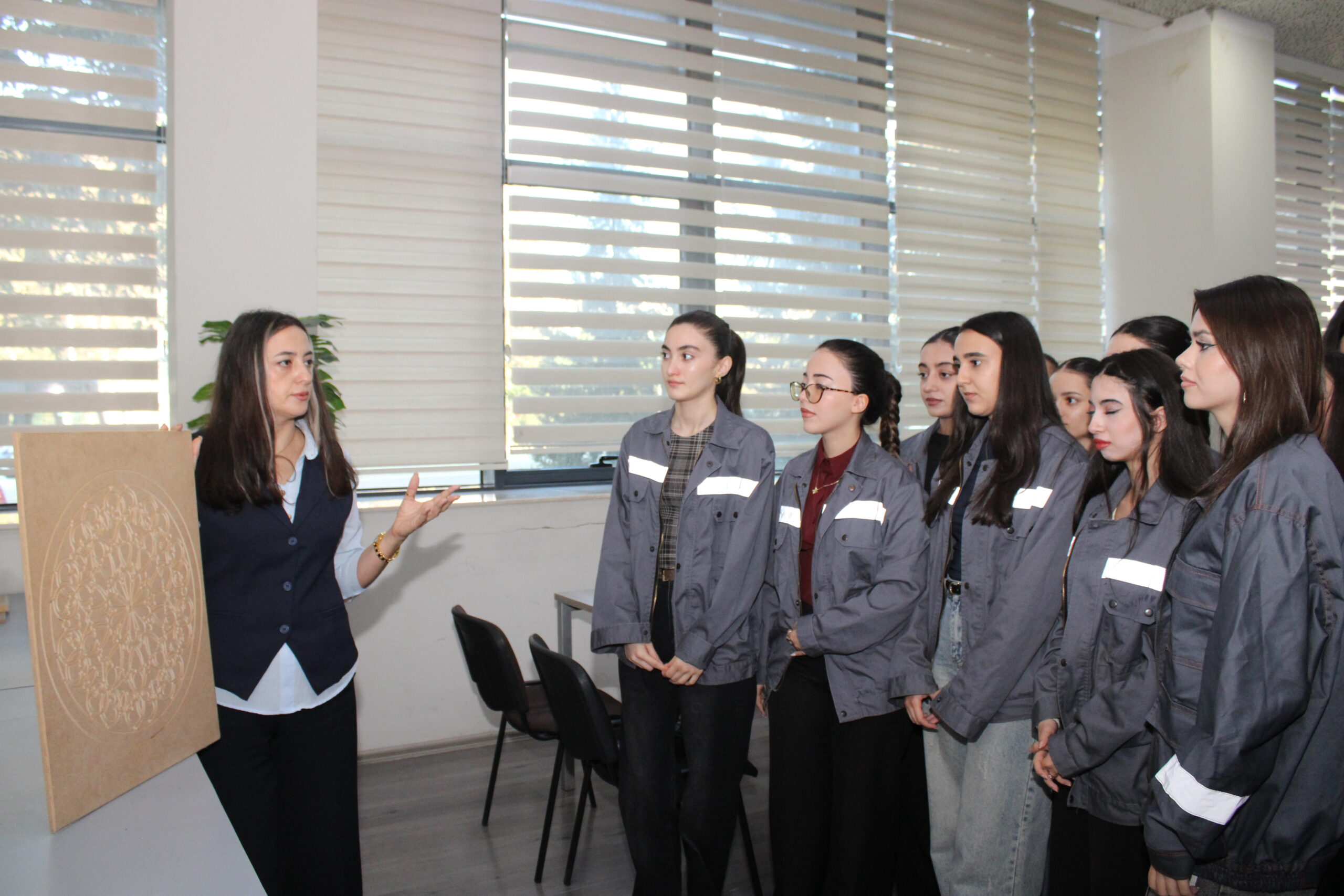
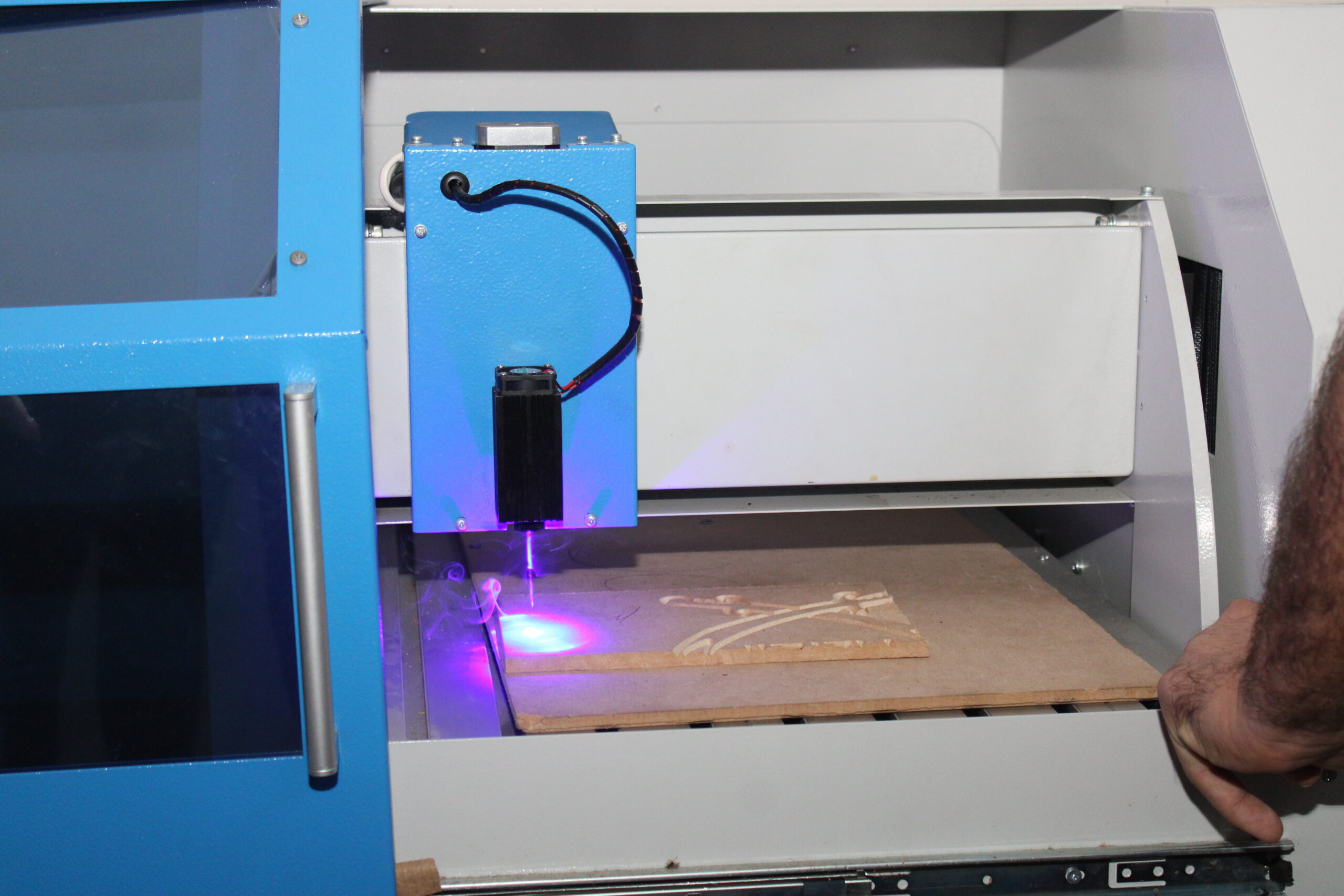
During the masterclass, conducted by a specialist from the center, students were given practical demonstrations of digital wood processing, engraving and laser cutting techniques, as well as the operating principles of computer numerical control (CNC) machines. Participants observed the technological stages from creating a three-dimensional model in a computer environment to obtaining a finished product using software-controlled equipment, gaining basic skills in the use of relevant software.
The session provided information on the application of digital technologies in industry and education, the capabilities of computer-aided design and manufacturing (CAD/CAM) systems, and occupational safety rules for operating equipment. Students’ questions were answered, and the advantages of digital processing methods in improving manufacturing precision and ensuring the efficient use of materials were discussed.
Such practical sessions are also significant for researching the potential applications of Fourth Industrial Revolution (4IR) technologies in the national economy. Familiarity with digital design and automated production processes in woodworking equips students with the basic knowledge and skills needed to investigate the impact of these technologies on productivity, product quality, and resource efficiency. The experience gained lays the groundwork for future technology teachers to develop a deeper understanding of the role of modern production technologies in the digital transformation of the national economy and to integrate this knowledge into teaching.
The masterclass also highlighted the importance of using wood materials economically and reducing processing waste. The contribution of precise design and appropriate technological approaches to conserving resources, developing responsible production habits, and promoting environmental awareness was emphasized.
The practical session enabled future technology teachers to connect their technical and pedagogical knowledge, acquire innovative design approaches, and explore more closely the possibilities of applying digital production tools in teaching. This experience was significant in developing students’ problem-solving and creative thinking skills, as well as strengthening their preparation for future professional activities.
Appreciation was expressed to the leadership of MSU and the “ASAN Peşə” Education Center for their support in enriching teaching with practical opportunities.
Such initiatives implemented at MSU contribute to the development of quality, student-centered education, the expansion of practical learning opportunities, the preparation of professionals in line with the demands of the modern labor market, and the promotion of a culture of responsible resource use.