
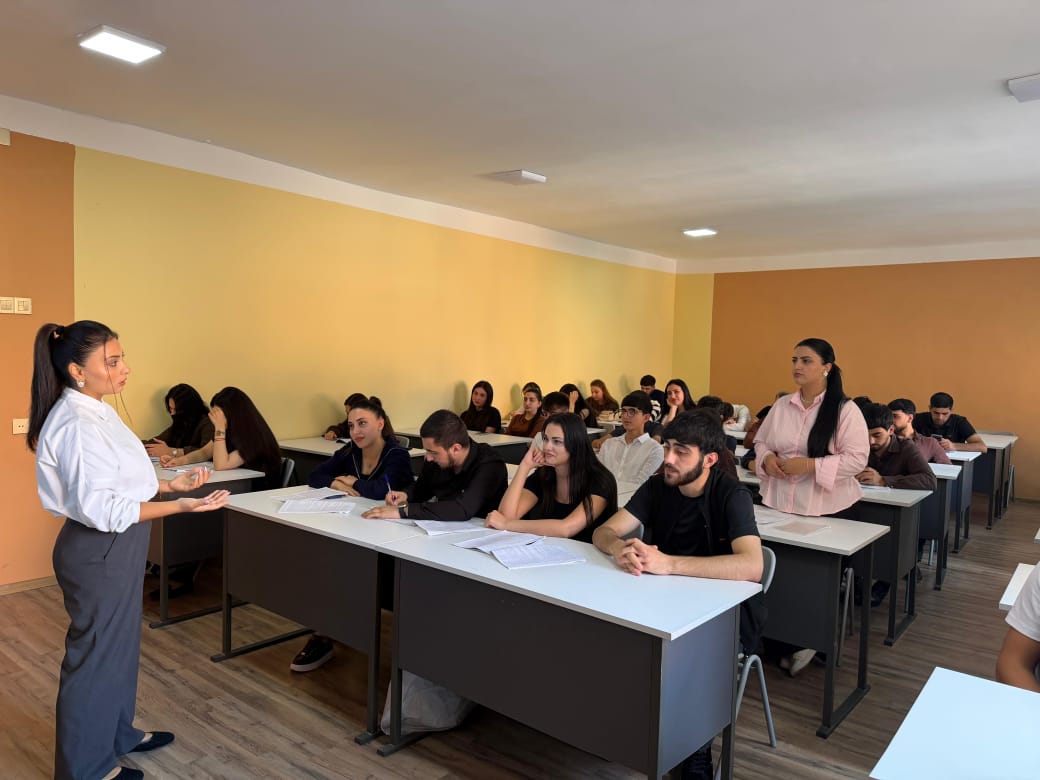


On October 16, 2026, an awareness-raising seminar titled “The unseen side of auditing: From error detection to the reliability of strategic decisions” was held at Mingachevir State University, presented by Kamala Karimova, a lecturer at the Department of Economics.
The main objective of the event was to highlight the role of auditing in the modern economic management system, its importance in ensuring the reliability of financial statements, and the impact of audit findings on making well-founded strategic decisions. During the presentation, it was emphasized that auditing is not merely a mechanism for detecting financial errors and exercising control, but also an important tool for improving management quality, proactively identifying risks, and strengthening institutional trust.
The seminar addressed the functions of internal and external auditing, risk-based audit approaches, financial transparency, strengthening investor confidence, and reducing uncertainty in decision-making. It was noted that reliable financial information is particularly important for the efficient use of resources, strengthening financial discipline, and identifying long-term development priorities. In this context, the contribution of auditing to fostering a culture of transparent, responsible, and accountable management was highlighted.
The discussions also explored new opportunities arising from artificial intelligence, big data, and digital audit technologies. Attention was drawn to the potential of these technologies to accelerate the analysis of financial transactions, enable more accurate risk assessment, and support the timely detection of possible discrepancies. At the same time, the importance of ensuring data security and confidentiality, the accuracy of analytical results, and the preservation of human oversight in the application of digital tools was emphasized.
Auditor independence, professional ethics, compliance with international standards, and the principles of objective assessment were identified as key factors determining the reliability of auditing. It was noted that audit mechanisms based on these principles not only facilitate the management of financial risks but also help strengthen organizational resilience, investment attractiveness, and long-term operational prospects.
The awareness-raising seminar was also significant in terms of deepening economic knowledge, developing analytical thinking skills, and improving financial literacy. The discussion helped connect the theoretical foundations of auditing with practical management issues, foster a critical approach to economic processes, and promote a culture of responsible decision-making.
Awareness-raising initiatives implemented by Mingachevir State University in this field contribute to promoting modern knowledge in economics and finance, enhancing understanding of digital transformation challenges, and advancing the principles of transparent, ethical, and sustainable management. Emphasizing these approaches in the University’s teaching and awareness-raising activities is particularly important for educating professionals equipped with the expertise and responsible decision-making skills needed to contribute to societal development.