
The article examines the coverage of the First Turkological Congress, held in Baku in 1926, in the Azerbaijani national press based on the research of Professor Nadir Mammadli. It analyzes how the preparation, course and results of the congress were reflected in the newspapers and journals of that period. It is established that the national press played an important role in conveying information about the congress to the public and in promoting issues related to alphabet reform, language and terminology. The study also shows that periodical press materials are among the reliable and rich sources for studying the history of the First Turkological Congress. As a result of the research, it is concluded that the Azerbaijani press was not only a means of information, but also an important public platform serving the dissemination of Turkological ideas.
The First Turkological Congress, held in Baku from 26 February to 6 March 1926, was an important event in the scientific, cultural and social life of the Turkic peoples. This remarkable scientific gathering, where issues such as the study of Turkic languages, a common alphabet, terminology, literary language, history, ethnography and folklore were widely discussed, attracted great interest not only in the Soviet space, but throughout the entire Turkic world. The participation of scholars from different countries and regions further increased the international scientific prestige of the congress.
The preparation, holding and adopted decisions of the congress were widely covered in the national press of the period, mainly in the newspapers “Yeni yol”, “Kommunist”, “Yeni fikir” and “Bakinskiy rabochiy”. Azerbaijani newspapers and journals followed this historical event on a daily basis and conveyed it to the public, playing an important role in promoting the aims and objectives of the congress. Information about the congress participants was published in the press, the main provisions of the reports were presented, and the adopted decisions were commented on. In this regard, national press materials may be considered one of the important sources for studying the history of the First Turkological Congress.
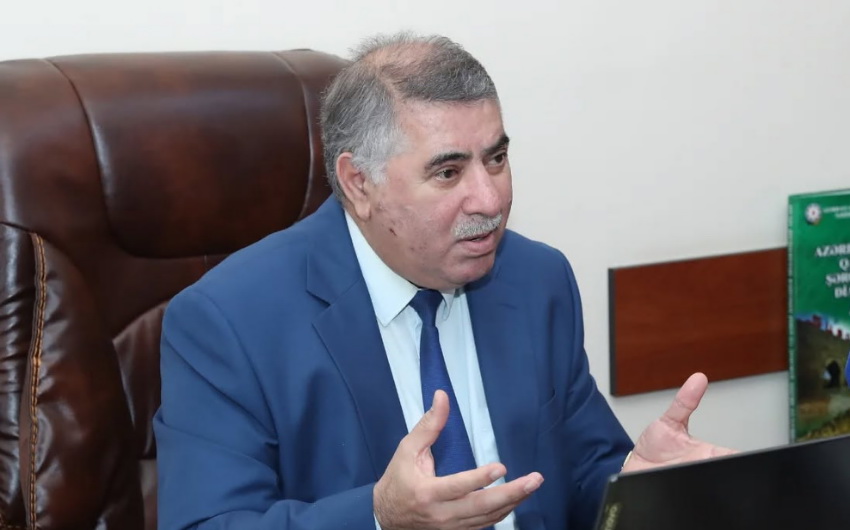
In recent years, the research carried out by the prominent linguist, Professor Nadir Mammadli, has opened a new stage in the study of the First Turkological Congress. The scholar’s investigations, prepared on the basis of archival documents, periodical press materials and other sources, have created an opportunity to illuminate various aspects of the congress more fully and objectively. In particular, analyses based on national press materials make it possible to determine the public resonance of the congress and how it was received by intellectuals and readers of the period.
The purpose of the article is to examine, with reference to Professor Nadir Mammadli’s research, the coverage of the First Turkological Congress in the Azerbaijani national press, to determine the scientific and historical significance of these materials, and to evaluate their role in the study of the congress.
The history of the First Turkological Congress can be studied not only through protocols and official documents, but also on the basis of national press materials. In this respect, the Azerbaijani press performed the function of a living chronicle of the congress.
The news about the convening of the First Turkological Congress was covered consistently and systematically in the Azerbaijani press long before the congress began. Newspapers of the period regarded the forthcoming scientific gathering as an important event in the cultural life of Turkic peoples and informed readers about the issues to be included in the agenda of the congress. Professor Nadir Mammadli’s research shows that during the organization of the congress, the press acted not only as a means of information, but also actively participated in shaping public opinion.
Newspapers such as “Kommunist” in Azerbaijani in the old alphabet, “Yeni yol” and “Maarif işçisi” in the Latin script, “Bakinskiy rabochiy” in Russian, and “Yeni fikir” in both the old alphabet and Latin script reported on the opening of the First All-Union Turkological Congress. During the days of the congress, these newspapers published lists of participants, regularly covered the course of the meetings, the main provisions of the reports, and the decisions adopted.
On 28 February, “Yeni yol” newspaper published extensive materials from the morning session of the First Turkological Congress held on 27 February and presented to readers Academician Bartold’s report on the current state of the history of Turkic peoples and ways of studying it.
“Yeni fikir” newspaper conducted an interview with Professor Köprülüzade, while “Kommunist” newspaper published the reports of the congress delegates.
These materials show how great the interest in Turkological problems was in the public thought of that period. By following the work of the congress on a daily basis, the press kept it at the center of attention of a wide readership.
One of the most widely covered issues in the press in connection with the congress was alphabet reform. The idea of transitioning to the new Latin-based Turkic alphabet was widely discussed both in scientific circles and in the press. Articles were published in newspapers about the advantages of the new alphabet, its impact on the development of education and the elimination of illiteracy.
In its article entitled “The Alphabet Issue at the Congress”, published in issue No. 52 (463) dated 2 March 1926, “Yeni yol” newspaper wrote: “Today, the Turkological Congress is discussing the most important issue on its agenda — the alphabet issue. Every member of the congress must properly understand this historical task and approach the alphabet issue in a fully conscious manner.”
The article also states: “We believe that the Turkic-Tatar peoples will approach the issue of the Latin alphabet not from the point of view of historical ‘tradition’ and religious superstition, but from the point of view of vital development and progress. We firmly believe that the representatives of the Turkic-Tatar peoples gathered at the congress will act in a revolutionary manner on such a great historical issue as the alphabet question and will vote decisively for the implementation of the Latin alphabet.”
In its issue No. 55 (466) dated 5 March 1926, “Yeni yol” newspaper called the transition to the Latin script “a historic decision” and presented its readers with articles entitled “A Historic Decision” and “Only the Turkic Alphabet Is Suitable for Us”.
Other newspapers also emphasized the strategic importance of the alphabet issue for the cultural, pedagogical and terminological development of the Turkic-Tatar peoples and published the decisions of the First All-Union Turkological Congress. The new Turkic alphabet was approved and its implementation by all Turkic peoples was considered desirable.
Professor Nadir Mammadli notes that the press of that period played an important role in explaining the essence of the alphabet reform to the population and helping it gain public support. For this reason, the congress decisions related to the alphabet were presented not only as a scientific event, but also as an important socio-cultural event.
The national press also gave wide coverage to the participants of the congress. Information about the biographies, scientific activities and reports of scholars, writers and public figures from different regions of the Turkic world was published. These articles allowed readers to become closely acquainted with outstanding representatives of the Turkic peoples.
In the February–March 1926 issues of “Yeni yol” newspaper, information was provided about Academician Bartold, Professors Borozdin, Kursin, Chobanzade, Poppe, Genko, Samoylovich, Malov, Ashmarin and other delegates, and their reports and speeches were presented to readers.
In its issue dated 2 March 1926, “Bakinskiy rabochiy” newspaper invited readers to a conversation with Pavlovich, chairman of the Scientific Association of Oriental Studies, and published the reports and speeches of congress delegates such as Professor Köprülüzade, Afandizade, Zhirkov, Samoylovich and other linguist-scholars.
In the Azerbaijani-language press, greater emphasis was placed on the agenda of the congress, the analysis of the speeches of the speakers, and their views on national language policy.
“Bakinskiy rabochiy”, however, paid more attention to relations with European Turkologists for its Russian-speaking readers.
The press did not merely present events within a certain historical framework; at the same time, it played the role of a bridge between the congress participants and society and served the systematic dissemination of information in the fields of language and culture.
Through these writings, the reader can more deeply feel both the lively atmosphere of the congress and the public reactions reflected in the press, as well as the cultural and political spirit of the period.
The materials presented by the press clearly express the international character of the congress and its role in the development of scientific and cultural relations among Turkic peoples.
One of the important aspects of Professor Nadir Mammadli’s research is the evaluation of press materials as historical sources. The scholar shows that information preserved in newspapers and journals provides rich factual material for studying the course of the congress, the positions of the participants and public reaction.
In this regard, the national press did not limit itself to providing information about the First Turkological Congress, but also acted as an important documentary source for studying its history. Therefore, in the study of the congress, periodical press materials should be widely used alongside archival documents.
The First Turkological Congress received wide resonance in the Azerbaijani national press. Newspapers and journals of the period played an important role in the preparation, conduct and promotion of the results of the congress, while also ensuring that its history was transmitted to future generations. Professor Nadir Mammadli’s research shows that national press materials are reliable and rich sources for studying the congress. On the basis of these materials, it is possible to determine more fully the scientific, social and cultural significance of the congress.
During the First Turkological Congress, the Azerbaijani press was not only a means of recording events, but also an important public platform that played a significant role in the formation and dissemination of Turkological ideas.
Maarifa Manafova
Senior Lecturer at Mingachevir State University,
Doctor of Philosophy in Philology