
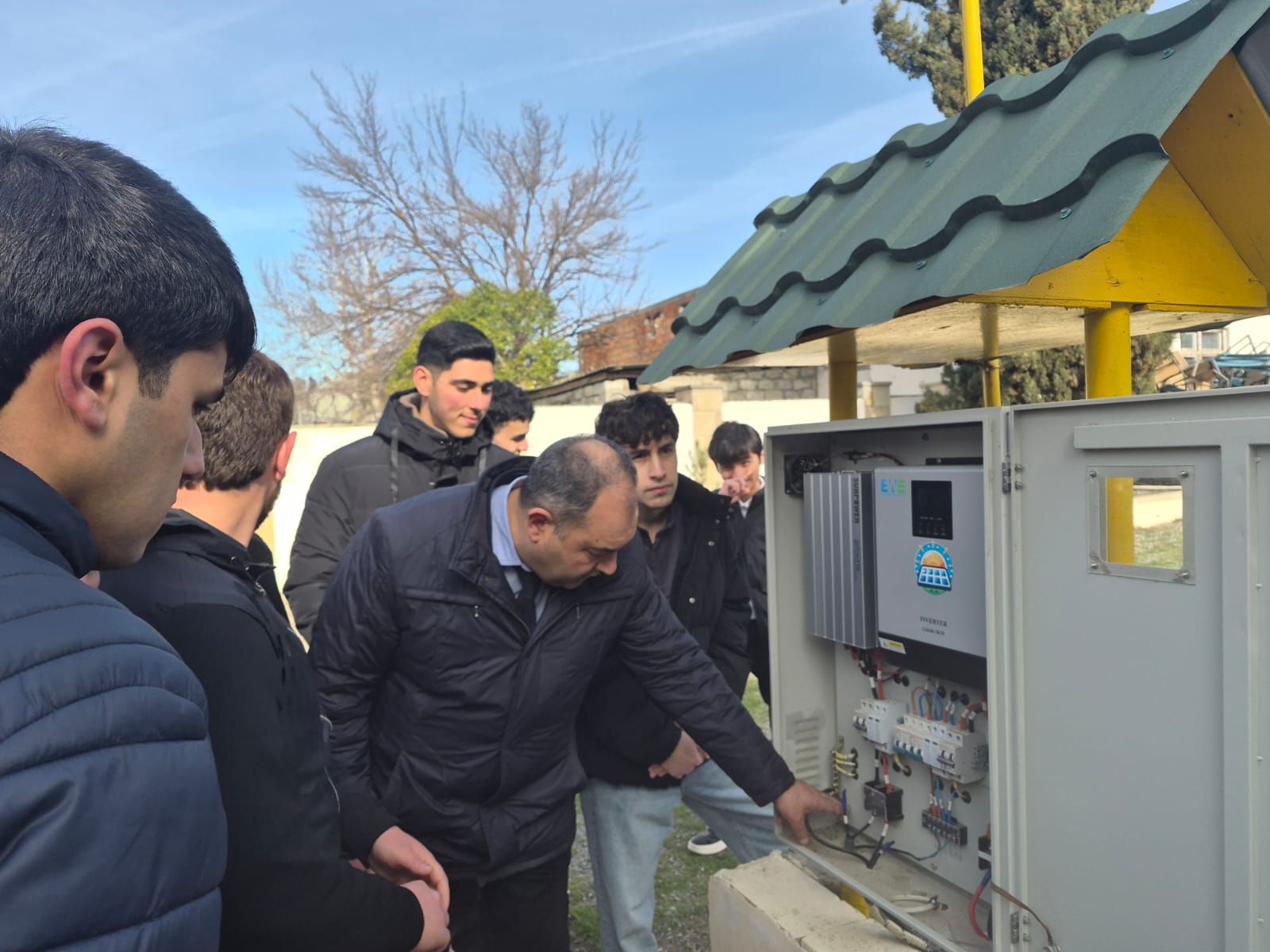
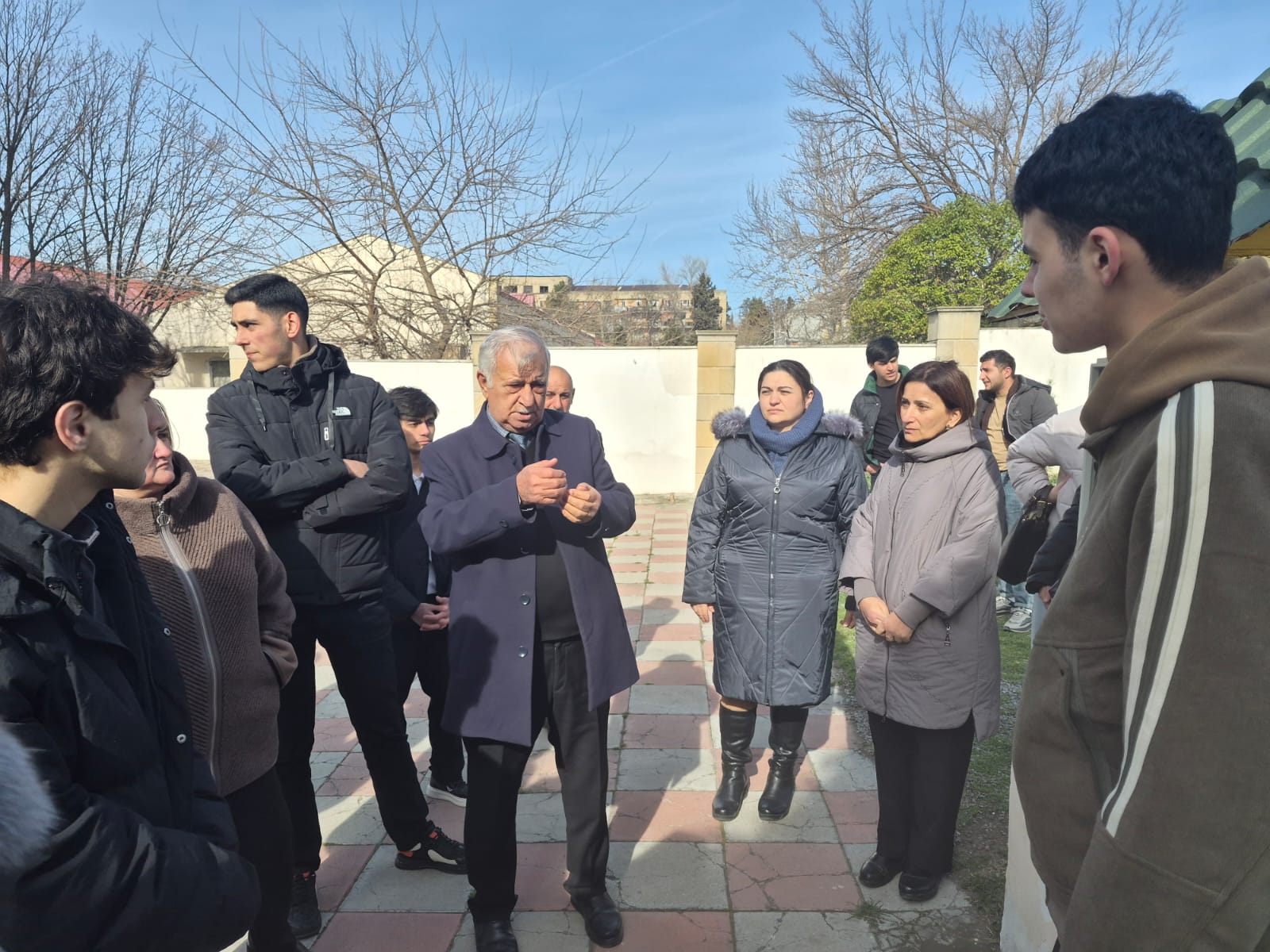
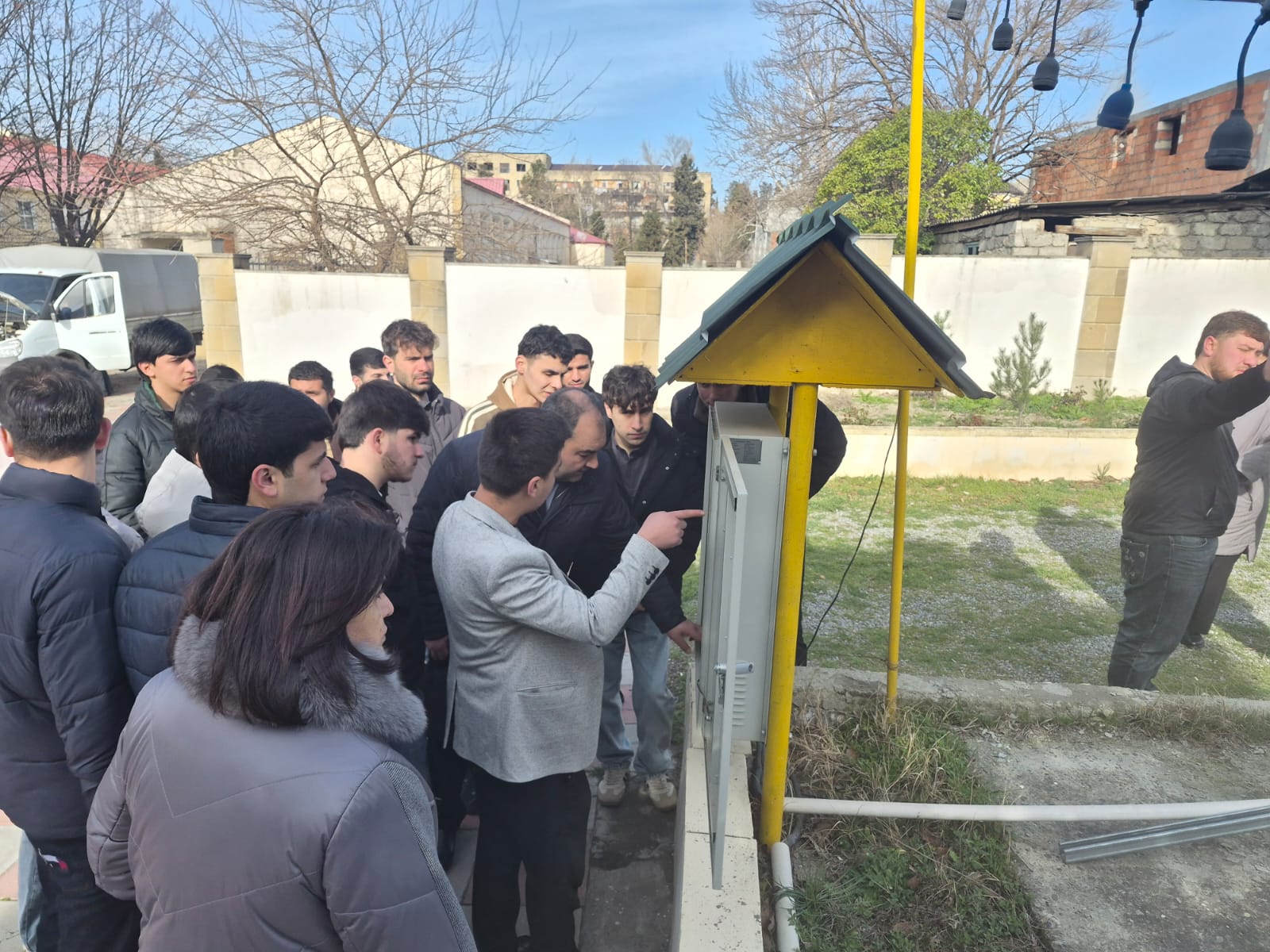
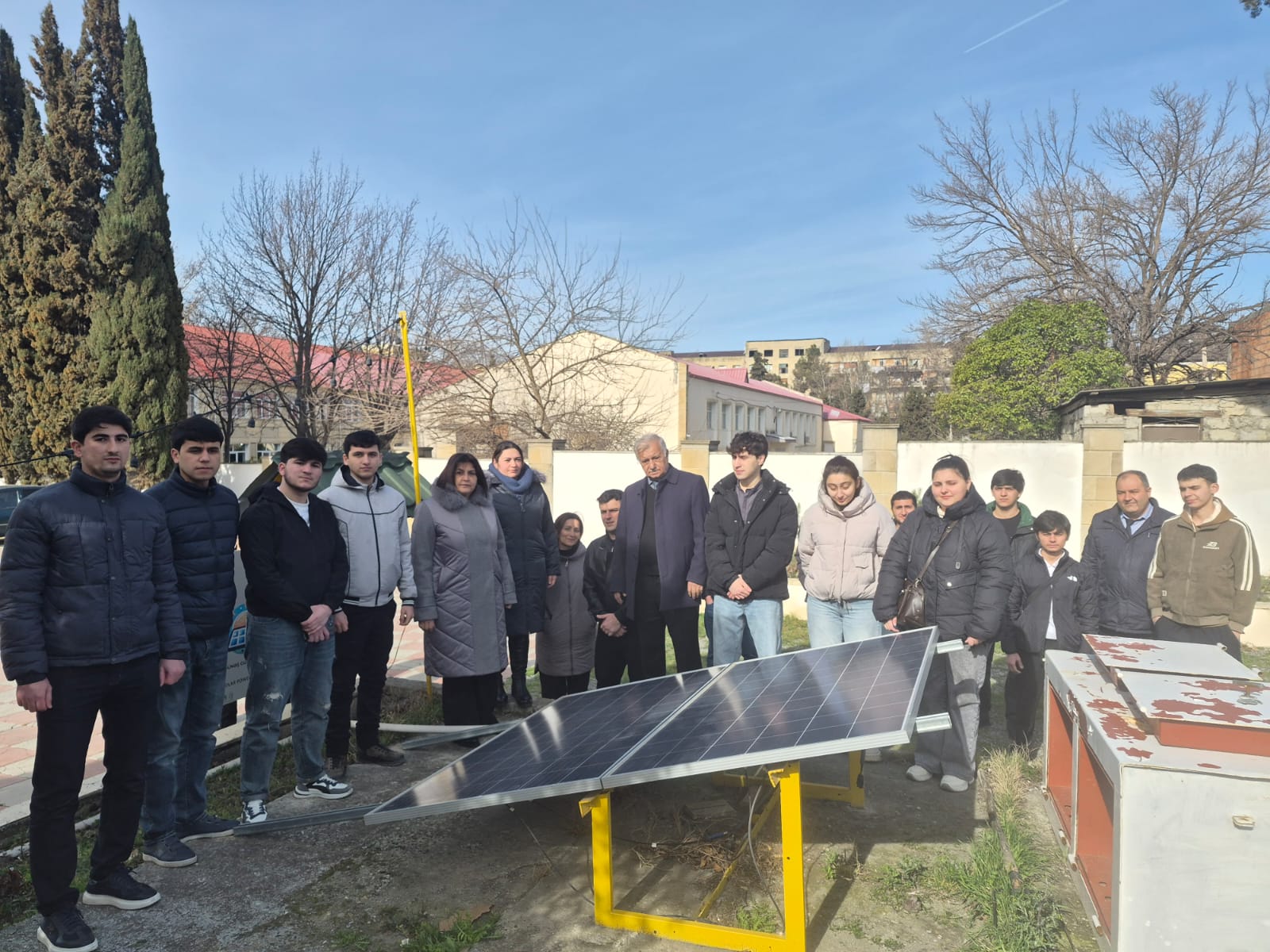
On September 24, 2025, a practical training titled “Techno-Economic Analysis of Solar Power Plants” was held for students at Mingachevir State University (MSU), organized by the Department of Energy Engineering. The training was conducted using the solar energy panels installed on the main academic building of the university. The main aim of the training was to expand students’ theoretical knowledge in the field of renewable energy technologies and strengthen their practical understanding of the technical and economic indicators of solar energy systems.
During the training, energy expert Alim Najafov delivered a comprehensive presentation on the technical characteristics, economic efficiency, and environmental advantages of solar power plants. In particular, he highlighted the key aspects that should be considered when evaluating the performance of solar energy systems.
The presentation first focused on technical parameters and efficiency. It was noted that the efficiency of solar panels usually ranges between 15–22 percent, and this indicator is closely related to local climatic conditions, especially the level of solar radiation. The importance of minimizing energy losses during the conversion of alternating current (AC) to direct current (DC) in inverter and grid integration processes was also emphasized. In addition, information was provided on the impact of regular maintenance of solar panels, including panel cleanliness and cooling systems, on the system’s output power.
Within the framework of the training, the economic indicators of solar power plants were also explained in detail. It was noted that LCOE (Levelized Cost of Energy) represents the normalized cost of producing one kilowatt-hour of electricity over the entire lifetime of the power plant. Participants were also informed about ROI (Return on Investment), which indicates the payback period of the invested capital. It was mentioned that the payback period for solar power plants typically ranges from 6 to 9 years. In addition, information was provided about CAPEX (initial investment costs, including panels and site preparation) and OPEX (annual operational costs).
Special attention was also given to the environmental and strategic advantages of solar energy. It was emphasized that the use of solar power significantly contributes to reducing carbon emissions, and each kilowatt-hour of solar energy helps decrease the amount of carbon dioxide released into the atmosphere.
At the end of the training, Alim Najafov noted that future engineers should not only perform technical calculations but also be capable of evaluating the financial sustainability and economic feasibility of energy projects. It was also highlighted that the application of hybrid systems combining hydropower and solar energy within the infrastructure of the Mingachevir Hydropower Plant could significantly enhance the flexibility of the energy system in the future.